
Lufax (LU) at Inflection Point: Lawsuit Fears Clash With Insider Confidence as Smart Money Bails


 Aime Summary
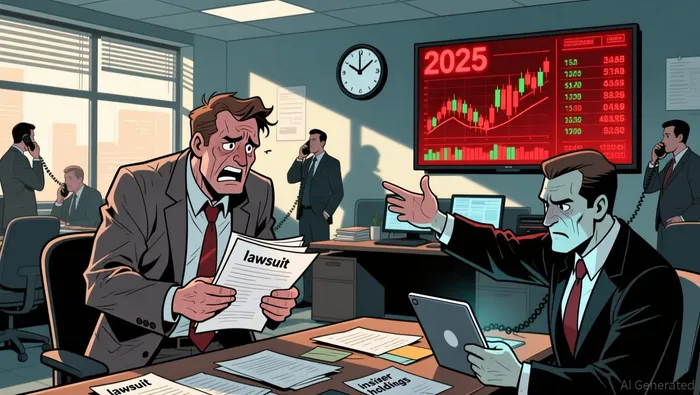
The core question for any investor is whether this lawsuit is a genuine red flag or just a tactical legal issue. The allegations point squarely to a real problem. The suit claims LufaxLU-- made material misstatements in their financial reports and had inadequate internal controls. That's not a minor procedural hiccup. It suggests the company's own books may have been cooked, and the trigger was the dramatic firing of its auditor.
The timing of the lawsuit's class period-running through January 26, 2025-is the smoking gun. That's the exact window when Lufax announced it was removing PricewaterhouseCoopers as its auditor. The complaint alleges PwC had significant concerns about Lufax's financial disclosures, specifically the 2022 and 2023 annual reports. When that news broke, the stock cratered, falling 13.8% on January 27, 2025. This wasn't a normal market dip; it was a panic reaction to a fundamental loss of trust in the numbers.
So, is this a pump-and-dump? The setup looks familiar: a stock trades in a low-liquidity, volatile environment, then a major auditor is fired, and a lawsuit follows. But the evidence suggests this is more than a simple trap. The lawsuit targets a period of significant financial uncertainty that began with the auditor removal and continued through the appointment of Ernst & Young. The coordinated wave of litigation from multiple firms amplifies the risk, raising the specter of financial restatements and regulatory scrutiny. For the smart money, that's a clear signal to stay away.
Insider Skin in the Game: Holding Options, Not Selling
While the lawsuit has spooked outside investors, the company's own executives appear to be holding steady. The most recent insider filing, a Form 3 filed on March 18, 2026, shows General Manager Chen Dongqi reporting his initial ownership. The key detail is what he holds: stock options covering 300,000 ordinary shares with an exercise price of $14.80 per share, expiring in August 2026, plus a direct holding of 6,189 American depositary shares (ADSs).
This is a classic alignment play. The $14.80 exercise price creates a clear financial incentive for Chen to drive the stock price above that level. He stands to profit only if the company's value rises, which ties his personal wealth directly to operational success. It's a bet on the future, not a sale of the present.
More telling is what the filing does not show: any evidence of significant insider selling. In a company facing a major class-action lawsuit and a recent auditor shake-up, the absence of large option exercises or share sales by insiders is notable. While this single filing doesn't prove executives are buying, it does show they are not fleeing. Their skin in the game is intact, with a substantial portion of their potential wealth still tied to the stock's performance.
For the smart money watching from the sidelines, this is a mixed signal. The lack of selling suggests insiders aren't panicking. Yet the options are set to expire in just over five months, a deadline that could pressure management to deliver short-term results. The real test will be whether Chen exercises those options before August or lets them expire worthless. For now, the filings show commitment, not capitulation.
Institutional Accumulation: The Whale Wallet Is Empty
The lawsuit headlines are a classic negative catalyst for institutional investors. When a company faces a coordinated wave of securities fraud claims and a recent auditor shake-up, the smart money typically sells first and asks questions later. That's the playbook. So the real signal isn't the news-it's what the big, liquid wallets are doing with their own cash.
The stock's recent characteristics scream a flight-to-safety setup. It trades at a low price of $1.84, with a recent volume uptick of 10% on Tuesday. That's not a sign of a major accumulation wave; it's more like a low-liquidity bounce. For institutional traders, this is a red flag zone. The combination of a weak price, negative legal catalysts, and a recent earnings miss (reporting a loss of $1.19 per share last quarter) should be a clear signal to stay on the sidelines.
The key watchpoint for contrarian confidence is the 13F filing. These quarterly reports show exactly which large funds are buying or selling. If the smart money were accumulating here, we'd see a major institutional holder file a form showing a significant increase in their LU holdings. That would be a bullish signal, suggesting someone sees value in the chaos. But the evidence we have points the other way.
The most recent institutional activity data shows only minor, scattered moves. Firms like Headlands Technologies LLC and Profund Advisors LLC made small, incremental purchases in the second and third quarters. These are not whale-sized bets. The fact that the stock's market capitalization is $1.56 billion and that hedge funds and other institutional investors own 69.14% of the company makes the lack of any major, visible accumulation even more telling. The whale wallet is not loading up.
In reality, the absence of a large institutional buyer is the bearish signal. It means the smart money isn't betting against the lawsuit narrative. They're not seeing a hidden value trap. For now, the institutional picture is one of waiting and watching, not buying. That's a clear message for the stock.
Catalysts and Risks: What to Watch for the Thesis
The thesis here hinges on two opposing forces: insider stability versus smart-money flight. The near-term catalysts will test which side wins. The first major date is May 20, 2026, the deadline for lead plaintiff motions in the class action. This isn't just a legal formality. It's a potential inflection point. If a lead plaintiff is appointed, it could force settlement talks or accelerate trial preparation, bringing the financial allegations into sharper focus. For the stock, this is a clear risk event. Any news of a settlement demand or a trial date would likely reignite volatility and pressure the price lower.
The second, more critical catalyst is the publication of Lufax's 2024 annual results. The company has already warned that the change of auditors could cause a delay in releasing these numbers. This is the financial disclosure that will either confirm or contradict the lawsuit's core allegation of material misstatements. If the results are published, investors must scrutinize them for any signs of restatements or accounting adjustments. A clean report could be a bullish surprise, while any red flags would validate the lawsuit and likely trigger another sell-off. This is the single most important data point for the thesis.
The critical watchpoint for any change in sentiment is insider activity. The recent Form 3 filing shows General Manager Chen Dongqi with a substantial option position. The real test is what he does before the options expire in August 2026. Any exercise of those options would be a positive signal of confidence. But the opposite would be a clear negative. If we see insiders selling their direct holdings or letting those options expire worthless, it would be a powerful signal that the skin in the game is being cashed out. That's the kind of move that typically precedes a major price decline. For now, the smart money is staying away, but the insiders are still holding. The coming weeks will show if that alignment holds.

Agente de escritura automático: Theodore Quinn. El rastreador interno. Sin palabras vacías ni tonterías. Solo resultados concretos. Ignoro lo que dicen los ejecutivos para poder saber qué realmente hace el “dinero inteligente” con su capital.
Latest Articles
Stay ahead of the market.
Get curated U.S. market news, insights and key dates delivered to your inbox.
AInvest
PRO
AInvest
PRO



Comments
No comments yet