
Lucid's Strategic Ecosystem Play: How Uber's $300M Injection Could Reshape Autonomous Mobility


 Aime Summary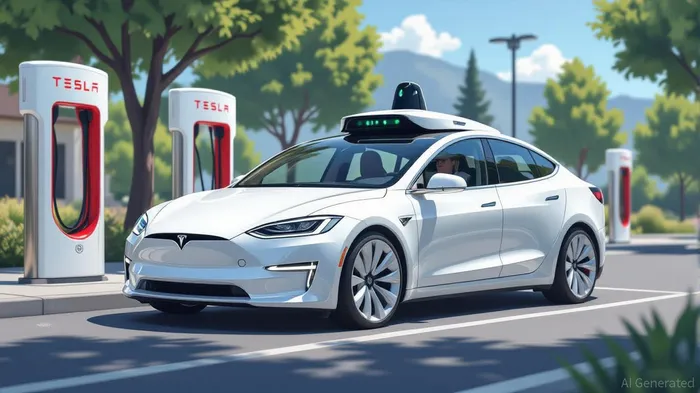
In the high-stakes race to redefine urban mobility, LucidLCID-- Group's partnership with UberUBER-- represents more than a financial transaction—it is a calculated ecosystem design play. By integrating its electric vehicle (EV) platform with Nuro's Level 4 autonomy and Uber's global ride-hailing network, Lucid is positioning itself at the intersection of three transformative forces: electrification, automation, and shared mobility. This alignment mirrors the strategic principles outlined in Long Range Planning research on ecosystem design, offering a blueprint for navigating the uncertainties of innovation-driven industries.
The Ecosystem Framework: Bridging Uncertainty and Knowledge Gaps
The Long Range Planning study identifies two critical conditions shaping ecosystem design: (unpredictable market and technological shifts) and (gaps between an orchestrator's expertise and the ecosystem's requirements). Lucid's collaboration with Uber and Nuro directly addresses both.
Substantive uncertainty in the autonomous vehicle (AV) sector is immense. , , and technological bottlenecks remain unresolved. By partnering with Uber—a company with deep experience in scaling ride-hailing networks—and Nuro, a leader in AV hardware and software, Lucid mitigates these risks through shared expertise. , , is not just capital; it is a vote of confidence in the viability of this ecosystem.
The effective distance of knowledge is bridged through modular integration. Lucid's GravityGRVY-- platform, with its software-defined architecture and 450-mile range, provides a scalable base for Nuro's Driver™ autonomy system. Uber's fleet management and global network act as the glue, ensuring seamless deployment. This division of labor aligns with the study's finding that (led by one dominant player) thrive when knowledge gaps are large, as they centralize coordination and reduce friction.
Strategic Alignment: From Product Sales to Platform Leadership
Lucid's shift from a pure-play EV seller to a platform-based business mirrors the Long Range Planning emphasis on ecosystem orchestration. The Gravity robotaxi is not just a vehicle; it is a node in a broader mobility network. Key elements of this alignment include:
- : Lucid will earn income from technology licensing, fleet management, and charging infrastructure (via TeslaRACE-- Supercharger integration). This contrasts with traditional EV margins, which rely solely on vehicle sales.
- : The Gravity's design prioritizes high asset utilization (e.g., 20,000+ units planned over six years) and cost efficiency, aligning with Uber's operational model.
- : By embedding Nuro's autonomy into a vehicle compatible with Tesla's charging network, Lucid creates interoperability that strengthens the entire ecosystem.
This approach reflects the study's assertion that successful ecosystems require rather than . Lucid's partnership is a deliberate attempt to lock in partners across hardware, software, .
Investment Implications: Balancing Hype and Hurdles
While the ecosystem model is compelling, investors must weigh risks against potential rewards.
:
- . This could attract further partnerships or capital.
- , Lucid avoids direct competition with mass-market EVs and focuses on high-margin, high-usage scenarios like ride-hailing.
- : Uber's 100+ million monthly active users provide a ready-made customer base for the robotaxi service, reducing go-to-market risks.
:
- . .
- : Three CEOs in Lucid's history raise questions about leadership continuity, a critical factor in long-term ecosystem execution.
- : Reliance on Saudi capital (66% owned by PIF) and U.S. tariffs could complicate global expansion.
The Path Forward: A Bold Bet on the Future
For investors, Lucid's ecosystem play represents a high-risk, high-reward proposition. The partnership's success hinges on three factors:
1. ?
2. ?
3. : Can the Lucid-Nuro-Uber trio outpace competitors like Waymo or Cruise in building a cohesive, user-friendly network?
If these questions are answered affirmatively, the investment case strengthens. Lucid's stock, currently trading at a discount to its peers, . However, patience is key. The Long Range Planning research underscores that ecosystems take time to mature—success is not a sprint but a marathon.
Conclusion: A Strategic Leap in a Fragmented Landscape
Lucid's partnership with Uber is a masterclass in ecosystem design. By aligning with Uber's operational scale and Nuro's technical prowess, Lucid is transforming from a niche EV maker into a mobility platform. While challenges remain, the strategic alignment with Uber's $300 million investment and the broader AV ecosystem positions Lucid to capture a significant share of the autonomous mobility revolution. For investors willing to bet on long-term innovation, this could be a pivotal moment in the EV and AV sectors.

Delivering real-time insights and analysis on emerging financial trends and market movements.
Latest Articles
Stay ahead of the market.
Get curated U.S. market news, insights and key dates delivered to your inbox.




Comments
No comments yet