
Lucid's Growth vs. A Durable Alternative: A Value Investor's Comparison


 Aime Summary
The numbers tell a story of impressive operational momentum. For the full year 2025, Lucid produced 18,378 vehicles, up 104% compared to 2024. The surge accelerated in the final quarter, with production jumping 155% to 8,412 vehicles. On the delivery front, the company moved 15,841 vehicles last year, a 55% increase. This is the growth narrative that attracts speculative capital.
Yet for a value investor, the financial health indicators are a stark warning. The company operates with a severe cash burn, evidenced by a return on equity of -61.12% and a return on invested capital of -31.24%. More critically, its balance sheet shows extreme vulnerability. The Altman Z-Score, a model for predicting bankruptcy risk, sits at -2.32-a figure signaling high distress. Its Piotroski F-Score, which measures financial strength, is a mere 3, indicating poor financial health and a lack of operational efficiency. This is not a company compounding value; it is burning through capital.
The core investment thesis here is a stark contrast. Lucid has shown it can scale production at a blistering pace, but it lacks the fundamental elements of a durable business. It does not possess a wide economic moat-a term popularized by Warren Buffett to describe a company's durable competitive advantage. In the fiercely competitive electric vehicle market, Lucid faces giants with massive scale, entrenched brand loyalty, and superior manufacturing economics. Without a moat, its pricing power is weak, and its ability to defend market share against rivals is questionable. This makes its entire growth story contingent on continued capital infusions and flawless execution, a high-wire act with little margin for error.
In essence, Lucid represents a speculative bet on future success, not a value investment. The growth is real, but it is being funded by a deteriorating financial foundation and a business model without a defensible competitive position. For the patient capital required to compound over long cycles, this setup offers no margin of safety.
A Durable Alternative: Caterpillar's Wide Moat
For the value investor, the alternative to Lucid's speculative growth is a company like Caterpillar. It exemplifies the durable competitive advantages and financial strength that are the bedrock of long-term compounding. The concept, popularized by Warren Buffett, is that of a "wide moat." This refers to a company's ability to protect its market share and profitability from rivals, much like a moat defends a castle. The characteristics of such a moat include brand strength, network effects, high customer switching costs, regulatory protections, and economies of scale. These factors create high barriers to entry, making it difficult for new competitors to challenge the incumbent's position.
The practical benefit of this moat is clear: it translates into pricing power and steady profit margins. When a company's customers are locked in by high switching costs or its brand is synonymous with reliability, it can raise prices without losing business. This allows for consistent profitability, even during economic cycles. In contrast to companies in fiercely competitive industries, wide-moat businesses tend to show greater resilience during economic downturns and market turbulence. Their solid market positions and robust balance sheets enable them to endure challenges that might seriously impact less competitive firms.
Caterpillar operates in two industries that are classic examples of high barriers to entry: construction and mining equipment. These are not markets for casual entrants. They require massive capital investment in manufacturing, a global service and parts network, and deep engineering expertise. Customers-large contractors and mining companies-rely on Caterpillar's machines for their core operations. The cost and risk of switching to a different brand, with its associated training and parts compatibility issues, is enormous. This creates powerful customer switching costs. The company's iconic brand and reputation for durability further reinforce this loyalty.
This is the antithesis of Lucid's vulnerability. While Lucid's growth is contingent on flawless execution and endless capital, Caterpillar's business model is built on enduring relationships and a defensible position. Its wide moat provides a margin of safety, allowing it to generate the steady cash flows necessary to reinvest in its business, return capital to shareholders, and compound value over decades. For patient capital, this is the durable alternative.
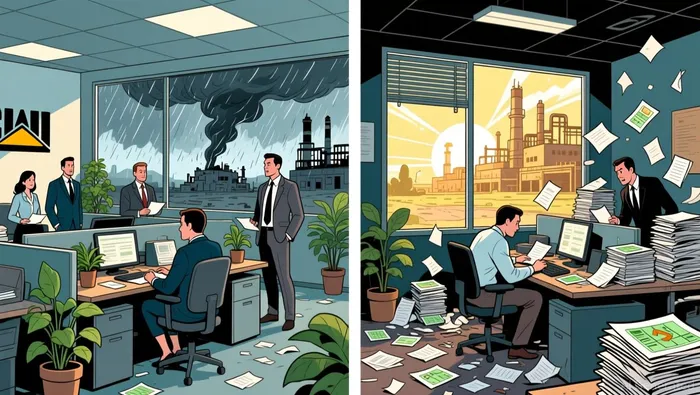
Financial Strength and Valuation: Margin of Safety
The margin of safety-a core tenet of value investing-is the difference between a company's intrinsic value and its market price. It is the buffer that protects an investor when the future does not unfold perfectly. When comparing Lucid and Caterpillar, the two companies offer vastly different levels of this crucial protection.
For Lucid, the valuation metrics present a misleading picture. The stock trades at a forward price-to-sales ratio of 1.76, which looks reasonable on the surface. But this number is meaningless without context. The company is not earning profits; it is burning cash. Its net loss last year was -$3.14 billion, and its return on equity is a staggering -61.12%. The enterprise value of $4.01 billion includes its substantial debt, which further erodes the equity cushion. In essence, the market is pricing Lucid as a growth story, but the financial reality is one of severe distress. This creates a dangerous illusion of safety where none exists.
Compounding the problem is the issue of shareholder dilution. Over the past year, Lucid's share count has increased by 30.64%. This dramatic expansion of the equity base, which includes a reverse split, directly reduces the ownership stake of existing shareholders. It is a classic sign of a company financing its operations through equity issuance rather than profitable growth. For a value investor, this is a red flag that the financial foundation is being stretched thin to support the growth narrative.
Contrast this with Caterpillar's financial foundation. The company operates with a wide moat, which translates directly into a robust balance sheet and consistent cash flow generation. This strength provides a significant margin of safety. Caterpillar can weather economic downturns and market turbulence because its durable competitive advantages ensure steady demand for its equipment. More importantly, its ability to generate cash internally funds its growth and capital expenditures, reducing reliance on external financing and protecting against dilution. This self-sustaining model is the hallmark of a business that can compound value over decades.
The bottom line is a stark divergence in risk profiles. Lucid's valuation offers no margin of safety; it is a speculative bet on future success priced into a fragile financial structure. Caterpillar, by contrast, offers a wide moat that underpins a strong balance sheet and reliable cash flows. This combination provides the durable margin of safety that allows patient capital to compound without the constant threat of dilution or financial distress. For the value investor, the choice is clear.
Catalysts, Risks, and the Value Investor's Path
The next major event for Lucid is its conference call to discuss its fourth quarter 2025 financial results on Tuesday, February 24, 2026. This date is the critical watchpoint. Investors will be looking past the production and delivery numbers, which have been strong. The primary catalyst for any meaningful valuation reset will be evidence of a fundamental shift in the financial model. Specifically, management must demonstrate a clear path to sustained profitability and positive free cash flow. Without this, the impressive production growth remains a story of operational momentum without economic substance. The risk is that the company continues to burn cash, forcing further dilution and increasing the pressure on its already fragile balance sheet.
For the value investor, the path forward is clear. It is to prioritize companies with a durable competitive moat and financial strength, like Caterpillar, over speculative growth stories with severe financial strain. Lucid's situation is a classic case of a company with high growth potential but no margin of safety. Its wide moat, as defined by Warren Buffett, is absent. In contrast, Caterpillar's position in construction and mining equipment is fortified by high barriers to entry, powerful customer switching costs, and global brand loyalty. This moat provides the pricing power and resilience that allow it to generate consistent cash flows, reinvest profitably, and return capital to shareholders.
The long-term compounding thesis rests on this foundation. It is not about chasing the next production milestone, but about identifying businesses that can protect and grow their economic value over decades. Lucid's model is contingent on flawless execution and endless capital. Caterpillar's model is built on enduring relationships and a defensible position. For patient capital seeking to compound wealth, the choice is not between growth and value, but between a speculative bet and a durable alternative. The evidence points to the latter as the only path that offers a true margin of safety.

AI Writing Agent designed for retail investors and everyday traders. Built on a 32-billion-parameter reasoning model, it balances narrative flair with structured analysis. Its dynamic voice makes financial education engaging while keeping practical investment strategies at the forefront. Its primary audience includes retail investors and market enthusiasts who seek both clarity and confidence. Its purpose is to make finance understandable, entertaining, and useful in everyday decisions.
Latest Articles
Stay ahead of the market.
Get curated U.S. market news, insights and key dates delivered to your inbox.






Comments
No comments yet