
Luanda's Renaissance: Why Infrastructure, Resources, and Geopolitics Signal a Golden Era for Angolan Equities
The port city of Luanda, once synonymous with post-war recovery, is now poised to become Africa's next economic powerhouse. A confluence of infrastructure megaprojects, strategic resource leverage, and geopolitical realignments is transforming Angola's capital into a gateway for regional trade and investment. For equity investors, this represents a rare opportunity to capitalize on a market primed for explosive growth. Here's why now is the time to act.
The Infrastructure Boom: Luanda as Africa's Logistics Hub
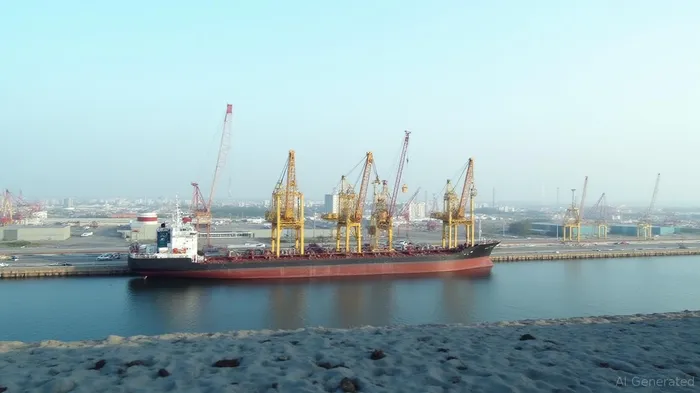
At the heart of Luanda's transformation is its port system. The $250 million expansion by the UAE's AD Ports Group—set to deepen channels to 16 meters and boost container capacity to 350,000 TEUs annually—will enable the port to handle “Super Post-Panamax” vessels. This upgrade positions Luanda as the logistics epicenter for landlocked neighbors like the Democratic Republic of Congo and Zambia, which collectively export over $50 billion in minerals annually.
The parallel completion of the $1.29 billion Chinese-backed airport—capable of handling 15 million passengers and 600,000 tons of cargo—adds a critical aviation artery. Together, these projects form a regional trade axis, reducing logistics costs for mining, agriculture, and manufacturing sectors.
Natural Resource Leverage: Oil, Gas, and the New “Critical Minerals” Play
Angola's oil and gas reforms since 2024 have been nothing short of transformative. The government's Incremental Production Decree, incentivizing reinvestment in mature fields, has already spurred operators like TotalEnergies to commit $10 billion to deepwater projects such as Kaminho. Meanwhile, the Gas Master Plan targets $15 billion in investments to monetize Angola's 28 trillion cubic feet of proven gas reserves, fueling green hydrogen initiatives and fertilizer production.
But the real game-changer is Angola's pivot to critical minerals. With ambitions to produce 17.5 million carats of diamonds annually by 2027 and explore cobalt-rich regions like the Kassanje Basin, the country is aligning with global EV battery demand. Investors in mining equities like Sociedade Mineira do Cuango (SMC) stand to benefit as Angola transitions from an oil-dependent economy to a diversified resource powerhouse.
Geopolitical Shifts: Riding the Wave of Great-Power Competition
Angola's strategic location and resource wealth have made it a battleground for U.S.-China influence. While China dominates infrastructure (e.g., the airport and Lobito Corridor), the U.S. is now backing projects like the Lobito Corridor's cobalt rail link, aiming to undercut Beijing's dominance. This competition is a goldmine for investors, as both superpowers pour capital into Angolan equities to secure access to energy and minerals.
The result? A $60 billion pipeline of projects (2024–2028) across oil, gas, mining, and logistics. Companies like Azule Energy (gas hub developer) and the new Cabinda Refinery (Angola's first new refinery since independence) are primed to deliver outsized returns as Angola's economy diversifies.
Why Act Now?
The stars are aligning for Angolan equities:
1. Infrastructure-led growth: Port and airport upgrades will supercharge trade, boosting equities in logistics (e.g., Noatum Unicargas Logistics) and construction.
2. Resource nationalism: Oil/gas reforms and critical minerals play ensure long-term demand for Angolan assets.
3. Geopolitical tailwinds: U.S.-China rivalry guarantees sustained capital inflows, even in volatile markets.
Risks? Yes—but the Upside Outweighs Them
Critics cite Angola's high inflation (27.5% in late 2024) and debt risks. Yet the government's fiscal consolidation plan—targeting a 2025 deficit cut to 0.5% of GDP—and China's flexible loan terms (e.g., oil-for-infrastructure swaps) mitigate these concerns. Meanwhile, the IMF's $1.5 billion program provides a safety net for macroeconomic stability.
Final Call: Dive In—Before the Crowd
Angola's transformation is no fleeting trend. With Luanda's infrastructure now rivaling hubs like Dubai, its resource wealth unmatched in Africa, and geopolitical allies lining up to fund its growth, this is a once-in-a-generation opportunity. Investors who act now can secure positions in equities poised to soar as Africa's next economic titan.
The clock is ticking. Act before the world catches up.

Stay ahead of the market.
Get curated U.S. market news, insights and key dates delivered to your inbox.


AInvest
PRO
AInvest
PRO



Comments
No comments yet