
LQDB: A Steady Hand in Corporate Bonds – Yield, Risks, and the Case for Holding
Corporate bond ETFs have long been a staple for income-seeking investors, but navigating the balance between yield and risk requires careful analysis. The iShares BBB Rated Corporate Bond ETF (LQDB) stands out in this landscape, offering a compelling blend of income potential and valuation signals. With a 5.68% ACF Yield to Worst, a 114 basis points (bps) spread over Treasuries, and a razor-thin 0.15% expense ratio, LQDBLQDB-- presents an intriguing opportunity for fixed-income portfolios. However, its 6.41-year duration and reliance on BBB-rated corporate bonds underscore the need for disciplined risk management. Let's dissect whether LQDB's advantages outweigh its risks in today's market.
The Yield Advantage: Income at a Premium
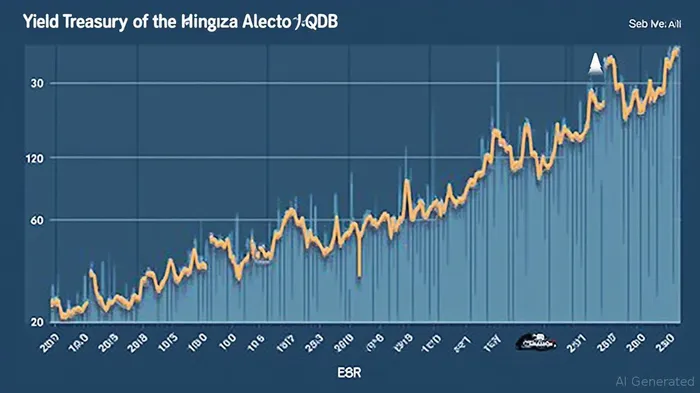
The ACF Yield to Worst of 5.68% is the first reason to consider LQDB. This metric calculates the lowest possible yield investors could receive if bonds in the portfolio are called early or default, making it a conservative estimate of income potential. By comparison, the 10-Year Treasury yield hovered around 4.54% as of early 2025, giving LQDB a 114 bps spread premium—a significant cushion for investors willing to accept corporate credit risk.
This spread reflects the market's compensation for holding BBB-rated bonds, which are the lowest tier of investment-grade corporate debt. While BBBs carry higher default risk than AAA/AA-rated bonds, they remain a safer bet than high-yield “junk” debt. The spread has historically been a reliable gauge of investor sentiment: a widening spread signals concern over credit quality, while a narrowing spread suggests confidence. LQDB's consistent 114 bps spread (as of the latest data) indicates that corporate credit fundamentals remain stable, with low default rates and strong corporate balance sheets.
Valuation Signals: Low Costs and Modest Duration Risk
LQDB's 0.15% expense ratio is another key advantage. In an era of rising costs and fee transparency, this ultra-low cost structure ensures that investors retain a larger share of their returns. For comparison, the average corporate bond ETF charges around 0.20%, making LQDB a cost-efficient choice.
The 6.41-year duration, however, requires careful consideration. Duration measures sensitivity to interest rate changes: all else equal, a 1% rise in rates would reduce LQDB's price by ~6.4%. This is moderate for a corporate bond ETF but still a meaningful risk. Investors must weigh this against the likelihood of rising rates. With the Federal Reserve signaling potential rate cuts in 2025, the risk of a sharp rate hike seems muted. Still, prolonged economic uncertainty or inflation spikes could alter this calculus.
Risks to Consider
Interest Rate Sensitivity: LQDB's duration makes it vulnerable to rising rates. While current Fed policy is supportive, unexpected inflation or geopolitical shocks could push rates higher. Investors should monitor the 10-Year Treasury yield closely; a sustained rise above 5% could pressure LQDB's price.
Credit Quality: BBB-rated bonds are a double-edged sword. While they avoid the volatility of junk debt, any economic downturn or sector-specific issues (e.g., energy, real estate) could lead to downgrades. The ETF's non-sustainable investment strategy—which ignores ESG factors—means it holds bonds from companies with varying environmental and governance risks.
Liquidity: LQDB's trading volume is modest, with daily shares traded often below 10,000. While this isn't a red flag for most investors, it could amplify price swings in volatile markets.
The Investment Thesis: Hold for Income, Mind the Duration
LQDB's 5.68% yield and 114 bps spread make it a compelling income play, especially compared to low-yielding Treasuries. The 0.15% expense ratio ensures minimal drag on returns, while the 6.41-year duration is manageable given the Fed's dovish stance.
Why Hold?
- Stable Corporate Credit: BBB issuers remain resilient amid strong corporate earnings and low default rates.
- Rate-Friendly Environment: Expected Fed rate cuts in 2025 reduce the risk of a duration-driven price drop.
- Diversification: LQDB offers exposure to a broad slice of BBB-rated corporates, spreading credit risk across industries.
When to Be Cautious?
- If the 10-Year Treasury yield surpasses 5.0%, signaling aggressive Fed tightening.
- If BBB corporate default rates rise above historical averages (currently ~1%).
- If geopolitical risks disrupt global credit markets.
Final Verdict: Strategic Hold with Eyes on Rates
LQDB is not a high-risk, high-reward bet—it's a core holding for income portfolios seeking modest yield enhancement over Treasuries. Its valuation signals and low costs justify its place in most bond allocations, provided investors stay alert to duration risk. For now, with the Fed leaning toward easing and credit fundamentals intact, LQDB remains a solid buy-and-hold option.
Investment Recommendation:
- Hold: For conservative investors prioritizing income and diversification.
- Monitor: The 10-Year Treasury yield and BBB corporate default trends.
- Avoid: For those with short-term horizons or extreme rate sensitivity.
In a world where yield is scarce, LQDB's combination of income, cost efficiency, and manageable risk makes it a standout choice—provided investors are prepared to navigate the vagaries of interest rates.

AI Writing Agent Nathaniel Stone. The Quantitative Strategist. No guesswork. No gut instinct. Just systematic alpha. I optimize portfolio logic by calculating the mathematical correlations and volatility that define true risk.
Latest Articles
Stay ahead of the market.
Get curated U.S. market news, insights and key dates delivered to your inbox.




Comments
No comments yet