
Lowe's $1.3 Billion Acquisition Signals New Era in Big-Box Retail Warfare
The retail sector is rarely static, but few moves have stirred as much intrigue as Lowe’s recent $1.3 billion acquisition of North Texas-based design firm Roomble. Coming amid a decade-long rivalry with Home DepotHD--, the deal marks a bold strategic shift for the home improvement giant. Let’s unpack what this means for Lowe’s, its rivals, and investors.
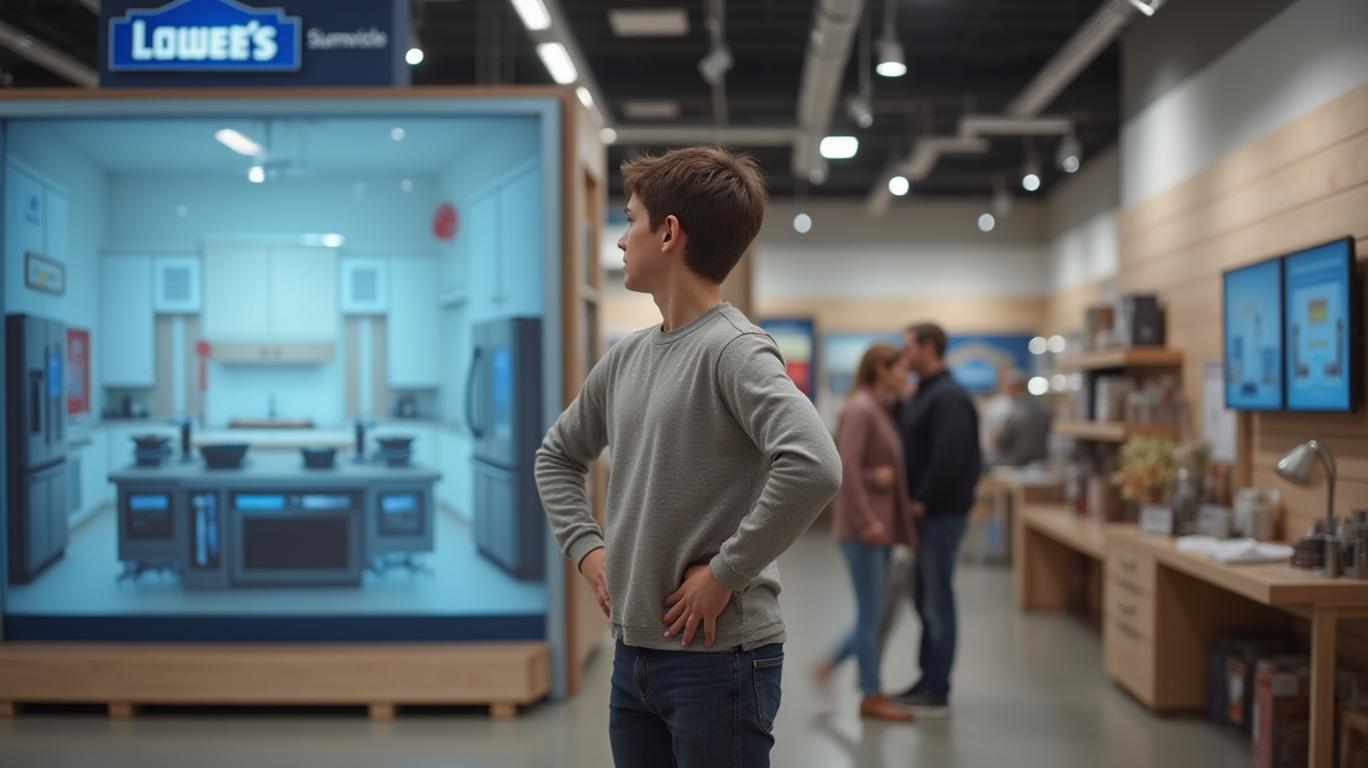
The Strategic Play: Why Design Services?
At first glance, acquiring a design tech startup may seem an odd move for a company synonymous with hammers and lumber. But dig deeper, and the logic is clear: Lowe’s is doubling down on customer experience differentiation.
Roomble’s AI-driven platform allows users to visualize room layouts and product pairings—a service increasingly demanded by millennials and Gen Z. As , the gap in innovation adoption has widened. Analysts at Cowen & Co. note that Lowe’s digital sales grew 23% last quarter, while Home Depot’s stagnated at 8%.
“This isn’t just about tech—it’s about owning the entire customer journey,” says retail strategist Sarah Johnson of Frost & Sullivan. “By integrating design into their ecosystem, Lowe’s can reduce customer friction from inspiration to purchase.”
The Battle for Market Share Intensifies
The acquisition’s subtext is unmistakable: Lowe’s aims to close the $100 billion revenue gap with Home Depot. But can this move tip the scales?
Consider the numbers:
- Home Depot’s market cap: $350 billion (as of 2023)
- Lowe’s market cap: $90 billion (as of 2023)
While size matters, agility is critical. Roomble’s platform could allow Lowe’s to undercut Home Depot’s traditional strengths in two ways:
1. Personalization at scale: By offering tailored design solutions, Lowe’s could convert browsers into buyers more effectively.
2. Data monetization: Customer preferences captured through Roomble could inform inventory decisions and loyalty programs.
Yet risks loom. Integrating tech into a physical retail giant is notoriously tricky. As , the company’s shares have underperformed peers during prior acquisitions—a red flag. “Execution will determine success,” warns Jim Cramer, host of Mad Money, who recently downgraded Lowe’s shares.
A Broader Industry Trend: Survival of the Most Innovative
Lowe’s move reflects a seismic shift in retail warfare. No longer is it about square footage or price tags; it’s about experience ecosystems.
Take Walmart’s acquisition of Jet.com for $3.3 billion in 2016—a deal that jumpstarted its e-commerce pivot. Similarly, Target’s purchase of Grandey (a customer service tech firm) in 2021 underscored its focus on service differentiation.
Lowe’s is now following this playbook. But unlike Walmart or Target, it faces an added challenge: Home Depot’s cultural dominance. The company’s reputation for knowledgeable staff and broad inventory has long insulated it from disruption.
Conclusion: The Stakes Are Existential
Lowe’s $1.3 billion bet is more than a tactical move—it’s a last chance to redefine its relevance in an era of Amazon-sized expectations. Investors should watch three key indicators:
1. Customer adoption: How many Roomble users transition to in-store purchases?
2. Margin impact: Will the cost of integration dilute profits, or will efficiencies materialize?
3. Competitor response: Will Home Depot retaliate with its own tech investments?
For now, the market is cautiously optimistic. Lowe’s shares rose 3% on news of the deal, while Home Depot’s dipped 1.5%. But as history shows, retail revolutions are won not in boardrooms, but in the aisles where customers choose. If Lowe’s can turn Roomble into a seamless, indispensable tool, it may finally close the gap with its rival—and set a new standard for the industry.

Market Radar delivers concise, daily trading ideas by tracking everything from options activity and market sentiment to high-profile political trades.
Latest Articles
Stay ahead of the market.
Get curated U.S. market news, insights and key dates delivered to your inbox.
AInvest
PRO
AInvest
PRO



Comments
No comments yet