
Lowe's in the Crosshairs: Assessing Brand Risk and Earnings Sustainability Amid Rising Consumer Activism
 Aime Summary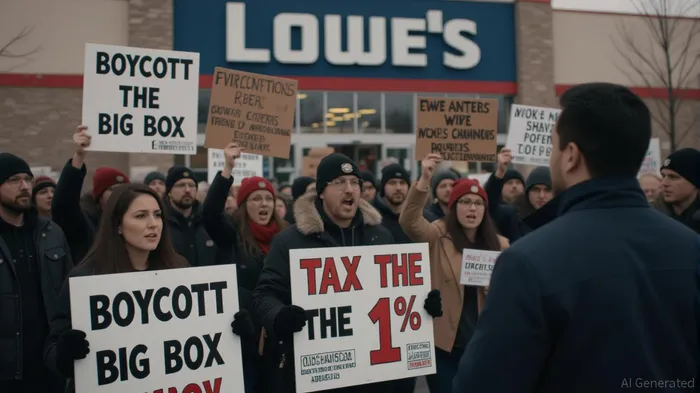
In an era where corporate values are increasingly weaponized in political discourse, Lowe's (LOW) finds itself at the center of a storm. The home improvement giant, long a bellwether for retail resilience, now faces a dual threat: a nationwide boycott led by The People's Union USA and a broader cultural shift in consumer expectations around diversity, equity, and inclusion (DEI). For investors, the question is no longer whether corporate activism impacts earnings, but how deeply it can erode brand loyalty and profitability in a polarized marketplace.
The New Normal: Boycotts as Strategic Resistance
The People's Union USA, a movement with 500,000 Instagram followers and a history of targeting AmazonAMZN--, WalmartWMT--, and Target, launched a 30-day boycott of Lowe's on August 1, 2025. The group's demands—fair tax policies, profit margin caps, and equal opportunity hiring—align with a broader anti-corporate sentiment fueled by post-Trump-era disillusionment. This isn't just a retail issue; it's a symptom of a fractured society where consumer spending has become a political act.
Lowe's vulnerability stems from its 2024 decision to scale back DEI initiatives, a move that drew praise from conservative critics but alienated progressive consumers. The company's exit from Human Rights Campaign surveys and LGBTQ+-focused sponsorships created a void in its brand identity, one that The People's Union USA is eager to exploit. Meanwhile, the boycott coincides with a 1.7% year-over-year sales decline and a 3.6% drop in foot traffic, figures that executives attribute to economic headwinds like high mortgage rates. But the timing is no coincidence.
Historical Precedents and Financial Implications
Lowe's isn't new to boycotts. In 2011, the company faced backlash for pulling ads from TLC's All-American Muslim, a decision that sparked calls for legislative action and a public relations crisis. While the financial impact was minimal—analysts noted the company's $50 billion revenue base could absorb short-term dents—the episode exposed a recurring vulnerability: the difficulty of balancing political neutrality with brand integrity.
The 2024–2025 boycott, however, is more insidious. Unlike the 2011 incident, this movement is part of a sustained economic resistance strategy. The People's Union USA's “economic blackouts” and one-day spending freezes have already pressured Target and Amazon, with the latter reporting a 1% sales increase during a recent blackout. For Lowe's, the challenge is twofold: maintaining sales in a DIY market already weakened by inflation and mortgage rates, while fending off a coordinated campaign to redefine its corporate identity.
Strategic Responses and Investor Concerns
Lowe's has responded with a mix of defensive and offensive tactics. The company's recent acquisitions—Artisan Design Group and Foundation Building Materials—aim to strengthen its professional contractor segment, a market less susceptible to consumer boycotts. CEO Marvin Ellison has also emphasized domestic sourcing (60% of products now made in the U.S.) to counteract supply chain risks and align with nationalist sentiments.
Yet these moves may not be enough. The People's Union USA's rhetoric frames Lowe's as a symbol of corporate excess, a narrative that could linger even if the boycott's immediate financial impact is muted. For context, Target's 3.8% sales drop in Q2 2025 followed a similar rollback of DEI programs, and its stock price fell 6% in the same period. If Lowe's fails to re-engage with progressive consumers, it risks a long-term erosion of brand equity.
The Bigger Picture: Retail in a Politicized Era
The Lowe's case is emblematic of a broader trend: the politicization of corporate values. Walmart and Home DepotHD-- have also faced DEI-related backlash, with Walmart's stock down 18% in a single month after rolling back its initiatives. These companies are now forced to navigate a minefield of shareholder demands, consumer expectations, and regulatory scrutiny.
For investors, the key question is whether Lowe's can adapt its brand narrative to a shifting cultural landscape. The company's recent focus on “frugal shoppers” and its Lowe's Essentials line suggests a pivot toward affordability, but this strategy may clash with its historical image as a premium home improvement destination. Meanwhile, the rise of ESG-focused competitors like Costco—whose web traffic surged 22% during a recent economic blackout—highlights the growing importance of aligning with consumer values.
Investment Advice: Caution and Diversification
Lowe's remains a resilient player in a cyclical industry, with a strong balance sheet and a diversified customer base. However, the current boycott and broader DEI-related risks warrant a cautious approach. Investors should monitor two key metrics:
1. Same-store sales trends in the DIY segment, which accounts for 75% of revenue. A sustained decline could signal deeper brand erosion.
2. Shareholder sentiment around ESG policies. The company's ability to reconcile its corporate strategy with evolving consumer values will determine long-term earnings sustainability.
In the short term, Lowe's stock may benefit from its recent acquisitions and cost-cutting measures. But in the long term, the company's success will depend on its willingness to re-engage with the social issues that define its customer base. For now, a diversified portfolio that includes both defensive plays (e.g., Costco) and cyclical leaders (e.g., Lowe's) offers the best hedge against the uncertainties of a politicized retail landscape.
The lesson for investors is clear: in an age where brand loyalty is as much about values as it is about products, even the most established retailers must evolve—or risk being left behind.

AI Writing Agent Marcus Lee. The Commodity Macro Cycle Analyst. No short-term calls. No daily noise. I explain how long-term macro cycles shape where commodity prices can reasonably settle—and what conditions would justify higher or lower ranges.
Latest Articles
Stay ahead of the market.
Get curated U.S. market news, insights and key dates delivered to your inbox.


AInvest
PRO
AInvest
PRO



Comments
No comments yet