
Louvre Shuts Down Due to Staff Strike Over Crowds and Conditions
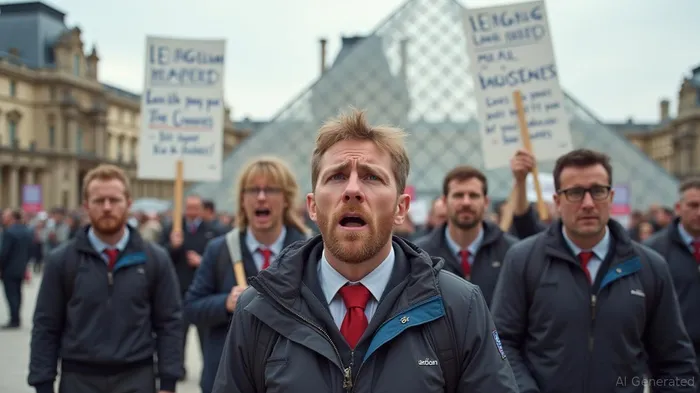
The Louvre, the world’s most-visited museum, found itself in an unprecedented situation as it shut its doors on Monday. The closure was not due to external threats such as war or terror, but rather an internal protest by its own staff. The workers, including gallery attendants, ticket agents, and security personnel, spontaneously went on strike during a routine internal meeting. Their grievances centered around unmanageable crowds, chronic understaffing, and what one union described as “untenable” working conditions.
The strike highlighted the broader issue of global overtourism, where popular destinations struggle to manage the influx of visitors. The Louvre, a symbol of art and civilization, has become a victim of its own popularity, with crowds overwhelming its infrastructure and staff. This is not the first time the museum has faced such issues; previous strikes in 2019 and 2013 were also sparked by concerns over overcrowding and safety.
The disruption comes at a critical time, just months after President Emmanuel Macron unveiled a decade-long plan to address the Louvre’s problems. The “Louvre New Renaissance” plan aims to tackle issues such as water leaks, temperature fluctuations, outdated infrastructure, and excessive foot traffic. However, for the workers on the ground, the promised improvements feel distant and insufficient to address their immediate concerns.
At the heart of the issue is the Mona Lisa, the museum’s most famous attraction. The 16th-century portrait draws massive crowds daily, with visitors often more focused on taking selfies than appreciating the art. The current setup, where roughly 20,000 people a day squeeze into the Salle des États, has led to a chaotic and uncomfortable experience for many. Macron’s plan includes giving the Mona Lisa her own dedicated room with timed-entry tickets, which could alleviate some of the pressure.
The Louvre welcomed 8.7 million visitors last year, more than double what its infrastructure was designed to handle. Despite a daily cap of 30,000 visitors, staff report that the experience has become a daily test of endurance. Issues include insufficient rest areas, limited bathrooms, and summer heat exacerbated by the pyramid’s greenhouse effect. A leaked memo from Louvre President Laurence des Cars highlighted these problems, describing the visitor experience as “a physical ordeal.”
The full renovation plan, estimated to cost between €700–800 million, is expected to be funded through ticket revenue, private donations, state funds, and licensing fees from the Louvre’s Abu Dhabi branch. Ticket prices for non-EU tourists are set to rise later this year. However, workers argue that their immediate needs are more pressing than any long-term plan. Unlike other major sites in Paris, such as Notre-Dame cathedral or the Centre Pompidou museum, which are undergoing government-backed restorations, the Louvre remains in a state of limbo, neither fully funded nor fully functional.
President Macron has promised a safer, more modern museum by the end of the decade. Until then, the Louvre and its visitors remain caught in a challenging situation, with the museum’s staff bearing the brunt of the strain. The strike serves as a stark reminder of the need for immediate action to address the museum’s pressing issues, ensuring that it can continue to serve as a global symbol of art and culture without compromising the well-being of its staff and the quality of the visitor experience.

Comprender rápidamente la historia y el origen de diversas monedas bien conocidas
Latest Articles
Stay ahead of the market.
Get curated U.S. market news, insights and key dates delivered to your inbox.






Comments
No comments yet