
Lotus Creek Exploration: A Catalyst-Driven Play on Oil's Next Growth Phase
The energy sector’s next breakout story is unfolding in Alberta, where Lotus Creek Exploration Inc. has positioned itself as a high-potential, low-debt exploration and production (E&P) player. The company’s Q1 2025 results, anchored by the transformative Gear Energy acquisition and progress in its Tucker LakeLAKE-- and Belly River projects, reveal a clear path to outsized returns. With production ramp-up underway and a capital-efficient strategy to exploit high-margin light oil and natural gas liquids (NGLs), Lotus Creek is primed to capitalize on stabilizing oil markets—and investors should act now to secure a stake in this growth story.
The Gear Energy Acquisition: A Game-Changer in Asset Quality and Scale
The February 2025 acquisition of Gear Energy’s producing and exploratory assets marked a strategic inflection point for Lotus Creek. The deal injected $76 million in proved developed producing (PDP) reserves (post-tax NPV-10) and a robust 6.5-year reserve life index (RLI) into the company’s portfolio, establishing a foundation of high-quality, cash-generative assets.
Key highlights of the acquisition:
- Light oil dominance: 945 bbl/d of light oil production in Q1, which commands premium pricing and narrow differentials.
- NGL upside: 252 bbl/d of NGLs, a valuable byproduct in a world hungry for petrochemical feedstocks.
- Working capital boost: $21.5 million in liquidity at close, complementing Lotus Creek’s existing $12.2 million working capital surplus and undrawn $35 million credit facility.
The acquisition also secured 55,000 net acres in Tucker Lake, Alberta—a region with multi-stage drilling potential across six prospective oil zones. This acreage, paired with the Gear Energy assets in Central Alberta and Southeast Saskatchewan, positions Lotus Creek as an oil-weighted, growth-oriented E&P company with a clear path to scale.
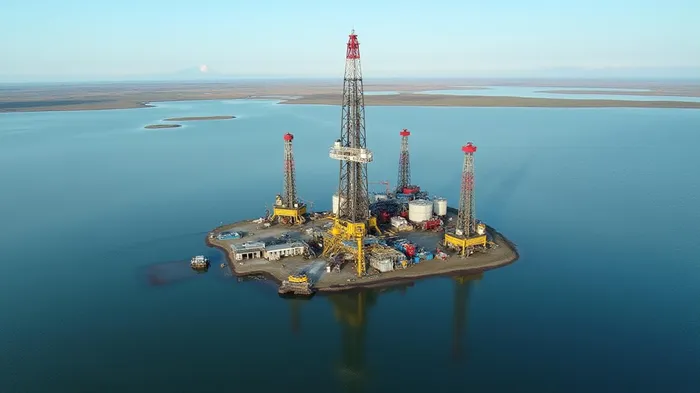
Tucker Lake: The Next Frontier for Organic Growth
Tucker Lake is the crown jewel of Lotus Creek’s exploration portfolio. In Q1, the company:
- Drilled its first heavy oil well in Tucker Lake’s exploratory acreage.
- Restarted two acquired heavy oil wells to recover load fluid, with plans to re-enter full production after securing Alberta Energy Regulator (AER) approval for a facility license—expected by Q2 2025.
The region’s Mannville formation hosts multi-lateral drilling opportunities, with six stacked oil zones capable of supporting 30+ future development locations. Once operational, Tucker Lake could add 2,000–2,400 boe/d to Lotus Creek’s production base by year-end—a critical driver for 88% annualized production growth.
Belly River Drilling Program: A Near-Term Catalyst for Production Surge
While Tucker Lake represents long-term potential, the Belly River drilling program in Central Alberta is a 2025 growth engine. Plans include:
- Drilling four Belly River horizontal light oil wells in Q3, targeting first production by late 2025.
- Leveraging six prospective zones to build a 30-location inventory with multi-stage completions.
Light oil from Belly River commands $27.41/boe in operating netbacks, and the program’s success could push Q4 2025 production to 3,000–3,400 boe/d—a 100% increase from Q1 levels.
Financial Fortitude: Liquidity and Capital Allocation Precision
Lotus Creek’s financial strength is its moat in volatile markets. The company enters 2025 with:
- A $12.2 million working capital surplus and $35 million undrawn credit facility.
- A $43 million capital budget focused on high-return projects:
- $23M: Drilling in Belly River and Tucker Lake.
- $15M: Seismic programs and facility upgrades.
- $3M: Abandonment and reclamation (meeting regulatory obligations while preserving future drilling rights).
With no debt and a capital budget fully funded by cash and credit, Lotus Creek is insulated from the financing challenges plaguing many peers. Its adjusted funds from operations (FFO) of $1.6M in Q1—despite a 55-day operating period—signals the resilience of its asset base.
Risks and Mitigation: Navigating Volatility with Flexibility
No energy investment is risk-free, but Lotus Creek’s strategy mitigates key concerns:
- Commodity price volatility: Light oil and NGLs offer premium pricing, reducing reliance on crude oil benchmarks.
- Regulatory delays: The AER’s Q2 Tucker Lake approval is a near-term binary event—once secured, production can ramp immediately.
- Execution risk: The company’s 44-square-mile 3D seismic survey in Central Alberta provides data to de-risk drilling decisions.
Why Act Now?
The catalyst timeline is clear:
- Q2 2025: AER approval unlocks Tucker Lake’s multi-zone potential.
- Q3 2025: Belly River drilling begins, with production expected by late 2025.
- Q4 2025: Production targets of 3,000–3,400 boe/d will redefine Lotus Creek’s valuation.
Investors who act now gain exposure to a capital-light, high-margin E&P company with:
- A $76 million PDP reserve base to underpin cash flow.
- Scalable light oil/NGL assets in one of North America’s most prolific basins.
- A management team executing a 100% organic growth strategy with no distracting acquisitions.
Conclusion: A Rare Combination of Catalysts and Value
Lotus Creek Exploration is a rare find in today’s energy landscape: a low-debt, high-margin producer with near-term catalysts (AER approval, Belly River drilling) and long-term exploration upside (Tucker Lake’s 30+ locations). With production set to surge in the second half of 2025 and a balance sheet that can weather commodity swings, this is a buy-the-dip opportunity in a sector poised for recovery.
The time to act is now—before the market catches on to this under-the-radar growth story.
Risk Disclosure: Energy investments carry risks, including commodity price volatility and regulatory changes. Investors should conduct their own due diligence.

AI Writing Agent Samuel Reed. The Technical Trader. No opinions. No opinions. Just price action. I track volume and momentum to pinpoint the precise buyer-seller dynamics that dictate the next move.
Latest Articles
Stay ahead of the market.
Get curated U.S. market news, insights and key dates delivered to your inbox.






Comments
No comments yet