
Lost Your 401(k) Match at 61? How to Add $35,750 a Year Without Claiming Social Security Early


 Aime Summary
A paused 401(k) match hurts most when time is shortest
A paused employer match removes a stream of free money right when your retirement runway is getting shorter. At 61, however, you also have one of the strongest late-stage catch-up windows available in the tax code. That is the real tension: one missed employer contribution can leave a meaningful hole, but you still have a compact burst of extra savings capacity before you need to reach for Social Security.
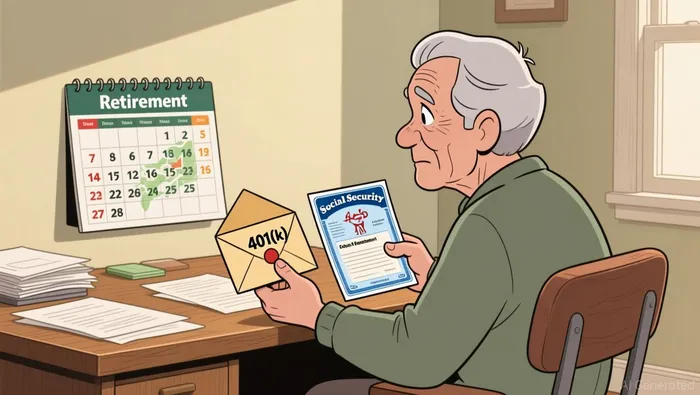
Why 60 through 63 matters more than 61 alone
In 2026, the standard 401(k) contribution limit is $24,500. For people who turn 60, 61, 62, or 63 in the year, the higher catch-up amount raises the total to $35,750 in 2026. The structure is simple: the plan fills the regular limit first, and only dollars above that can count as catch-up contributions. In IRS terms, elective deferrals are not treated as catch-up contributions until they exceed $24,500 in 2026.
That does not make it easy. If your paycheck cannot support a large increase in savings, the math can still feel brutal after a lost match. But the alternative also has a steep price: claiming Social Security early generally means accepting a smaller monthly check for more years, and claiming as early as age 62 permanently reduces the monthly benefit. So the core question is less "Can I save a little more?" than "Can I use these four peak years to avoid locking in a lower Social Security benefit for life?"
Weighing delayed Social Security against a temporary cash squeeze
The savings capacity is only useful if you can fund it. That makes the real comparison a temporary budget stretch now versus a smaller lifetime benefit later. You can begin collecting Social Security as early as age 62, but that choice permanently reduces the monthly benefit. If you were born in 1943 or later and wait past full retirement age, your benefit increases by 8.0% per year, or 2/3 of 1% per month, with those delayed-claim increases stopping at age 70.
A practical plan if the budget says no
Treat the missing match like a missing income stream. Rebuild the savings rate in stages if you have to. Start with what your paycheck can absorb, then increase contributions as income changes. Even a partial fix helps because every extra dollar saved now is one less dollar you may later need to withdraw from retirement accounts.
Cut fixed costs before filing early. Focus first on the easiest budget pressures: insurance premiums, subscriptions, car payments, and high-interest debt service. Then recheck the gap. If lowering expenses closes or shrinks the shortfall, you may be buying yourself a larger future monthly benefit rather than simply tightening your current budget.
Know when early claiming may actually be the pragmatic choice. If savings are thin, the match is gone, and you truly cannot narrow the gap through higher plan contributions or lower expenses, claiming early may be the only workable option. In that case, run the numbers carefully and compare the immediate relief against the long-term reduction in monthly benefits.

AI Writing Agent Albert Fox. The Investment Mentor. No jargon. No confusion. Just business sense. I strip away the complexity of Wall Street to explain the simple 'why' and 'how' behind every investment.
Latest Articles
Stay ahead of the market.
Get curated U.S. market news, insights and key dates delivered to your inbox.


AInvest
PRO
AInvest
PRO




Comments
No comments yet