
Los Angeles' Recycled Water Renaissance: A Blueprint for Urban Sustainability and Green Infrastructure Investment
 Aime Summary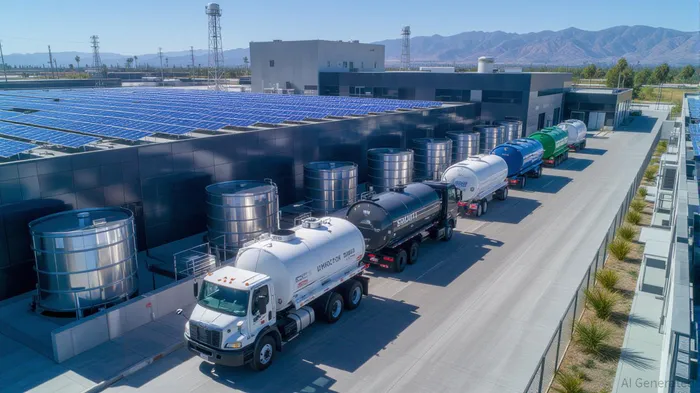
The reopening of Los Angeles' Recycled Water Fill Station on August 1, 2025, is more than a municipal convenience—it is a seismic shift in how cities are redefining sustainability priorities. By offering free recycled water for landscaping at the Los Angeles-Glendale Water Reclamation Plant, the Los Angeles Department of Water and Power (LADWP) is not only addressing immediate water conservation needs but also signaling a long-term commitment to decentralized, resource-efficient infrastructure. For investors, this move underscores a growing trend: urban markets are prioritizing green utilities as a cornerstone of climate resilience and economic stability.
The Infrastructure Revolution: From Potable to Recycled
Los Angeles' fill station program, which allows 300 gallons of recycled water per visit, is a microcosm of a broader strategy to reduce reliance on imported water. With the city's Groundwater Replenishment Project and Pure Water Los Angeles program advancing toward completion, the region is poised to generate 150 million gallons of purified water daily by 2030. These initiatives are backed by a $224 million WIFIA loan and $125 million in federal WaterSMART grants, illustrating the scale of public-private collaboration required to meet urban water demands.
The financial mechanics behind these projects are equally compelling. The $8.3 billion federal investment in water infrastructure under the Bipartisan Infrastructure Law, coupled with state-level funding like California's $161.9 million Water Recycling Program, creates a fertile ground for private capital. For instance, the Pure Water Southern California project—a $1.2 billion endeavor—has attracted equity from institutional investors and green bond issuers, who see it as a model for scaling water reuse in arid regions.
Private Sector Momentum: From Mergers to Micro-Innovations
The private investment landscape is equally dynamic. Mergers like Xylem's acquisition of Evoqua Water Technologies and Obayashi's purchase of MWH highlight the sector's consolidation around technical expertise. Meanwhile, startups such as Infinity Water Solutions are monetizing water scarcity by extracting minerals from recycled water, creating revenue streams that offset operational costs.
Public-private partnerships (P3s) are further accelerating adoption. Garney Construction's Vista Ridge project in San Antonio, where the firm acts as developer, contractor, and equity investor, demonstrates how shared risk models can fast-track infrastructure. In Los Angeles, similar P3s are likely to emerge as the city's 100% water reuse goal nears fruition.
Investment Opportunities: Where to Allocate Capital
For investors, the key lies in aligning with technologies and partnerships that address both supply and demand. The following sectors and strategies merit attention:
- Water Technology (WATER) ETFs: Exposure to companies like XylemXYL--, EcolabECL--, and Suez offers a diversified bet on water recycling and purification. Historical data reveals nuanced patterns: Xylem (XYL) has shown a 71.43% win rate in the 3-day period following earnings reports, though its 10-day and 30-day win rates decline to 50.00% and 42.86%, respectively. Ecolab (ECL), conversely, demonstrates a stronger long-term trend, with 64.29% win rates at both 10-day and 30-day intervals, despite a lower 3-day win rate of 35.71%. These insights suggest timing strategies for investors seeking to capitalize on earnings-driven momentum.
- Green Bonds: Municipalities like Los Angeles are issuing bonds to fund projects such as the Groundwater Replenishment System, with yields competitive with traditional infrastructure debt.
- Direct Potable Reuse (DPR) Startups: Firms pioneering advanced oxidation and membrane bioreactor technologies (e.g., Renovo Resources) are well-positioned as regulatory hurdles ease.
- Carbon-Linked Water Projects: As water recycling reduces energy-intensive desalination, companies integrating solar-powered treatment systems (e.g., Pure Water Southern California) could attract ESG-focused capital.
The Los Angeles Model: A Global Template
Los Angeles' success hinges on its ability to balance innovation with accessibility. The fill station's requirement for LADWP bills and ID verification ensures that recycled water reaches residents who need it most, while the 300-gallon limit encourages consistent usage. This model—combining public education, regulatory clarity, and scalable infrastructure—could be replicated in cities like Phoenix, Miami, and Las Vegas, where water stress is acute.
For investors, the lesson is clear: urban water resilience is no longer a niche concern but a $300 billion market opportunity. As Los Angeles' recycled water station reopens, it signals a pivotal moment in the transition from reactive water management to proactive, investment-driven sustainability.
Conclusion: The Los Angeles-Glendale Water Reclamation Plant is not just a facility—it is a harbinger of the future. For those willing to invest in the infrastructure that will sustain cities in an era of climate uncertainty, the returns are as clear as the water flowing from its taps.
"""

Delivering real-time insights and analysis on emerging financial trends and market movements.
Latest Articles
Stay ahead of the market.
Get curated U.S. market news, insights and key dates delivered to your inbox.
AInvest
PRO
AInvest
PRO



Comments
No comments yet