
The Looming Economic Downturn: Is the U.S. Headed for a 2008-Style Crisis?
 Aime Summary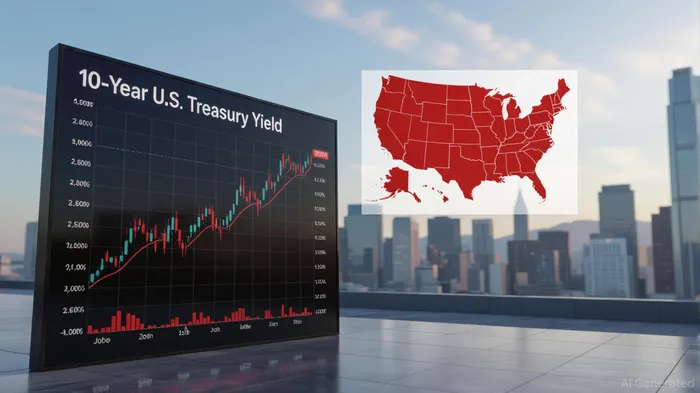
The specter of a 2008-style financial crisis has resurfaced in 2025, fueled by warnings from high-profile figures like Grant Cardone and growing concerns over systemic risks in a high-debt, low-growth economy. While the U.S. financial system has evolved significantly since 2008, the interplay of Federal Reserve policies, commercial real estate debt, and inflationary pressures has reignited debates about fragility. This article examines the validity of these concerns, draws parallels to 2008, and offers actionable strategies for investors to navigate the risks.
The Fed's Tightrope: High Rates and Systemic Risks
Grant Cardone, a real estate mogul and CEO of Cardone Capital, has been a vocal critic of Federal Reserve Chair Jerome Powell's monetary policy. He argues that sustained high interest rates—currently hovering around 4.25%-4.5%—are stifling housing demand, exacerbating commercial real estate distress, and threatening to trigger a collapse in property markets. Cardone's warnings are rooted in the 10-year Treasury yield, a critical benchmark for borrowing costs. As of 2025, this rate has surged to levels not seen since the 2000s, directly increasing the financial burden on property owners and developers.
Cardone's analysis draws a stark parallel to 2008, when the housing bubble burst due to subprime lending and speculative overbuilding. Today's crisis, he argues, is driven by a different mechanism: high leverage in commercial real estate and a shift toward remote work, which has reduced demand for office spaces. The looming $2.7 trillion in maturing commercial real estate debt over the next 30 months, he warns, could destabilize banks and trigger a cascade of defaults.
Lessons from 2008: A Different Market, Similar Risks
While Cardone's concerns are valid, the 2008 crisis and today's environment differ in critical ways. In 2008, the collapse was fueled by a housing bubble, speculative investment, and widespread subprime lending. By contrast, today's homeowners are in stronger financial positions, with record home equity and lower debt-to-income ratios. Additionally, housing inventory has increased compared to 2023, providing a buffer against a sudden price drop.
However, systemic risks remain. The commercial real estate sector, particularly office spaces and retail properties, faces a perfect storm of declining demand and high borrowing costs. The shift to remote work has left urban centers grappling with vacancies, while rising rates make refinancing existing debt increasingly unfeasible. This scenario mirrors the 2008 crisis in terms of leverage but is amplified by the scale of institutional ownership in today's market.
Asset Allocation Strategies: Mitigating Downside Risk
In a high-debt, low-growth environment, investors must prioritize resilience over growth. Here are four key strategies to consider:
Defensive Equities: Utilities and Consumer Staples
Defensive sectors like utilities and consumer staples offer stability during economic downturns. These sectors are less sensitive to interest rate fluctuations and provide consistent dividends. For example, utilities companies like NextEra EnergyNEE-- (NEE) and consumer staples giants like Procter & Gamble (PG) have historically outperformed in stagflationary environments.Gold: A Timeless Hedge Against Volatility
Gold remains a critical component of a diversified portfolio, particularly in times of policy uncertainty and inflation. As central banks grapple with balancing rate hikes and economic growth, gold's inverse correlation to equities provides a buffer. Investors should consider allocating 5%-10% of their portfolios to physical gold or ETFs like SPDR Gold Shares (GLD).Residential Real Estate: Strategic Leverage
While commercial real estate faces headwinds, residential markets remain resilient. Cardone's advocacy for leveraging 65% debt to finance real estate investments highlights the potential for high returns, but caution is advised. Investors should focus on affordable markets with strong fundamentals, such as Midwest cities like Detroit or Cleveland, where median home prices are under $300,000.Cash Reserves: Liquidity as a Lifeline
Maintaining a cash buffer is essential for capitalizing on recovery opportunities. Historically, cash has outperformed during the early stages of market corrections. Investors should aim to hold 10%-20% of their portfolios in short-term treasuries or high-yield savings accounts, particularly as interest rates remain elevated.
Conclusion: Preparing for the Inevitable
While the U.S. economy is not on the brink of a 2008-style collapse, the risks of a prolonged downturn cannot be ignored. Grant Cardone's warnings about the Fed's policies and commercial real estate debt highlight the fragility of certain sectors. By adopting a defensive asset allocation strategy—focusing on equities, gold, residential real estate, and cash—investors can mitigate downside risk and position themselves to capitalize on recovery opportunities. The key lies in balancing caution with strategic aggression, ensuring resilience in an era of uncertainty.

Delivering real-time insights and analysis on emerging financial trends and market movements.
Latest Articles
Stay ahead of the market.
Get curated U.S. market news, insights and key dates delivered to your inbox.


AInvest
PRO
AInvest
PRO



Comments
No comments yet