
The Looming "Everything Bubble" in US Markets: Are We Headed for a Correction?
 Aime Summary
The U.S. economy is teetering on a knife's edge. On one side, the national debt has ballooned to $36.22 trillion, with households now carrying an extra $10,348 in debt since 2024. On the other, GDP growth is projected to crawl at just 1.4% in 2025, shackled by high interest rates, inflation, and a labor market inching toward stall speed. This is the backdrop for a market that's defied gravityG--, with the S&P 500 hitting record highs while warning signs flash like red traffic lights.
Let's start with equities. The data is clear: speculative fervor is surging. Goldman Sachs' Speculative Trading Indicator is at its highest level since the dot-com bubble, with retail investors pouring $50 billion into the market just last month. Stocks like BigBear.ai and LucidLCID-- are being traded as if they're the next AmazonAMZN--, despite minimal revenue. Short squeezes in names like Krispy KremeDNUT-- and Kohl'sKSS-- are creating artificial rallies, driven by social media hype and a “buy the rumor, sell the news” mentality. This isn't healthy. It's a mirror of 2021, when meme stocks like GameStopGME-- briefly made headlines—and then collapsed.
The real estate market isn't immune. J.P. Morgan predicts a 3% rise in home prices this year, but that's a mirage. Mortgage rates hover near 6.7%, locking out first-time buyers and trapping homeowners in “out-of-the-money” mortgages. New home inventory is up, but construction is slowing as builders grapple with soaring borrowing costs. The CRE market, meanwhile, is a minefield of mispriced assets. Investors are chasing “value,” but without rigorous due diligence, they risk buying overleveraged properties that will crater when rates stay high.

Here's the elephant in the room: retail investors are the new market drivers. Regulatory easing and social media have turned trading into a popularity contest. JPMorganJPM-- estimates retail investors could inject $360 billion into the market by year-end—enough to fuel a short-term euphoria but not a sustainable bull run. The problem? This money is highly sensitive to macroeconomic shifts. If unemployment ticks up or tariffs spike, we could see a stampede for the exits.
So what's a long-term investor to do? First, abandon the “buy and hold” mantra. The days of passive investing are over. You need to hedge, to diversify, to think like a contrarian. Let's break down the defensive playbook:
Real Estate Development with a Twist: The U.S. is short two to three million homes, creating a structural opportunity in multifamily, senior housing, and workforce housing. These sectors are less sensitive to interest rates and offer stable cash flow. For example, companies like Equity ResidentialEQR-- (EQR) and VentasVTR-- (VTR) are positioning themselves in high-demand demographics.
Energy Infrastructure as a Bond: The AI-driven energy bottleneck is a goldmine. Power generation, battery storage, and data centers are set to see 5x–7x growth in demand over the next five years. Look at firms like NextEra EnergyNEE-- (NEE) and Plug PowerPLUG-- (PLUG), which are bridging the gap between renewables and AI-driven consumption.
Private Equity and Credit, Not Debt: With interest rates normalizing, private equity is rebounding. Focus on secondary transactions and distressed debt. Firms like Apollo GlobalAPO-- (APO) and BlackstoneBX-- (BX) are capitalizing on undervalued assets in sectors like real estate and industrials.
Growth Equity in AI and Automation: The AI boom isn't slowing. Enterprise spending on AI is projected to grow at 84% annually. Early-stage bets in AI-driven robotics (Boston Dynamics) and automation (Fanuc) could pay off handsomely, but only for those with a long-term horizon.
Private Credit as a Safe Haven: With corporate debt stress rising, private credit managers are stepping in. Yields here are 9.9%, dwarfing high-yield bonds. Look at companies like Oaktree Capital (OAK) and Ares ManagementARES-- (ARES) for exposure to this space.
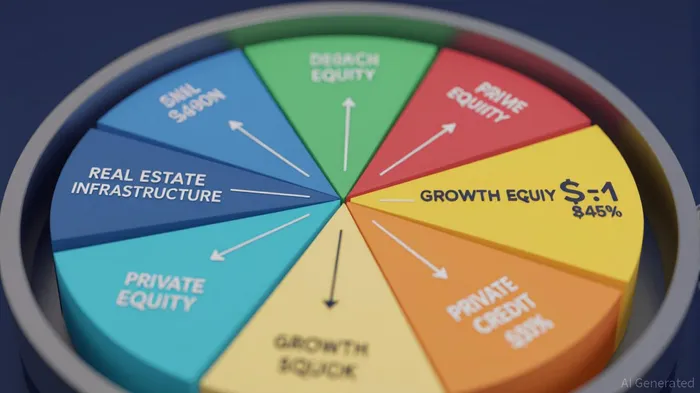
The key takeaway? This isn't the time to chase growth at all costs. The “everything bubble” is inflating, but it's not uniform. Defensive sectors like real estate and energy infrastructure, paired with alternative assets like private credit, offer a shield against volatility. Meanwhile, cash is no longer anathema—hold 10–15% to capitalize on dips.
History teaches us that bubbles burst when complacency peaks. The current mix of speculative trading, regulatory easing, and policy uncertainty is a recipe for a correction. But for those who prepare, the aftermath could be a buying opportunity. Stay nimble, stay diversified, and don't let the noise of the crowd drown out your strategy. The market isn't broken—just unbalanced. It's time to tip the scales in your favor.

Stay ahead of the market.
Get curated U.S. market news, insights and key dates delivered to your inbox.




Comments
No comments yet