
The Longevity Imperative: Aging Populations and the Rise of Financial Resilience Markets
 Aime Summary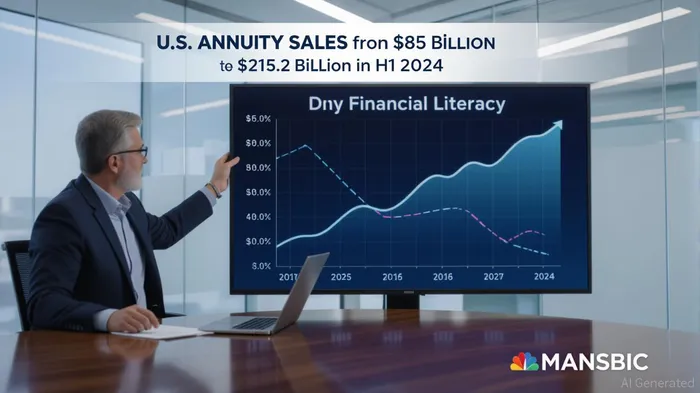
The intersection of declining financial literacy and rising life expectancy is reshaping the global financial landscape, creating urgent demand for innovative retirement solutions and longevity insurance. As populations age and lifespans extend, the risks of outliving savings, falling victim to fraud, and facing unmet healthcare costs are escalating. Yet, these challenges also present a golden opportunity for investors to capitalize on a market poised for transformation.
The Crisis of Financial Literacy in Aging Populations
Recent studies reveal a stark decline in financial literacy among older adults. By 2025, the U.S. financial literacy rate among seniors had plummeted to 49.2%, with an annual erosion of 1% after age 65. In the European Union, the situation is even graver, with only 18% of citizens demonstrating high financial literacy. This decline is not merely a personal failing but a systemic risk. Older adults are making suboptimal decisions on Social Security claiming, credit card debt, and long-term care insurance, leaving them vulnerable to exploitation.
The economic toll is staggering. Scam losses in 2023 reached $3.4 billion, with deepfake-driven impersonation scams accounting for $1.3 billion. Women, older age groups, and those with lower education levels are disproportionately affected. A 12-year study by Wharton and Rush University found that financial literacy scores among older adults drop by 1% annually, compounding risks for widows and those with limited resources. These trends underscore a growing fragility in the financial systems of aging populations, creating a vacuum that demand for structured solutions is set to fill.
The Longevity Revolution: A Double-Edged Sword
While declining financial literacy exacerbates vulnerability, rising life expectancy amplifies the stakes. Global life expectancy in 2023 stood at 73.33 years, projected to rise to 73.49 by 2025. In the U.S., life expectancy at 65 is now 19.5 additional years, meaning retirement savings must stretch for two decades or more. The implications are profound: a 65-year-old couple today can expect to spend $683,306 on healthcare alone, excluding long-term care costs that can exceed $100,000 annually.
The mismatch between extended lifespans and inadequate retirement planning is stark. A 2024 study found that 75% of Americans fear outliving their savings, while only 29% of those expecting to live past 90 plan to retire at 70 or later. This disconnect highlights a critical need for tools that align financial strategies with longevity. Employers and policymakers are increasingly recognizing this gap, with organizations like Gallagher Fiduciary Advisors advocating for phased retirement plans and guaranteed income solutions.
The Emergence of Longevity-Driven Financial Products
The demand for longevity insurance and retirement solutions is surging. U.S. annuity sales, for instance, grew by 23% in 2023 to $385 billion, with fixed annuities accounting for 36% of that increase. By mid-2024, sales had climbed another 19% to $215.2 billion. This growth is driven by a combination of high interest rates, which make annuities more attractive, and a growing awareness of longevity risk.
Innovations in the sector are equally compelling. The Geneva Association's 2025 report, Insurance and the Longevity Economy, highlights the rise of customer-centric solutions that integrate health, wealth, and longevity planning. Insurers are developing flexible savings mechanisms, hybrid life insurance policies with long-term care riders, and AI-driven platforms to personalize risk assessments. For example, single premium immediate annuities (SPIAs) and deferred income annuities (DIAs) are gaining traction as tools to mitigate outliving savings. Meanwhile, long-term care insurance is becoming a cornerstone of retirement planning, given that 70% of Americans will require such care in their lifetimes.
Investment Opportunities in the Longevity Economy
The convergence of these trends points to a $70 trillion global retirement savings gap and a $25 trillion mortality coverage gap in the U.S. alone. Investors can capitalize on this by targeting companies at the forefront of longevity-driven innovation.
- Annuity Providers: Firms like MetLifeMET-- (MET) and Prudential FinancialPRU-- (PGR) are expanding their annuity offerings to address longevity risk.
- Tech-Driven Financial Literacy Platforms: Startups leveraging AI to improve financial decision-making among seniors are gaining traction. For example, platforms that simulate retirement scenarios or detect fraud patterns are in high demand.
- Long-Term Care Insurance Innovators: Companies such as John Hancock (now part of MassMutual) are integrating health data into policy design, using wearable technology to incentivize preventive care.
- RegTech and Anti-Fraud Solutions: As scams evolve, firms specializing in transaction monitoring and AI-driven fraud detection are critical.
A Call to Action for Investors
The aging population and the longevity revolution are not distant threats but immediate realities. For investors, the key lies in aligning portfolios with the structural shifts in retirement and healthcare needs. This means prioritizing companies that offer guaranteed income streams, health-integrated insurance products, and technological solutions to bridge the financial literacy gap.
Policymakers and employers also play a role in fostering adoption. Phased retirement programs, employer-sponsored annuities, and mandatory financial education for seniors can accelerate demand. However, the private sector's agility in innovating and scaling solutions will be the driving force behind this market's growth.
In conclusion, the crisis of declining financial literacy and rising life expectancy is a catalyst for a new era of financial resilience. By investing in longevity-driven products, stakeholders can not only mitigate systemic risks but also unlock substantial returns in a market that is here to stay. The time to act is now—before the next generation of retirees faces the same vulnerabilities.

Delivering real-time insights and analysis on emerging financial trends and market movements.
Latest Articles
Stay ahead of the market.
Get curated U.S. market news, insights and key dates delivered to your inbox.




Comments
No comments yet