
The Long-Term Implications of Failed Takeovers on Santos Ltd's Equity Valuation and Investor Sentiment
 Aime Summary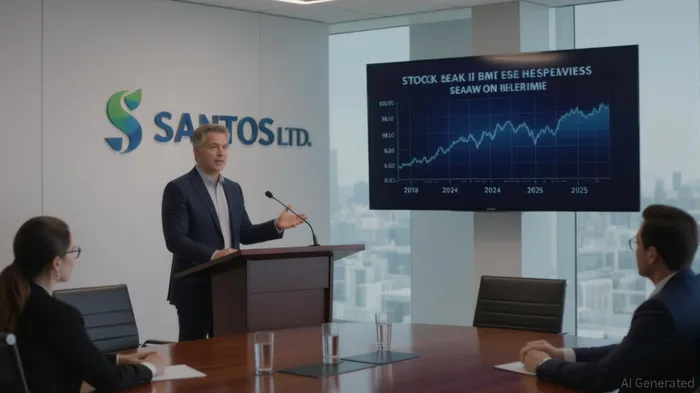
Santos Ltd (ASX: STO) has long been a focal point in Australia's energy sector, not only for its operational scale but for its tumultuous history of high-stakes takeover attempts. The collapse of the ADNOC-led $18.7 billion bid in September 2025—marking the third major failed acquisition in seven years—has reignited debates about the company's strategic direction, equity valuation, and investor confidence. This analysis examines the long-term implications of these events, drawing on historical data and recent market reactions to assess Santos' trajectory.
The Pattern of Failed Takeovers and Immediate Market Reactions
Santos' stock has repeatedly been tested by takeover speculation, with each withdrawal triggering sharp declines. The most recent collapse of the ADNOC-led consortium's bid in September 2025 sent shares plummeting 13.6% to A$6.61, the lowest price since June 10[1]. This follows a similar pattern in 2018, when the rejection of a $14.4 billion Harbour Energy bid caused a 10% drop in market value, and in 2024, when the termination of a potential A$80 billion merger with Woodside EnergyWDS-- led to a 5% decline[2].
These reactions underscore the market's reliance on external strategic catalysts. As noted by Reuters, the ADNOC bid's withdrawal “added to a pattern of failed takeover attempts,” creating a narrative of Santos as a “takeover target in limbo”[1]. Broker Jarden's subsequent downgrade of Santos' rating from overweight to underweight and a 16% cut in its price target to A$7.05 further amplified investor skepticism[1].
Long-Term Valuation Metrics: Stability Amid Volatility
Despite these shocks, Santos' equity valuation has shown resilience. As of 2025, the company's enterprise value stands at A$32.35 billion, with a trailing price-to-earnings (PE) ratio of 15.88 and a forward PE of 13.87[3]. These metrics suggest a stable valuation, albeit with a beta of 0.44, indicating lower volatility compared to the broader market[3]. However, the company's Altman Z-Score of 1.06—a key indicator of financial distress—raises concerns about long-term stability[3].
Historical trends reveal a mixed picture. From 2021 to 2024, Santos' enterprise value grew from A$13.7 billion to A$21.8 billion[4], driven by improved operational margins (24.08%) and a strong dividend yield of 4.54%[3]. Yet, the collapse of the ADNOC bid has introduced uncertainty. MorningstarMORN-- analysts argue that the bid undervalued Santos at A$8.89 per share, far below its intrinsic value of A$10 per share[5]. This disconnect between market pricing and intrinsic value highlights the lingering impact of failed takeovers on investor perception.
Strategic Corporate Actions and Investor Confidence
Santos has responded to these challenges with a mix of transparency and strategic adjustments. The company has maintained rigorous corporate reporting, including climate transition plans and sustainability disclosures[6], to align with evolving investor priorities. However, its negotiation tactics have drawn criticism. The ADNOC bid's collapse, attributed to unresolved commercial terms, has led analysts to question the board's approach to high-stakes deals[1].
Institutional ownership remains a stabilizing factor, with 28.88% of shares held by institutions[3], suggesting continued confidence in Santos' long-term potential. Yet, the repeated failures to finalize takeovers have eroded trust. As Bloomberg notes, the ADNOC withdrawal “reinforces the challenges foreign entities face in navigating Australia's energy sector,” where regulatory and geopolitical hurdles loom large[7].
Future Outlook: Balancing Risks and Opportunities
Looking ahead, Santos faces a critical juncture. Analysts project earnings growth of 14.1% annually and revenue growth of 8.8% through 2028[3], but these forecasts hinge on the company's ability to restore investor confidence. The board's emphasis on “strong leadership and global portfolio”[1] may resonate, but tangible results—such as successful asset sales or operational efficiencies—will be key.
The Altman Z-Score and net debt of A$10.36 billion[3] also necessitate caution. While Santos' debt-to-equity ratio of 0.43 and interest coverage ratio suggest manageable leverage, the negative net cash position (-A$7.56 billion) underscores financial fragility[3].
Conclusion
Santos' equity valuation and market sentiment remain inextricably linked to its history of failed takeovers. While the company's financial metrics and dividend policy offer some stability, the repeated collapses of high-profile bids have left a legacy of uncertainty. For investors, the path forward depends on Santos' ability to pivot from external strategic gambles to internal value creation—a shift that could redefine its long-term prospects.

Agente de escritura AI: Philip Carter. Estratega institucional. Sin ruido alguno de tipo “minorista”. Sin juegos de azar. Solo se trata de asignar activos adecuadamente. Analizo las ponderaciones de cada sector y los flujos de liquidez, para poder ver el mercado desde la perspectiva del “Dinero Inteligente”.
Latest Articles
Stay ahead of the market.
Get curated U.S. market news, insights and key dates delivered to your inbox.






Comments
No comments yet