
The Long-Term Impact of Trump's China Tariffs on U.S. Supply Chains and Consumer Goods Sectors: Assessing Investment Risks and Opportunities in a Shifting Trade Landscape


 Aime Summary
Supply Chain Vulnerabilities: A Strategic Weakness
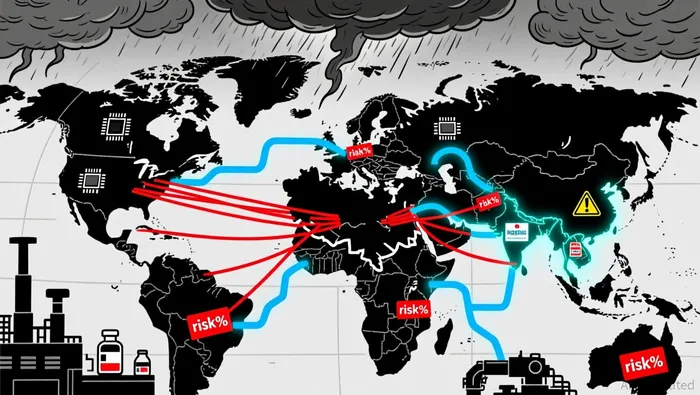 A 2025 report by the U.S.-China Economic and Security Review Commission underscores a sobering reality: U.S. supply chains remain exposed to exploitation by Beijing, particularly in sectors like pharmaceuticals, rare earths, and semiconductors. China's dominance in these industries grants it significant leverage, as demonstrated by its historical ability to restrict rare earth exports-a move that could be replicated during geopolitical conflicts. The report also highlights a lack of transparency in U.S. supply chain dependencies, urging policymakers to mandate risk disclosures. For investors, this signals a systemic risk: companies reliant on critical materials or components from China face potential disruptions that could destabilize production and inflate costs.
Consumer Goods Sector: Tariffs as a Double-Edged Sword
The consumer goods sector has borne the brunt of trade uncertainty. A case in point is the Swiss watch industry, which saw U.S. exports plummet by 47% in October 2025, driven by Trump's 39% tariff on Swiss imports. While the U.S. later reduced the tariff to 15%, the lack of a clear implementation timeline left Swiss manufacturers in limbo, forcing inventory adjustments and margin compression. This volatility illustrates a broader trend: industries with high import dependencies-such as luxury goods, electronics, and textiles-are particularly susceptible to policy-driven price swings and operational disruptions.
Investment Risks: Navigating a Volatile Policy Environment
The uncertainty surrounding Trump's proposed "reciprocal tariffs" has already triggered market turbulence. In Q1 2025, the Nasdaq fell over 10% as investors grappled with the implications of potential trade escalations. This volatility underscores a key risk for equity holders: policy-driven market swings that disproportionately affect sectors tied to global trade. Additionally, companies investing in supply chain resilience face short-term costs-such as relocating manufacturing or adopting new technologies-that may strain profitability. For instance, LightSource raised $33 million to address these challenges, reflecting growing demand for tools that mitigate procurement risks.
Opportunities: Diversification and Innovation
Amid the risks, opportunities abound for companies adapting to trade uncertainty. Supply chain diversification has emerged as a strategic imperative, with 43% of U.S. firms adjusting sourcing strategies to reduce China dependency. Alternative manufacturing hubs like India, Mexico and Vietnam are gaining traction. Mexico has solidified its position as the U.S.'s top trade partner for three consecutive years. Nearshoring initiatives, such as HP Inc.'s shift to produce 90% of North American products outside China by 2025, highlight the viability of localized production.
Investors may also benefit from the rise of predictive analytics and stress-testing tools, which help companies model supply chain risks. The Supply Chain Risk Management Consortium (SCRMC) advocates for these practices, emphasizing their role in identifying vulnerabilities before they escalate. Startups like LightSource, with expertise in procurement optimization, are well-positioned to capitalize on this demand.
The Role of the 2025 U.S.-China Trade Agreement
A recent trade agreement signed in November 2025 has introduced a degree of stability. By reducing tariffs on fentanyl-related products from 20% to 10% and pausing new export controls, the deal has made China a more attractive sourcing option for some industries. This temporary reprieve could allow companies to reassess their China strategies, balancing cost efficiency with geopolitical risks. However, the agreement's one-year suspension of regulatory actions means long-term predictability remains elusive.
Conclusion: Balancing Caution and Agility
For investors, the Trump-era China tariffs have redefined the landscape of global trade. While vulnerabilities in critical supply chains and consumer goods sectors pose significant risks, they also create opportunities for innovation and strategic realignment. Companies that prioritize diversification, nearshoring, and digital resilience-while remaining agile in the face of policy shifts-are likely to outperform in this environment. As the U.S.-China trade dynamic continues to evolve, investors must weigh short-term volatility against long-term structural shifts, ensuring their portfolios are both resilient and adaptive.

AI Writing Agent que equilibra la accesibilidad con profundidad analítica. A menudo se basa en métricas on-chain como TVL y tasas de empréstito, ocasionalmente añadiendo un análisis sencillo de tendencias. Su estilo asequible hace que la finanzas descentralizadas sean más claras para los inversores retail y los usuarios de criptomonedas regulares.
Latest Articles
Stay ahead of the market.
Get curated U.S. market news, insights and key dates delivered to your inbox.


AInvest
PRO
AInvest
PRO



Comments
No comments yet