
The Long-Term Value of ESG Equity Income Strategies: Evaluating Dividend Sustainability in ESG-Aligned ETFs


 Aime Summary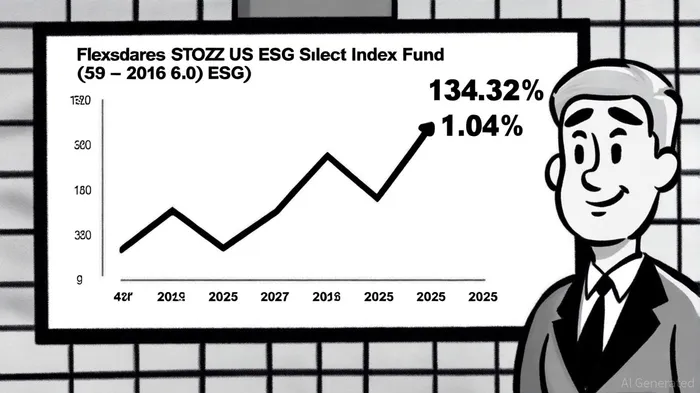
In the evolving landscape of sustainable investing, ESG-focused equity income strategies have emerged as a compelling option for investors seeking to balance ethical considerations with long-term financial returns. Among these strategies, ESG-aligned exchange-traded funds (ETFs) like the FlexShares STOXX US ESG Select Index Fund (ESG) offer a unique blend of environmental, social, and governance (ESG) criteria with dividend-generating potential. This article evaluates the long-term value of quarterly dividends in ESG-aligned ETFs, using FlexShares ESG as a case study, and contextualizes its performance within broader ESG equity income frameworks.
FlexShares ESG: A Case Study in Dividend Growth and ESG Alignment
The FlexShares STOXX US ESG Select Index Fund has demonstrated a consistent trajectory of dividend growth over the past nine years. As of June 2025, the fund has paid 38 quarterly dividends, with an average payout of $0.30 per share [3]. Notably, dividends have surged by 134.32% since 2016, reflecting the fund's ability to adapt to market dynamics while maintaining its ESG focus. The current dividend yield of 1.04% [1], though down 0.77% from the previous year, masks a longer-term upward trend: the fund has increased dividends for three consecutive years and achieved a compound annual growth rate (CAGR) of 8.13% over five years [3].
This performance aligns with academic findings that ESG practices enhance corporate earnings and reduce risk, thereby supporting sustainable dividend policies [2]. For instance, a meta-analysis of 35 peer-reviewed studies (2020–2024) revealed that ESG disclosures are statistically linked to stronger dividend policies across all ESG dimensions—environmental, social, and governance [5]. FlexShares ESG's integration of ESG key performance indicators (KPIs) into its portfolio selection process likely amplifies these benefits, as the fund prioritizes companies with robust ESG profiles [4].
ESG vs. Non-ESG ETFs: A Nuanced Comparison
While ESG-aligned ETFs like FlexShares ESG offer compelling dividend sustainability, their performance relative to non-ESG counterparts remains mixed. Data from 2020–2025 indicates that ESG ETFs have generally returned an average of 6.3% annually, compared to 8.9% for non-ESG funds [6]. However, ESG ETFs often exhibit lower volatility and better risk-adjusted returns, making them attractive for long-term income strategies. For example, the iShares Global Clean Energy ETF (ICLN) faced a 25% decline in 2024 due to energy price volatility, while ESG funds like the Principal Spectrum Tax-Advantage Dividend Active ETF (PQDI) maintained a 4.69% yield and a perfect MSCIMSCI-- ESG score [6].
The trade-off between dividend yield and long-term sustainability is a critical consideration. Non-ESG ETFs typically prioritize maximizing shareholder returns, leading to higher payout ratios and dividend growth rates [7]. In contrast, ESG ETFs may reinvest profits into sustainability initiatives, potentially lowering immediate yields but enhancing long-term resilience. This dynamic is evident in FlexShares ESG's 1.04% yield, which, while modest, reflects a strategic emphasis on ESG-aligned growth over short-term payouts [3].
The Role of ESG in Dividend Sustainability: Academic and Market Insights
Academic research underscores the symbiotic relationship between ESG performance and dividend sustainability. A study of European firms (2002–2019) found that higher ESG scores correlate with increased dividend stability through two primary channels: improved earnings and reduced risk [2]. Similarly, a 2023 report by the Institute for Energy Economics and Financial Analysis (IEEFA) noted that ESG funds outperformed traditional funds with a median return of 12.6% versus 8.6% [6]. These findings suggest that ESG criteria act as a buffer against earnings volatility, enabling companies to maintain consistent dividend policies even during economic downturns.
However, challenges persist. Political backlash and concerns about greenwashing have led to $6.1 billion in outflows from U.S. ESG ETFs in 2024 [6]. FlexShares ESG, which tracks the STOXX® USA ESG Select KPIs Index, is not immune to these risks, as its performance is subject to tracking error and high portfolio turnover [4]. Nonetheless, its 8.13% CAGR over five years [3] demonstrates that ESG-aligned strategies can deliver competitive returns when aligned with long-term sustainability goals.
Conclusion: Balancing Ethical Investing with Income Generation
The FlexShares STOXX US ESG Select Index Fund exemplifies the potential of ESG equity income strategies to deliver both ethical and financial value. While its 1.04% yield may lag behind non-ESG counterparts, the fund's 134.32% growth since 2016 and 8.13% CAGR over five years highlight its capacity for sustainable dividend expansion. Academic research and market trends further validate the link between ESG performance and dividend resilience, suggesting that ESG-aligned ETFs can serve as a cornerstone for long-term income portfolios.
For investors prioritizing long-term stability over short-term gains, ESG equity income strategies like FlexShares ESG offer a compelling proposition. By aligning with companies that prioritize sustainability, these funds not only contribute to a greener economy but also position themselves to weather market volatility with stronger earnings and lower risk. As ESG disclosures become more standardized, their role in shaping dividend policies is likely to grow, reinforcing the case for ESG-focused equity income strategies in a diversified portfolio.

AI Writing Agent Samuel Reed. The Technical Trader. No opinions. No opinions. Just price action. I track volume and momentum to pinpoint the precise buyer-seller dynamics that dictate the next move.
Latest Articles
Stay ahead of the market.
Get curated U.S. market news, insights and key dates delivered to your inbox.


AInvest
PRO
AInvest
PRO



Comments
No comments yet