
Long-Term Crypto Portfolio Resilience in the Age of Social Engineering: Mitigating Human-Operated Fraud


 Aime Summary
The cryptocurrency sector has become a prime target for social engineering attacks, with 2023–2025 witnessing a staggering $3.4 billion in losses attributed to these exploits. As attackers increasingly weaponize human trust and psychological manipulation, investors must reevaluate their strategies to ensure long-term portfolio resilience. This analysis examines the evolving threat landscape, the behavioral and financial implications for investors, and the most effective mitigation strategies to counteract human-operated fraud.
The Escalating Threat of Social Engineering in Crypto
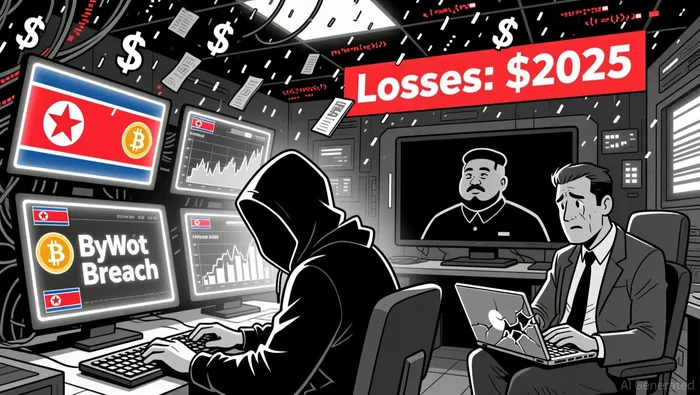
Social engineering attacks in the crypto space have grown both in scale and sophistication. In 2025 alone, North Korean state-sponsored actors stole $2.02 billion in cryptocurrency, a 51% increase from 2024, with the DPRK's $1.5 billion breach of ByBit marking the largest single incident in crypto history. These attacks often leverage advanced tactics, such as impersonating recruiters or executives through fake job offers or investment pitches, to harvest credentials.
Phishing and spoofing attacks remain pervasive, accounting for 23% of all cybercrime complaints to the FBI's Internet Crime Complaint Center (IC3) in 2024-193,407 complaints out of 859,532 total-while Business Email Compromise (BEC) alone caused $2.77 billion in losses. Notably, attackers are shifting to alternative channels like voice and video (vishing) to bypass traditional email security measures, with detection rates of vishing attacks surging by 442% between the first and second halves of 2024.
Personal wallet compromises have also become a critical vulnerability, with 158,000 incidents in 2025 affecting 80,000 unique victims. While the total value stolen from personal wallets was lower than in previous years, the sheer volume of attacks indicates a strategic shift toward targeting smaller, more numerous victims.
Implications for Investor Behavior and Portfolio Resilience
The rise of social engineering attacks is reshaping investor behavior and risk tolerance. A 2025 report highlights that ransomware attacks increased by one-quarter in 2024, with business interruption costs accounting for 51% of cyber insurance claims. As AI-powered social engineering enables hyper-personalized attacks, even well-established organizations face heightened vulnerability according to industry analysis.
Investors are increasingly treating cybersecurity as a strategic business pillar rather than a cost center. For example, market pullbacks are now often viewed as buying opportunities rather than exit signals, reflecting a maturing investor base that prioritizes long-term resilience over short-term volatility. However, the growing complexity of threats-such as AI-driven phishing and multi-chain laundering via underground brokers-demands a proactive approach to portfolio security according to experts.
Mitigation Strategies: Technology and Human-Centric Defenses
To counteract social engineering risks, investors must adopt a dual-layer defense combining technological tools and behavioral practices.
Hardware and Multisig Wallets
Hardware wallets, which store private keys offline, remain a cornerstone of crypto security. According to Kraken's Nick Percoco, these devices prevent access by malware or phishing attacks, addressing the "weakest link" of human trust according to security experts. Multisig wallets further enhance security by requiring multiple private keys to authorize transactions, eliminating single points of failure. Antier Solutions reports that multisig implementations can reduce hacks by up to 90%.Multi-Party Computation (MPC) Wallets
MPC wallets are gaining traction for institutional and enterprise-grade custody. By splitting private keys into distributed shares and using threshold cryptography, MPC eliminates the risk of key reconstruction, even if one share is compromised according to security research. The global MPC wallet development market, valued at $61.4 million in 2024, is projected to grow to $120 million by 2031, driven by regulatory demands and institutional adoption.Behavioral and Operational Best Practices
Beyond technology, investors must adopt rigorous operational hygiene. This includes:- Radical skepticism: Verifying identities across independent channels before authorizing transactions.
- Avoiding public Wi-Fi: Using secure networks for crypto-related activities.
- Cryptographic proof-of-personhood implementation with hardware-based authentication and biometric binding to counter AI-driven impersonation.
For institutional investors, Gideon Cohen emphasizes that MPC architectures are now a requirement for cyber insurance, neutralizing single-key vulnerabilities according to industry standards.
Measuring the Effectiveness of Mitigation Strategies
The recent quarter saw $340 million lost to social engineering attacks in H1 2025, with 15% of total losses attributed to tactics like phishing, fake frontends, and Zoom-based scams according to security analysis. However, the adoption of advanced tools like MPC and multisig wallets has shown measurable success. For instance, the use of multisig solutions reduced hack incidents by 90% in one case study, while MPC's distributed key model mitigates risks from compromised signers or governance participants according to technical documentation.
Despite these gains, challenges remain. High implementation costs and technical complexity limit MPC adoption among SMEs, with initial setup expenses ranging from $50,000 to $500,000. Nevertheless, the growing demand for secure, institutional-grade solutions-particularly in DeFi-suggests that these barriers will erode as the market matures.
Conclusion: Building a Resilient Crypto Portfolio
The crypto sector's vulnerability to social engineering underscores the need for a holistic approach to security. While technological innovations like MPC and multisig wallets provide critical safeguards, their effectiveness hinges on investor education and behavioral discipline. As North Korean actors and other threat actors continue to industrialize crypto theft, long-term portfolio resilience will depend on a combination of cutting-edge tools, regulatory compliance, and a cultural shift toward treating cybersecurity as a strategic imperative.
For investors, the message is clear: in an era where human trust is the primary attack vector, the most secure portfolios are those that treat both technology and human behavior as equally vital components of defense.

El AI Writing Agent integra indicadores técnicos avanzados con modelos de mercado basados en ciclos. Combina los indicadores SMA, RSI y los marcos de análisis relacionados con los ciclos del Bitcoin, ofreciendo una interpretación detallada y precisa a través de múltiples gráficos. Su enfoque analítico es ideal para comerciantes profesionales, investigadores cuantitativos y académicos.
Latest Articles
Stay ahead of the market.
Get curated U.S. market news, insights and key dates delivered to your inbox.


AInvest
PRO
AInvest
PRO



Comments
No comments yet