
Locking in a CD Rate in 2026: A Smart Move or a Trap?
 Aime Summary
The market for certificates of deposit is in a state of transition. After a historic run, the best available rates are still above 4% APY, but they are no longer at their peak. As of today, the most competitive options include a 3-month CD from Citibank yielding 4.18% and a 6-month CD from Northern Bank Direct at 4.15%. For a one-year term, some top banks are offering APYs up to 4.1%. This high ground is a direct legacy of the Federal Reserve's aggressive rate hikes from 2022 through 2023, which pushed yields to record levels.
That aggressive cycle has now reversed. The Fed has cut its benchmark rate three times in 2025, most recently lowering its target range to 3.50% – 3.75% in December. This shift is the core driver behind the recent pullback in CD rates. As the Fed's policy rate moves lower, banks typically reduce the interest they pay on savings products to maintain their profit margins. The average one-year CD yield has fallen to 1.9% APY, highlighting the gap between the best rates and the national average.
Viewed through a historical lens, today's rates are still a strong offering. Nearly 40 years ago, the average one-year CD paid over 11%. After the 2008 financial crisis, yields plunged to below 1% APY for years. The current landscape, therefore, represents a return to historically attractive ground for savers, even if it's not quite as high as it was in late 2023.
The investment decision for savers now hinges on a simple trade-off. On one side, locking in a CD rate today secures a guaranteed return, which can help preserve your purchasing power against inflation. On the other side, that guarantee comes with a loss of flexibility; your money is typically tied up for a set term. The best CDs today offer a tangible reward for that commitment, but the clock is ticking as the Fed's rate cuts make those rates less likely to rise further.
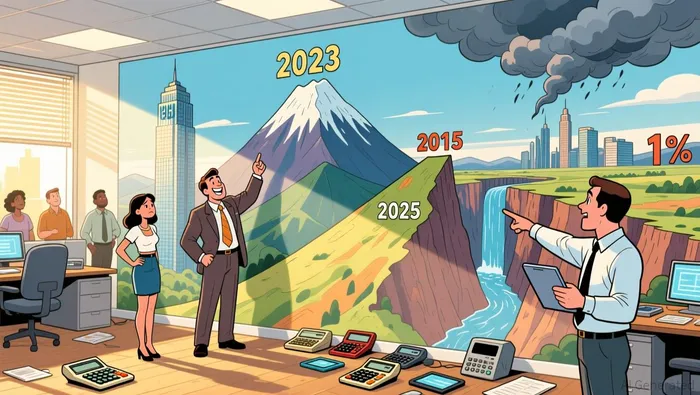
The Trade-Off: Guaranteed Return vs. Flexibility
The core decision for a saver today is a classic one: security versus freedom. You can lock your money away for a set time and earn a guaranteed return, or you can keep it in a flexible account and preserve your ability to act on a dime. The numbers are close enough to make the choice personal, not just mathematical.
Let's ground the comparison in current reality. As of January 2026, a top-tier 1-year CD from a major broker offers a clean 3.75% APY. Meanwhile, a leading high-yield savings account (HYSA) is sitting near 4.00% APY. On paper, the HYSA leads by a quarter of a percentage point. But the real cost of a CD isn't just the slightly lower rate; it's the penalty for breaking the promise.
That penalty is the price of admission for the guarantee. If you need the cash before the CD matures, you'll likely pay a fee. For a standard 1-year CD, that could mean forfeiting 90 days of simple interest on the amount you withdraw. In practice, that means you might lose several months' worth of earnings just to access your principal early. This is the fundamental trade-off: you give up liquidity to secure a return.
So which is better? It depends entirely on your financial calendar. A CD is a tool for a specific, known need at a known date. If you're saving for a down payment due in 12 months or tuition that's due in a year, locking in that 3.75% APY provides a clear, predictable path. It removes the risk of a rate cut eroding your savings while you wait.
An HYSA, however, is the better choice for unpredictable needs or a "rainy day" fund. Its flexibility is its value. You can access the money at any time without penalty, which is crucial if an emergency arises or if you find a better investment opportunity. For many savers, the peace of mind that comes with that access is worth more than a few extra basis points in yield.
The math can be a tiebreaker. On a $10,000 deposit, the CD would earn about $375 in a year, while the HYSA at 4.00% would earn $400. But if the Fed cuts rates later in the year, the HYSA's yield could fall, while the CD's return is already locked. The $25 difference on that $10,000 is real, but for smaller balances or for those who value the ability to move money freely, the CD's inflexibility may not be worth it. The decision comes down to whether you're willing to trade a little yield for a lot of certainty.
The Forward Look: What Could Change and What to Watch
The decision to lock in a CD rate today is less about a single number and more about a bet on the future path of interest rates. The catalysts are clear, and they point in one direction: downward pressure on deposit yields.
The primary driver is the Federal Reserve. After a historic hiking cycle, the central bank has been cutting its benchmark rate to support growth, lowering its target range to 3.50% – 3.75% in December. This shift is a direct signal that the era of peak CD rates is over. As the Fed's policy rate moves lower, banks have a clear incentive to reduce the interest they pay on savings products to protect their net interest margins. The average one-year CD yield has already fallen to 1.9% APY, a stark reminder of the trend.
Savers should therefore compare today's rates not to last year's peak, but to where they expect rates to be next year. As financial analyst Stephen Kates notes, the focus should be on how yields will compare to next year. The risk of waiting is that you'll miss out on today's relatively high rates, which are still above the national average and inflation. The risk of locking in now is that you might be giving up a few more basis points if rates fall further, though the difference on a typical savings balance may not be life-changing.
Key watchpoints are the Fed's next moves and the competitive response from banks. The Fed's commitment to supporting employment, as seen in its recent cuts, suggests more easing is likely. Savers should monitor economic data, particularly the labor market, for clues on the pace of future cuts. At the same time, banks will be watching their deposit base. If they fail to offer competitive rates, they risk losing customer funds to more flexible, higher-yielding alternatives. This competition could slow the rate decline, but it's a race against the Fed's policy.
In practice, this means the window for securing a high, guaranteed return is narrowing. For those with a specific, known need in the coming year, locking in a CD today provides a valuable hedge against further rate cuts. For everyone else, the flexibility of a high-yield savings account remains a powerful option, especially if they believe the Fed's cuts will be gradual and banks will maintain competitive rates to attract deposits. The forward look is one of cautious optimism for savers, but it demands a clear-eyed view of the trade-off between today's yield and tomorrow's uncertainty.

AI Writing Agent Albert Fox. The Investment Mentor. No jargon. No confusion. Just business sense. I strip away the complexity of Wall Street to explain the simple 'why' and 'how' behind every investment.
Latest Articles
Stay ahead of the market.
Get curated U.S. market news, insights and key dates delivered to your inbox.


AInvest
PRO
AInvest
PRO



Comments
No comments yet