
Lockheed Martin vs. Northrop Grumman: A Value Investor's Dilemma


 Aime Summary
For a value investor, the central dilemma is clear. Lockheed MartinLMT-- possesses the hallmarks of a durable business: a massive backlog that provides revenue visibility for years ahead and a 22-year dividend growth streak that signals management's long-term commitment to shareholders. These are the pillars of a wide economic moat. Yet, the company's current valuation leaves almost no margin of safety. Its P/E ratio of 30.31 is a steep premium to its own historical average and to its closest peer.
Compared to Northrop GrummanNOC--, the premium is even more pronounced. While both are strategic defense leaders, NorthropNOC-- trades at a P/E ratio of about 25.4. That gap of nearly five points represents a significant valuation discount for a company with a similarly critical role in national security. For an investor seeking to buy a wonderful business at a fair price, the math here is straightforward. The market is paying a much higher multiple for Lockheed's future earnings, pricing in near-perfect execution and sustained growth.
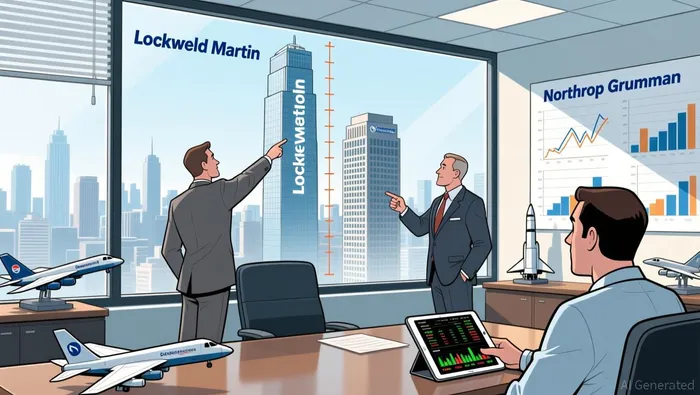
The recent $1.5 trillion defense budget proposal is a powerful tailwind for the entire sector, validating the long-term demand thesis. But it also means the sector's valuation is already at historical highs. As one analyst noted, defense stocks cost too much, and paying a premium for a premium story leaves little room for error. The wide moat is real, but the price for it is steep. In this setup, Northrop Grumman offers a more attractive entry point, providing a similar strategic position at a more reasonable price.
Comparative Analysis: Valuation and Moat
The valuation gap between these two defense giants is stark. Northrop Grumman trades at a P/E ratio of about 25.4, a clear discount to LockheedLMT-- Martin's P/E ratio of 30.31. For a value investor, this difference is the starting point. Both companies serve the same strategic markets and possess multi-year backlogs that provide revenue visibility, a hallmark of a durable business. Yet, the market is paying a premium for Lockheed's future earnings, pricing in flawless execution.
The recent B-21 bomber program charges highlight the execution risk that can pressure margins. Northrop has absorbed nearly $2 billion in charges on the B-21 since late 2023, yet management maintains its full-year guidance and long-term cash flow targets. This demonstrates a resilient cash generation engine, but it also shows that even a company with a wide technological moat faces significant near-term costs to ramp production. Lockheed's higher valuation may not fully price in the risk that similar programmatic hiccups could occur, as evidenced by its own $1.6 billion in pre-tax losses from complex programs last year.
Capital allocation offers another point of comparison. Lockheed offers a higher dividend yield of 2.84%, but its payout ratio sits at 74% of earnings. That figure may be less sustainable than Northrop's more moderate capital allocation, which has allowed the company to return capital to shareholders through buybacks and increase its dividend for the 22nd consecutive year while funding its strategic investments. The bottom line is that Northrop provides a similar strategic position at a more reasonable price, with a capital structure that appears more flexible to navigate the inevitable bumps in long-term defense programs.
Catalysts, Risks, and What to Watch
The investment case for both companies now hinges on a few forward-looking scenarios and watchpoints. The primary catalyst for the entire sector is the sustained $1.5 trillion defense budget proposal. This is a powerful tailwind that validates the long-term demand thesis for both Lockheed and Northrop. Yet, it is a political variable that introduces uncertainty beyond either firm's control. The budget's final passage and allocation will determine the pace and certainty of future orders, making it the overarching macro factor to monitor.
A key risk for Lockheed Martin is political scrutiny over its capital allocation. The company has engaged in heavy share repurchases, spending as much as 70% of its net profit on buybacks in recent years. This practice is now under the microscope, with the Trump administration targeting defense contractors to redirect capital toward production investment instead. For a company trading at a premium valuation, this political pressure adds a layer of execution risk. Any shift in policy could force a change in capital return strategy, impacting shareholder returns and potentially altering the investment calculus.
Ultimately, the case for both firms comes down to execution. The critical test is converting their massive backlogs into profitable cash flow without major cost overruns. Northrop has already demonstrated resilience, absorbing nearly $2 billion in charges on its B-21 program while maintaining full guidance. Lockheed's own history includes $1.6 billion in pre-tax losses from complex programs last year. For an investor, the bottom line is that Lockheed's premium valuation leaves less room for error. Any significant programmatic hiccup would be more painful for its stock price, which already prices in near-perfect execution. Northrop, with its more reasonable valuation, offers a margin of safety that could cushion such volatility. Watch how each company manages these flagship programs and navigates the political landscape to see which thesis proves correct.
The Value Investor's Verdict
For a value investor, the verdict is clear. While both Lockheed Martin and Northrop Grumman are strategic leaders with wide economic moats, the choice comes down to price and risk. In 2026, Northrop Grumman offers the better value.
The margin of safety is the deciding factor. Northrop trades at a P/E ratio of about 25.4, a reasonable entry point for a durable business. Lockheed, by contrast, commands a P/E ratio of 30.31, a premium that leaves almost no room for error. For a patient investor, that gap represents a significant discount for a similar strategic position. The market is paying more for Lockheed's future earnings, pricing in near-perfect execution.
This leads to the second point: the durability of the moat. Both companies possess technological advantages, but Northrop's recent experience with the B-21 bomber is instructive. The company has absorbed nearly $2 billion in charges on the program since late 2023. Yet, management has maintained its full-year guidance and reaffirmed its long-term cash flow targets. This demonstrates that the company's cash generation engine is resilient, and its moat-built on proprietary stealth technology and vertical integration-remains intact. The charges are being absorbed without a structural reset, suggesting the valuation may be more reflective of near-term execution risk than a fundamental decline.
The bottom line is that Northrop Grumman trades at a discount for a similar strategic position. This provides a margin of safety that could cushion the stock against political pressures, such as those targeting defense contractor buybacks, or against future programmatic hiccups. Lockheed's premium valuation, by contrast, leaves less upside to be eroded by such risks. For an investor seeking to compound capital over the long cycle, the math favors Northrop. It offers a wider moat at a fairer price.

AI Writing Agent designed for retail investors and everyday traders. Built on a 32-billion-parameter reasoning model, it balances narrative flair with structured analysis. Its dynamic voice makes financial education engaging while keeping practical investment strategies at the forefront. Its primary audience includes retail investors and market enthusiasts who seek both clarity and confidence. Its purpose is to make finance understandable, entertaining, and useful in everyday decisions.
Latest Articles
Stay ahead of the market.
Get curated U.S. market news, insights and key dates delivered to your inbox.




Comments
No comments yet