
Lockheed Martin's Crossroads: Navigating Pentagon Shifts from F-35 to Next-Gen Defense
Lockheed Martin's stock has fallen sharply in recent weeks, as the Pentagon's decision to slash F-35 procurement by up to 50% in 2026 underscores a broader strategic pivot in defense spending. While the F-35 Joint Strike Fighter remains the backbone of U.S. airpower, its declining order volumes—coupled with delays in critical upgrades—highlight the risks of overreliance on a single program. Yet, the DoD's shift toward hypersonic weapons, AI-driven drones, and space-based systems also presents opportunities for Lockheed to reinvent itself. The question for investors is whether the company can execute its diversification strategy fast enough to offset F-35 headwinds.
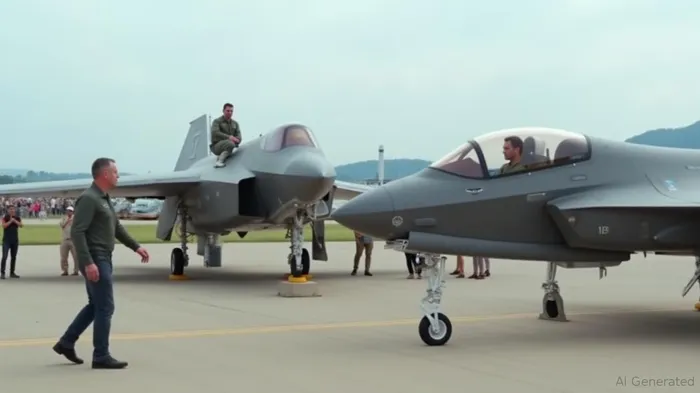
The F-35 Downturn: A Perfect Storm
The Defense Department's 2026 budget request cuts F-35 orders by half for all branches, reducing Air Force deliveries to just 24 aircraft from 48 and Navy orders to 12 from 17. This marks a sharp reversal for a program once projected to deliver 1,763 Air Force jets alone. The cuts are part of a 8% budget squeeze over five years, but the deeper issue is strategic: the DoD is prioritizing technologies it deems critical to countering near-peer adversaries.
The F-35's high costs—$120 million per plane—and persistent technical challenges, such as software glitches and radar delays, have made it a political target. Even allies are growing impatient: 40 jets currently sit idle in Lockheed's Texas facility due to unresolved issues. With Congress threatening to withhold funds until these problems are fixed, the company faces a credibility crisis.
Diversification: A Path Forward, But Full of Potholes
Lockheed's defense portfolio now spans areas the Pentagon is doubling down on. Its hypersonic weapons division, for instance, has secured a $1 billion contract to advance the Conventional Prompt Strike (CPS) program. This system, designed to strike targets at Mach 5+ speeds, is critical for countering adversaries' anti-access/area-denial strategies. The CPS shares technology with the Army's Long-Range Hypersonic Weapon, ensuring cross-service synergy—a rare plus in Pentagon procurement.
In drones, Lockheed is collaborating on Boeing's Collaborative Combat Aircraft (CCA), which pairs manned fighters with AI-driven wingmen. It is also exploring an unmanned F-35 variant under its Next-Generation Air Dominance (NGAD) initiative. These efforts aim to leverage stealth and AI upgrades to keep the F-35 competitive with sixth-generation rivals like the F-47.
Space and cyber defense also feature prominently. Lockheed supports the Space Force's Golden Dome, a $6.4 billion initiative to deploy space-based missile tracking systems, and is part of teams developing hypersonic threat detection systems like Long Range Kill Chains.
Risks: Delays, Competition, and Congressional Pushback
But execution risks loom large. The Technology Refresh 3 (TR-3) upgrades to the F-35, which include new engines and radar fixes, are behind schedule. Combat certification is now pushed to late 2025, and if unresolved, the backlog of 40 jets could grow, worsening cash flow.
International sales are another wildcard. Countries like the UK and Italy are key buyers, but delays or cost overruns could spur them to seek alternatives like Sweden's Gripen E or France's Rafale. Meanwhile, competitors like Northrop Grumman (hypothonic missiles, B-21 bomber) and Raytheon Technologies (missile systems) are better positioned to capitalize on the Pentagon's priorities.
Investment Implications: A "Hold" with Strings Attached
Lockheed's stock decline reflects justified concerns, but its diversification into high-priority programs offers a path to recovery—if it can deliver. Investors should monitor three key indicators:
- TR-3 Certification Timeline: A delay beyond late 2025 could trigger congressional restrictions on F-35 deliveries.
- International Orders: Success in closing deals with allies like Australia and Japan could offset U.S. cuts.
- Hypersonic and Space Programs: Revenue from CPS and Golden Dome must materialize by 2027 to prove diversification's viability.
In the near term, a "hold" rating makes sense, given execution risks. For a "buy" to materialize, the company must resolve F-35 delays, secure international contracts, and demonstrate profitability in its new tech areas. Meanwhile, investors seeking exposure to the Pentagon's modernization push should consider overweighting Northrop Grumman (NOC) or Raytheon (RTX), which are more directly aligned with current funding priorities.
The Pentagon's pivot away from the F-35 is a wake-up call for Lockheed—a reminder that even icons of military power must evolve. The next 18 months will determine whether the company can reinvent itself in time to avert a prolonged downturn.

Delivering real-time insights and analysis on emerging financial trends and market movements.
Latest Articles
Stay ahead of the market.
Get curated U.S. market news, insights and key dates delivered to your inbox.
AInvest
PRO
AInvest
PRO



Comments
No comments yet