
Local Heritage Events as Economic Catalysts: The Collierville Train Heritage Day Phenomenon
 Aime Summary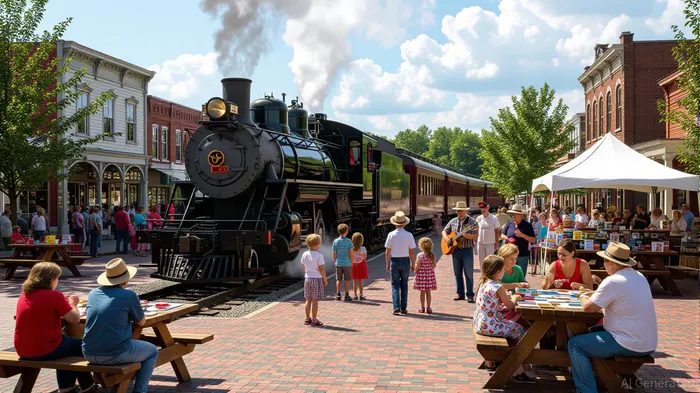
In the post-pandemic economic landscape, small-town tourism has emerged as a powerful engine for growth, blending nostalgia with innovation to attract visitors and investors alike. Collierville, Tennessee's annual Train HeritageCASK-- Day exemplifies this trend, transforming a local celebration of railroad history into a multifaceted economic driver. For investors seeking undervalued opportunities in regional markets, heritage events like this offer a blueprint for community-driven growth that bridges cultural preservation with financial returns.
The Collierville Model: Heritage as a Catalyst
Collierville's Train Heritage Day is more than a nostalgic nod to the past—it's a strategic investment in the future. By leveraging its historical ties to railroads, the town has created a free, family-friendly event that draws attendees from Memphis, Germantown, and beyond. The 2025 iteration, held on August 16, featured model train displays, live bluegrass music, and interactive exhibits at multiple locations, including the Morton Museum and the Germantown Train Depot. These activities not only educate but also incentivize spending: local businesses like Bazaar offered 15% discounts, while the setup of picnic tables on Rowlett Street encouraged visitors to linger and support nearby restaurants and retailers.
The event's success lies in its ability to generate foot traffic without relying on high ticket prices. A 2011 study by Ha and Grunwell on the Great Smoky Mountains Railroad found that heritage tourism attractions can generate $46 million in direct annual expenditures, with indirect benefits amplifying the impact. While Collierville lacks a formal economic impact report, its collaborative approach—partnering with the Train Collectors Association, TDOT, and local vendors—mirrors the structures of high-performing heritage events. The inclusion of rare access to historic railcars and the Frisco 1351 steam engine further elevates the event's appeal, positioning Collierville as a cultural destination.
Scalability and Sector Opportunities
The Collierville model is scalable, particularly in regions with underutilized historical assets. Heritage events can be replicated in other small towns by combining free public programming with incentives for local businesses. For investors, this creates opportunities in three key areas:
- Real Estate: Heritage events often drive demand for short-term rentals and mixed-use developments. Collierville's proximity to Memphis and its low cost of living make it a prime example. Investors could target properties in towns with similar historical narratives, betting on rising tourism-driven property values.
- Tourism Infrastructure: Events like Train Heritage Day require ancillary services—food trucks, artisan vendors, and event-specific amenities (e.g., picnic tables). Companies specializing in modular event infrastructure or local tourism tech platforms could benefit from this trend.
- Public-Private Partnerships: The event's success hinges on collaboration between the Town of Collierville, nonprofits like the Morton Museum, and private businesses. Investors might explore opportunities in municipal bonds or impact funds that finance community-driven projects.
Investment Implications and Risks
For investors, the key is to identify towns with strong historical narratives and existing infrastructure. Collierville's educated population (53.6% with bachelor's degrees or higher) and strategic location at major highway intersections suggest a resilient economic base. However, risks include over-saturation of the heritage tourism market and reliance on seasonal events. Diversification is critical—pairing heritage investments with long-term community development plans (e.g., Collierville's FY 2025 budget prioritizing cultural programming) can mitigate these risks.
Conclusion: The Future of Community-Driven Growth
Collierville's Train Heritage Day is a microcosm of a broader shift in post-pandemic markets: consumers and investors alike are prioritizing experiences that blend authenticity with economic value. By investing in heritage events, small towns can unlock dormant assets, attract tourism, and create sustainable growth. For investors, the lesson is clear: the next wave of economic catalysts lies not in flashy tech hubs but in the stories and traditions that bind communities together.
In an era where authenticity is currency, heritage events are not just cultural touchstones—they're blueprints for economic resilience. The Collierville phenomenon proves that even the smallest towns can become big opportunities for those who know where to look.

Delivering real-time insights and analysis on emerging financial trends and market movements.
Latest Articles
Stay ahead of the market.
Get curated U.S. market news, insights and key dates delivered to your inbox.


AInvest
PRO
AInvest
PRO



Comments
No comments yet