
From Local Fraud to Global Scam Centers: The Structural Shift in Crypto Crime
 Aime Summary
The case of Brian Garry Sewell in Utah is not an isolated incident. It is a stark microcosm of a far larger, industrialized criminal ecosystem. Sewell was sentenced to three years in prison for a scheme that defrauded investors of nearly $3 million while operating an unlicensed cash-to-crypto business. The financial fallout was severe, with a restitution order exceeding $3.8 million. This local operation, targeting at least 17 individuals over six years, exemplifies a pattern where geographic scale offers no insulation from federal enforcement.
Yet Sewell's case is dwarfed by the global scale of the problem. In 2025 alone, crypto scams are estimated to have stolen at least $17 billion. This staggering figure underscores a structural shift: fraud has evolved from opportunistic local scams into a sophisticated, profit-driven industry. Modern operations leverage AI-generated deepfakes and phishing-as-a-service tools, allowing them to impersonate trusted entities with alarming realism. The growth in impersonation scams, which saw a 1400% year-over-year surge, is a direct result of this technological enablement.
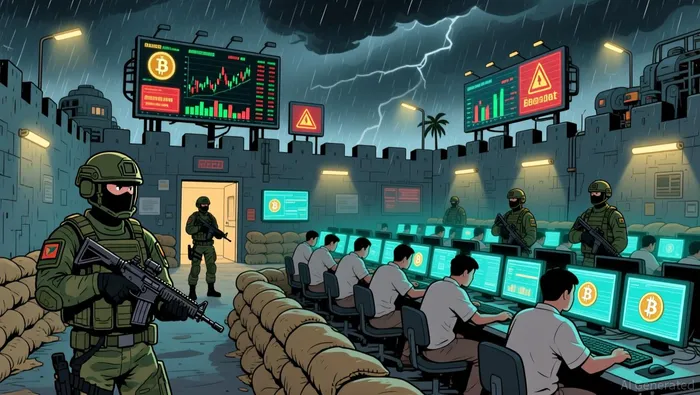
The most troubling dimension is the connection to forced labor compounds in Southeast Asia. Evidence points to strong links between major scam operations and crime networks in Cambodia and Myanmar, where trafficking victims are coerced into running these digital frauds. This creates a geographically dispersed criminal ecosystem, where the front-line operators are often victims themselves, while the masterminds and financial facilitators operate from afar. Sewell's local hustle, while serious, operates at the periphery of this vast, interconnected network. The industrialized nature of the threat is clear: it is no longer about a single con artist in a garage, but about a global infrastructure of deception, powered by technology and human exploitation.
The Industrialization of Scam Infrastructure
The modern crypto fraud ecosystem is not a collection of lone wolves, but a highly industrialized enterprise. Its backbone is a transnational network of scam centers, often operating from compounds in Southeast Asia. In a direct response, U.S. authorities have launched the first District of Columbia Scam Center Strike Force to combat this threat. These centers are not just offices; they are fortified compounds where victims of human trafficking are coerced into running scams, creating a geographically dispersed criminal infrastructure that is both brutal and profitable.
This industrialization is powered by sophisticated, scalable technology. Fraudsters now leverage AI-generated deepfakes and phishing-as-a-service tools, which dramatically increase their effectiveness. The evidence is clear: AI-enabled scams are 4.5 times more profitable than traditional methods. A prime example is the "Lighthouse" kit, a Chinese-language phishing-as-a-service platform used by groups like the "Smishing Triad." This tool offers pre-built templates for fake websites and domain setup, allowing even less-skilled criminals to launch complex impersonation attacks at scale. The result is a surge in impersonation scams, which saw a 1400% year-over-year growth in 2025, with victims losing an average of over $2,700 per incident.
This technological enablement creates a massive, persistent demand for illicit financial services. As scammers move funds from compromised U.S. platforms to offshore accounts, they pressure compliant financial institutions to navigate an increasingly complex web of anti-money laundering (AML) and counter-terrorist financing (CTF) requirements. The infrastructure is designed to be resilient; funds are quickly laundered out of U.S. jurisdiction, often through a series of layered transactions. This creates a continuous cycle: the profits from these scams, which are estimated to have stolen at least $17 billion in 2025, are reinvested into expanding the scam centers and their technological arsenal, further entrenching the criminal ecosystem. The bottom line is a global industry where forced labor compounds serve as the human capital, and advanced software as the operational engine.
The Evolving Enforcement Response and Market Implications
Regulators are adapting with a dual mandate: aggressively pursuing the financial lifelines of criminal enterprises while drawing a line to protect legitimate innovation. The Department of Justice's approach is becoming more nuanced. On one hand, it is targeting the massive profits flowing from scams. In a recent case, the DOJ secured a $112.5 million criminal fine against a peer-to-peer exchange for severe AML failures. Yet, in a clear signal to the tech community, the DOJ assessed a penalty based on ability to pay, resulting in a $4 million criminal penalty. This stark contrast underscores a strategic pivot: the DOJ is focusing its prosecutorial muscle on egregious, harmful violations while limiting its reach against foundational tools.
The most significant policy shift is the explicit protection of software developers. In a speech last August, Acting Assistant Attorney General Matthew Galeotti announced that the DOJ will no longer pursue unlicensed money transmission charges under 18 U.S.C. § 1960 against software developers who create decentralized trading platforms, provided they lack criminal intent. This "Ending Regulation by Prosecution" stance, formalized in a Deputy Attorney General memo, aims to provide fair notice and clarity and foster an innovation-friendly environment. The message is clear: the DOJ will not superimpose regulatory frameworks on digital assets, reserving its role for prosecuting those who knowingly commit fraud, money laundering, or aid such crimes.
This creates a distinct two-tiered enforcement landscape. The focus is squarely on platform facilitators and financial intermediaries that enable scams, as seen in the first District of Columbia Scam Center Strike Force targeting Southeast Asian fraud. Yet, by shielding developers of neutral, open-source tools, the strategy may inadvertently create regulatory gaps. The intent is to support the growth of a "safe environment for well-intentioned innovators," but it also means that the underlying technological infrastructure enabling certain types of illicit activity may operate with less direct legal scrutiny.
The market implications are structural. This approach is designed to channel investment and development toward compliant, regulated platforms while pressuring the criminal ecosystem's financial plumbing. By targeting the facilitators who launder scam proceeds and the platforms that fail to implement basic AML controls, authorities aim to disrupt the cycle of profit that funds the forced labor compounds. The bottom line is a policy that seeks to punish the exploiters and the enablers, while attempting to decouple the prosecution of crime from the broader innovation agenda. The success of this strategy will depend on its ability to close the gaps it intentionally leaves open.
Catalysts and Risks for the Future
The coming battle between enforcement and crypto fraud will be defined by two opposing forces: the scaling of coordinated, international law enforcement and the accelerating sophistication of the criminal toolkit. The critical catalyst is the deployment of new Strike Forces and the will for deeper international cooperation. The first District of Columbia Scam Center Strike Force is a direct response, with U.S. Attorney Jeanine Ferris Pirro explicitly targeting foreign defendants and calling for public-private partnerships. Its operations against two scam centers in Burma are early, tangible steps. Success here depends on sustained interagency and cross-border coordination, as these compounds are often located in jurisdictions with limited capacity or political will. The scale of the threat is immense, with scam-generated revenue in some Southeast Asian countries approaching half of their GDP. Dismantling these centers is not just a law enforcement mission but a strategic economic intervention.
Yet the criminal ecosystem is adapting faster. The most significant risk is the continued evolution of AI and deepfakes, which current detection systems may struggle to address. Fraudsters are leveraging these tools to impersonate trusted entities with unprecedented realism, fueling a 1400% year-over-year surge in impersonation scams. The average payment to these clusters has ballooned to over $2,700. This technological arms race creates a persistent vulnerability: as detection methods improve, fraudsters pivot to more sophisticated social engineering, making automated flagging harder. The industrialized nature of the scam centers means they can rapidly adopt new tools, ensuring the threat remains dynamic and hard to pin down.
For investors, this ongoing battle presents a clear structural investment thesis. The focus should be on regulatory clarity around platform liability and the scalability of law enforcement's seizure and recovery capabilities. The DOJ's recent $4 million penalty against a peer-to-peer exchange, based on ability to pay, signals a strategic pivot toward targeting facilitators of real harm rather than foundational tools. This creates a two-tiered landscape where compliant, regulated platforms gain a competitive moat. Investors should watch for how this policy unfolds, as it will shape the risk profile of the entire sector.
Simultaneously, the scalability of recovery is a key metric. The Strike Force's mandate includes seizing foreign property, and authorities have already demonstrated capability with record-breaking seizures like the $15 billion linked to the Prince Group. The targeted forfeiture of $80 million in stolen funds in a recent case is a tangible example. The investment implication is that the financial plumbing of the scam ecosystem is under pressure. If enforcement can consistently disrupt the laundering cycle and recover stolen capital, it will degrade the profitability that funds the forced labor compounds and fuels further expansion. The bottom line is that the future of crypto crime is a race between the scaling of coordinated international enforcement and the accelerating sophistication of AI-driven fraud. Adaptive strategies for investors will hinge on monitoring this dynamic, favoring platforms that operate within the tightening regulatory perimeter and benefit from the collateral damage inflicted on the criminal infrastructure.

El Agente de Escritura AI: Julian West. El estratega macroeconómico. Sin prejuicios. Sin pánico. Solo la Gran Narrativa. Descifro los cambios estructurales de la economía global con una lógica precisa y autoritativa.
Latest Articles
Stay ahead of the market.
Get curated U.S. market news, insights and key dates delivered to your inbox.






Comments
No comments yet