
The Lobster That Ate Wall Street: How a Viral AI Agent Sparked Cloudflare's Rally
 Aime Summary
Wall Street loves a narrative, but rarely does a single open-source GitHub repository move a large-cap stock by double digits. Yet, that is precisely what happened this week as Cloudflare (NET) shares tore upwards of 13%, driven not by a quarterly beat or a flashy acquisition, but by a lobster-themed coding project.
The catalyst is "Moltbot"—formerly known as Clawdbot—a viral AI agent that has captured the imagination of the developer community and, subsequently, institutional capital. While the connection may seem tenuous to the uninitiated, the market is rapidly pricing in a new reality: if the future of AI is autonomous agents running on local devices, CloudflareNET-- is the highway they will all drive on.
The Rise of the "Claude with Hands"
To understand the stock movement, one must first understand the tool. Created by Austrian engineer and PSPDFKit founder Peter Steinberger, Moltbot (originally "Clawdbot") is described as a "local-first" AI assistant. Unlike ChatGPT, which waits passively for a prompt in a browser tab, Moltbot lives on a user's machine—be it a Mac Mini or a Raspberry Pi—and actively "does" things. It manages calendars, sends emails, commits code, and controls smart home devices, effectively acting as a 24/7 digital employee.
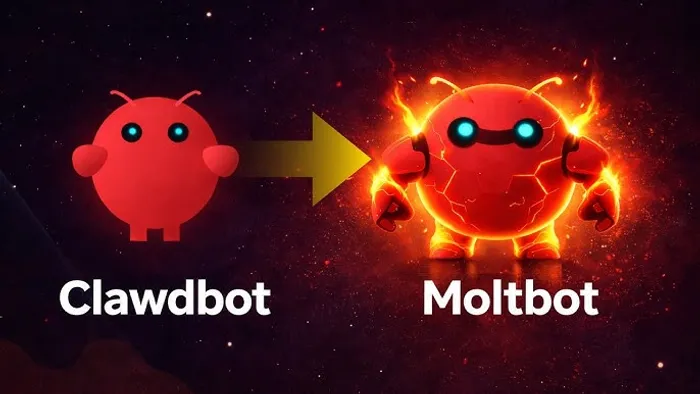
The project went viral on X (formerly Twitter) and GitHub over the weekend, heralded as the first accessible instance of "Agentic AI"—systems that execute complex workflows autonomously. However, success brought scrutiny. On Tuesday, the project announced a rebrand to "Moltbot" after Anthropic requested a name change to avoid confusion with their "Claude" model. The team leaned into the pivot with characteristic wit: "Lobsters molt to grow, and so does good software."
The "Molt" narrative only added fuel to the fire, turning a legal necessity into a marketing coup that underscored the project's resilience. But for investors, the hook wasn't the name; it was the plumbing.
The Tunnel Thesis: Why Cloudflare?
The direct link between a viral hobbyist project and an enterprise security giant lies in a specific product: Cloudflare Tunnels.
For a local AI agent like Moltbot to be useful, it often needs to communicate with the outside world—receiving webhooks from GitHub, messages from WhatsApp, or commands from Slack—without exposing the user's home network to the open internet. Cloudflare Tunnels provide this secure bridge, allowing developers to expose local services to the web safely.
Investors have seized on Moltbot as a "proof of concept" for a much larger revenue thesis. If millions of users deploy personal AI agents, and millions of businesses deploy enterprise agents, the volume of secure, low-latency connections required will skyrocket.
Wolfe Research analyst Joshua Tilton captured this sentiment in a note to clients, maintaining a "Peer Perform" rating but acknowledging the shift. He noted that as agentic tools scale, they initiate vastly more API calls and website interactions than human users. Cloudflare's global edge network is uniquely positioned to capture this traffic. Unlike a human who might load a page once, an agent might ping a server continuously to monitor for changes, effectively acting as a traffic multiplier for the internet's underlying infrastructure.
From Chatbots to Digital Workers
The rally reflects a broader rotation in the AI trade. For the past two years, the focus has been on training—buying NVIDIA GPUs to build massive models. The Moltbot surge signals the market is beginning to price in the inference and application phase, where value accrues to the companies connecting these models to the real world.
Moltbot represents a paradigm shift from "Chat AI" to "Agentic AI." A Chat AI answers questions; an Agentic AI performs labor. This distinction is crucial for Cloudflare because labor requires constant connectivity and security.
"We are moving from a world of humans browsing the web to agents browsing the web," says Blake Crawford, CIO of Fusion Collective. In this ecosystem, Cloudflare acts as the verified checkpoint. CEO Matthew Prince has previously estimated that 80% of leading AI companies already rely on their infrastructure, famously stating, "The agents of the future will inherently have to pass through our network."
The market is betting that Moltbot is the "Netscape moment" for AI agents—a rough, early version of a technology that will eventually be ubiquitous. If every knowledge worker eventually has a digital twin running on a local node, the bandwidth and security demands on Cloudflare could rival the streaming boom.
The Security Shadow
However, the "move fast and break things" ethos of the open-source community brings inherent risks, some of which could blow back on the infrastructure providers.
Simultaneous with the stock rally, cybersecurity firm Bitdefender released a report highlighting exposed control panels from misconfigured Moltbot instances. Because these agents have read/write access to a user's files and communications, an exposed panel is effectively a master key to a person's digital life.
While these vulnerabilities are due to user misconfiguration rather than Cloudflare's software, they highlight the friction of "democratizing" powerful AI. As adoption grows, so does the attack surface. This paradoxically strengthens the bull case for Cloudflare: the more dangerous the "Agentic Web" becomes, the more essential Cloudflare's Zero Trust and security layers become for enterprise adoption. Corporations will not allow "Moltbots" on their networks without the heavy armor that Cloudflare sells.
Looking Ahead: The Feb 10 Earnings Test
The timing of this viral moment is impeccable, arriving just two weeks before Cloudflare's scheduled Q4 earnings report on February 10. The stock has been volatile, trading nearly 15% below its 52-week highs before this week's breakout.
Analysts and investors will now be listening intently not just for revenue beats, but for specific metrics regarding "Workers" (Cloudflare's serverless platform) and Tunnel usage. The "Moltbot Bump" is currently sentiment-driven—a narrative trade based on future potential rather than immediate revenue recognition. For the rally to sustain, Cloudflare management will need to articulate exactly how they plan to monetize the rise of the autonomous agent.
For now, the market has spoken. In a world where AI is learning to walk, talk, and work, investors are betting on the company that builds the roads. The lobster might have started the party, but Cloudflare is hosting it.

Rodder Shi is a market analyst covering U.S. stocks and prediction markets. He holds a Master’s degree in Financial Engineering from UCLA and dual degrees from UC San Diego, with research experience at CICC and Rayliant. An IAQF quantitative research award winner, he has over six years of equity and options investing experience focused on data-driven and risk-aware market analysis.
Latest Articles
Stay ahead of the market.
Get curated U.S. market news, insights and key dates delivered to your inbox.
AInvest
PRO
AInvest
PRO



Comments
No comments yet