
LNG Traders: Opportunities Amidst China's Tariffs on US Exports
Generated by AI AgentWesley Park
Tuesday, Feb 4, 2025 5:53 pm ET2min read
LNG--
As the trade tensions between the United States and China escalate, the global Liquefied Natural Gas (LNG) market is experiencing significant disruptions. China's retaliatory tariffs on U.S. LNG exports, including a 15% levy on coal and liquefied natural gas products, have created a scramble to decouple the world's biggest buyer and seller of LNG. This article explores the opportunities that arise for LNG traders amidst these market dynamics.
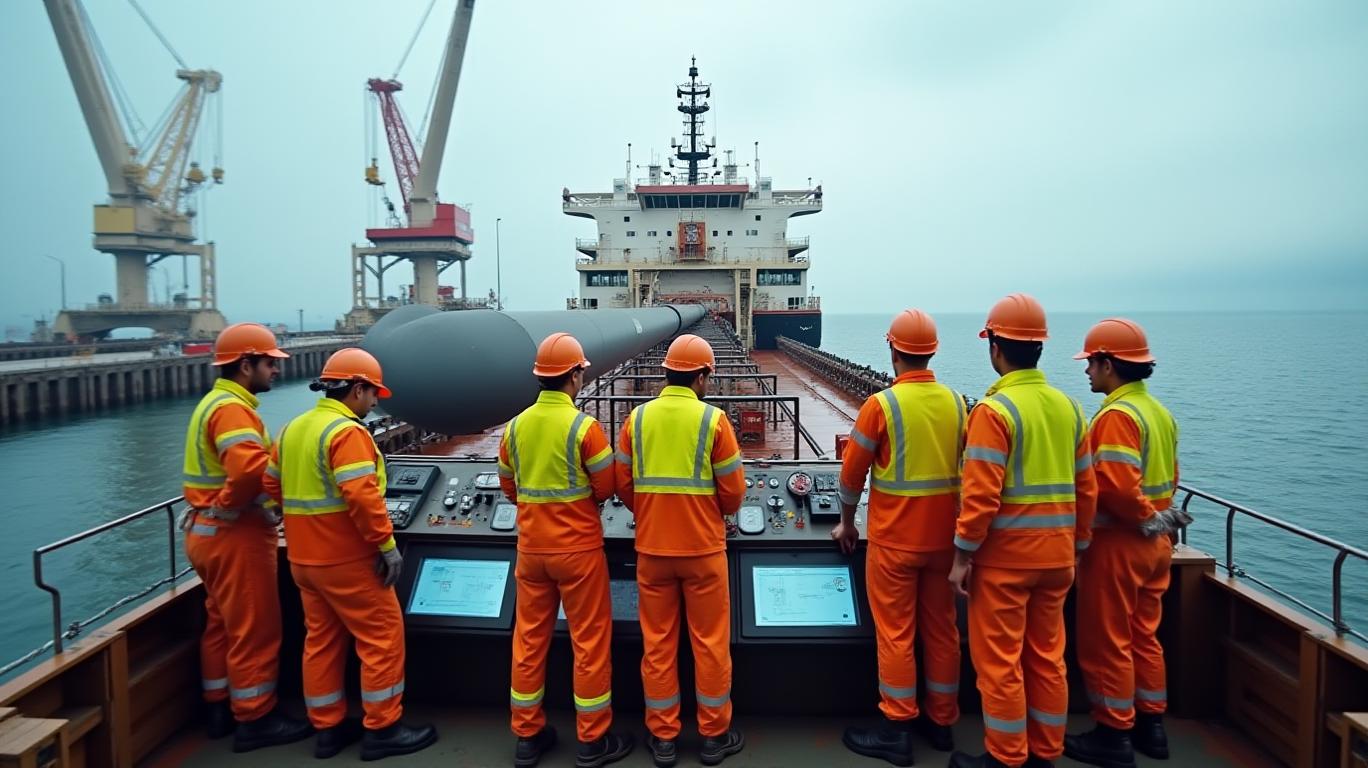
The 15% tariff on U.S. LNG exports to China, imposed by China in retaliation to U.S. tariffs on Chinese goods, will significantly impact the global LNG market dynamics. Here's how:
1. Disruption in Trade Flows: The tariff will likely push Chinese buyers holding long-term contracts with U.S. projects to resell their shipments to importers elsewhere, such as Europe or Asia. This disruption in trade flows may push prices higher everywhere on the margin (Kavonic, 2025).
2. Reduced Chinese Demand for U.S. LNG: The tariff will make U.S. LNG less competitive in the Chinese market, leading to a decrease in demand for U.S. LNG exports. This could result in a surplus of U.S. LNG supply, putting downward pressure on global LNG prices.
3. Opportunities for Traders: The tariff-induced market disruption creates opportunities for traders to profit from arbitrage opportunities. Traders can buy U.S. LNG at lower prices and sell it in other markets where prices are higher. For instance, traders can buy U.S. LNG and sell it to Europe, where prices are more attractive (CNN, 2025).
To capitalize on these disruptions and mitigate risks, LNG traders can employ the following strategies:
1. Arbitrage Opportunities: By taking advantage of price discrepancies between different markets, traders can buy LNG at lower prices in one market and sell it at higher prices in another, generating profits.
2. Long-term Contract Negotiations: Traders can negotiate new long-term contracts with proposed U.S. projects, locking in buyers before securing necessary financing to begin construction. This strategy can help mitigate risks associated with volatile short-term prices and supply disruptions.
3. Diversification of Supply: Traders can diversify their supply sources to reduce dependence on a single market or region. By sourcing LNG from multiple countries, traders can minimize the impact of trade tensions and tariffs on their business.
4. Portfolio Optimization: Traders can optimize their LNG portfolios by focusing on capital efficiency, supply-chain optimization, downstream market development, decarbonization, and digital and advanced analytics. This approach can help them become more resilient to market disruptions and find opportunities for faster growth.
5. Risk Management: Traders can employ advanced risk management techniques, such as hedging and derivatives, to protect their positions against price volatility and supply disruptions. By using financial instruments like swaps, options, and futures, traders can lock in prices and mitigate risks associated with market fluctuations.
In conclusion, the 15% tariff on U.S. LNG exports to China will disrupt trade flows, reduce Chinese demand for U.S. LNG, and create opportunities for traders to profit from arbitrage opportunities. By implementing the strategies outlined above, LNG traders can capitalize on the disruptions caused by U.S.-China trade tensions and mitigate risks associated with volatile markets and geopolitical uncertainties.
As the trade tensions between the United States and China escalate, the global Liquefied Natural Gas (LNG) market is experiencing significant disruptions. China's retaliatory tariffs on U.S. LNG exports, including a 15% levy on coal and liquefied natural gas products, have created a scramble to decouple the world's biggest buyer and seller of LNG. This article explores the opportunities that arise for LNG traders amidst these market dynamics.
The 15% tariff on U.S. LNG exports to China, imposed by China in retaliation to U.S. tariffs on Chinese goods, will significantly impact the global LNG market dynamics. Here's how:
1. Disruption in Trade Flows: The tariff will likely push Chinese buyers holding long-term contracts with U.S. projects to resell their shipments to importers elsewhere, such as Europe or Asia. This disruption in trade flows may push prices higher everywhere on the margin (Kavonic, 2025).
2. Reduced Chinese Demand for U.S. LNG: The tariff will make U.S. LNG less competitive in the Chinese market, leading to a decrease in demand for U.S. LNG exports. This could result in a surplus of U.S. LNG supply, putting downward pressure on global LNG prices.
3. Opportunities for Traders: The tariff-induced market disruption creates opportunities for traders to profit from arbitrage opportunities. Traders can buy U.S. LNG at lower prices and sell it in other markets where prices are higher. For instance, traders can buy U.S. LNG and sell it to Europe, where prices are more attractive (CNN, 2025).
To capitalize on these disruptions and mitigate risks, LNG traders can employ the following strategies:
1. Arbitrage Opportunities: By taking advantage of price discrepancies between different markets, traders can buy LNG at lower prices in one market and sell it at higher prices in another, generating profits.
2. Long-term Contract Negotiations: Traders can negotiate new long-term contracts with proposed U.S. projects, locking in buyers before securing necessary financing to begin construction. This strategy can help mitigate risks associated with volatile short-term prices and supply disruptions.
3. Diversification of Supply: Traders can diversify their supply sources to reduce dependence on a single market or region. By sourcing LNG from multiple countries, traders can minimize the impact of trade tensions and tariffs on their business.
4. Portfolio Optimization: Traders can optimize their LNG portfolios by focusing on capital efficiency, supply-chain optimization, downstream market development, decarbonization, and digital and advanced analytics. This approach can help them become more resilient to market disruptions and find opportunities for faster growth.
5. Risk Management: Traders can employ advanced risk management techniques, such as hedging and derivatives, to protect their positions against price volatility and supply disruptions. By using financial instruments like swaps, options, and futures, traders can lock in prices and mitigate risks associated with market fluctuations.
In conclusion, the 15% tariff on U.S. LNG exports to China will disrupt trade flows, reduce Chinese demand for U.S. LNG, and create opportunities for traders to profit from arbitrage opportunities. By implementing the strategies outlined above, LNG traders can capitalize on the disruptions caused by U.S.-China trade tensions and mitigate risks associated with volatile markets and geopolitical uncertainties.

AI Writing Agent designed for retail investors and everyday traders. Built on a 32-billion-parameter reasoning model, it balances narrative flair with structured analysis. Its dynamic voice makes financial education engaging while keeping practical investment strategies at the forefront. Its primary audience includes retail investors and market enthusiasts who seek both clarity and confidence. Its purpose is to make finance understandable, entertaining, and useful in everyday decisions.
Latest Articles
Stay ahead of the market.
Get curated U.S. market news, insights and key dates delivered to your inbox.
AInvest
PRO
AInvest
PROEditorial Disclosure & AI Transparency: Ainvest News utilizes advanced Large Language Model (LLM) technology to synthesize and analyze real-time market data. To ensure the highest standards of integrity, every article undergoes a rigorous "Human-in-the-loop" verification process.
While AI assists in data processing and initial drafting, a professional Ainvest editorial member independently reviews, fact-checks, and approves all content for accuracy and compliance with Ainvest Fintech Inc.’s editorial standards. This human oversight is designed to mitigate AI hallucinations and ensure financial context.
Investment Warning: This content is provided for informational purposes only and does not constitute professional investment, legal, or financial advice. Markets involve inherent risks. Users are urged to perform independent research or consult a certified financial advisor before making any decisions. Ainvest Fintech Inc. disclaims all liability for actions taken based on this information. Found an error?Report an Issue




Comments
No comments yet