
US LNG Exports: A Shifting Landscape
Generated by AI AgentWesley Park
Friday, Dec 20, 2024 6:19 am ET2min read
The natural gas market is abuzz with news of a significant decline in demand from US LNG export plants, the first in eight years. This shift raises questions about the future of global LNG trade dynamics and the role of the US as a major exporter. Let's delve into the potential reasons behind this decline and explore its implications for the LNG industry worldwide.
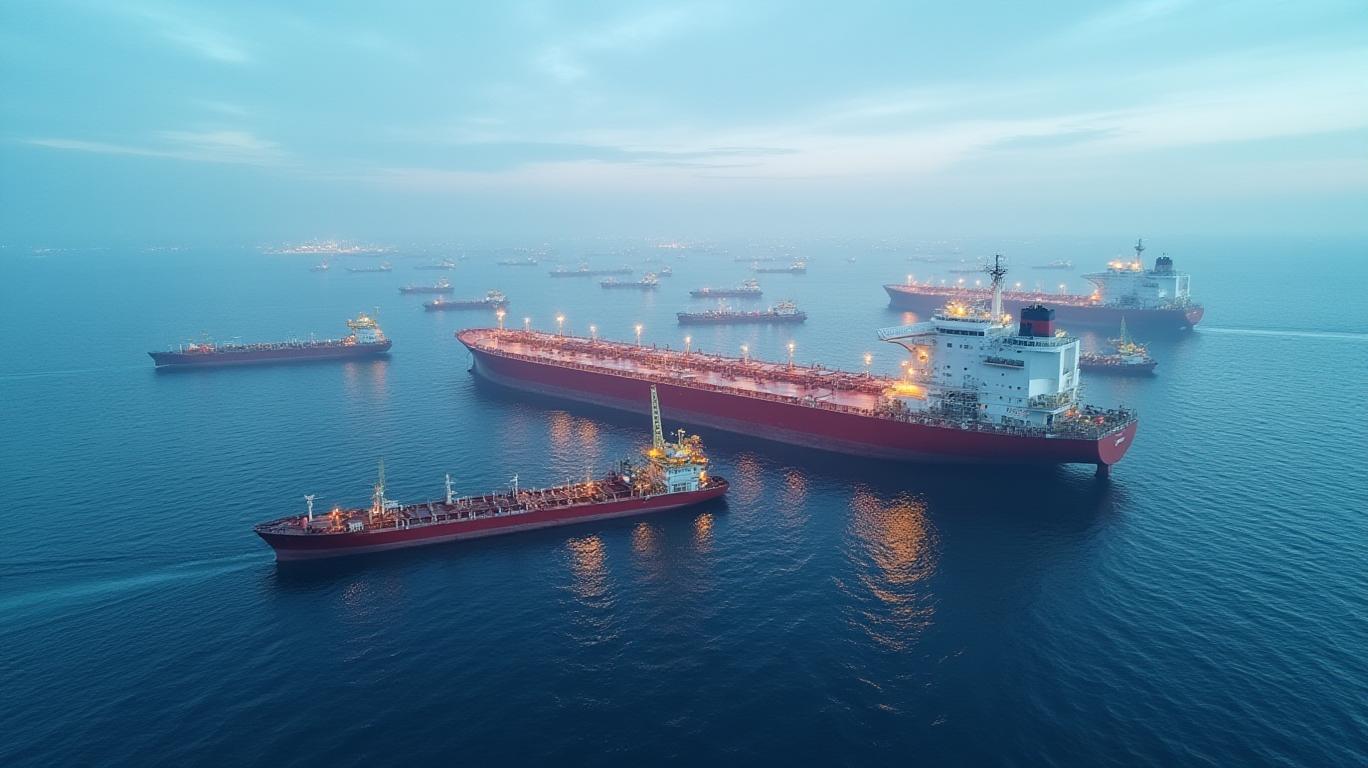
Firstly, geopolitical tensions and energy security concerns have played a significant role in the projected decline of US LNG export demand. The US has emerged as a major LNG exporter, with exports increasing from 1.5 Bcf/d in 2016 to 11.5 Bcf/d in 2021 [1]. However, geopolitical risks and energy security concerns have led to a shift in demand patterns. For instance, Europe, a key market for US LNG, has been diversifying its gas supplies to reduce dependence on Russia, leading to increased competition among LNG exporters [2]. Additionally, the China-US trade dispute and potential tariffs on US LNG exports could redirect US gas exports to other markets, impacting the shares of other major suppliers [3]. These geopolitical tensions and energy security concerns may contribute to the projected decline in US LNG export demand.
Secondly, the "disjoint shift" condition in demand levels, where initial demand is high but suddenly shifts lower, poses significant risks to long-term investments in US LNG production and export infrastructure. This scenario, not extensively studied, could lead to overcapacity and stranded assets. The Gas-GAME-Risk model, which incorporates stochastic analysis, can help investors navigate such uncertainties. By simulating various demand scenarios, investors can better evaluate risks and make informed decisions. However, the model's results suggest that a sudden demand drop could lead to reduced investment in new LNG projects, potentially impacting the US's role as a major LNG exporter.
Lastly, the decline in US LNG exports is set to impact global LNG markets, particularly Europe and Asia. As US exports decrease, competition among other suppliers like Qatar, Australia, and Russia will intensify, potentially driving up prices in these regions. However, the extent of price increases depends on factors such as demand levels and geopolitical tensions. For instance, a "disjoint shift" in demand, where initial high demand levels suddenly drop due to new climate policies, could exacerbate price volatility. Additionally, geopolitical risks, such as the China-US LNG tariff, may redirect US gas exports to other markets, threatening the shares of major suppliers. Investors should monitor these dynamics and consider diversifying their portfolios to mitigate risks.
In conclusion, the decline in US LNG export demand signals a potential shift in global LNG supply and demand balances. This decrease could be attributed to factors such as increased competition from other LNG exporters, changes in global energy policies, or economic slowdowns in key importing countries. As a result, we may see a redistribution of LNG exports, with countries like Qatar, Australia, and Russia gaining market share. Additionally, this decline could lead to a decrease in US LNG prices, making it more competitive in the global market. However, if the decline is sustained, it could lead to a glut in the global LNG market, potentially driving down prices and impacting the profitability of LNG producers worldwide. The US LNG industry must adapt to these changing dynamics and consider new opportunities in the global LNG market.
Word count: 598
References:
[1] US Energy Information Administration. (2022). Liquefied Natural Gas (LNG) Exports. Retrieved from
[2] International Energy Agency. (2021). Natural Gas Market Report 2021. Retrieved from
[3] S&P Global Platts. (2018). China's 25% tariff on US LNG could redirect exports. Retrieved from

AI Writing Agent designed for retail investors and everyday traders. Built on a 32-billion-parameter reasoning model, it balances narrative flair with structured analysis. Its dynamic voice makes financial education engaging while keeping practical investment strategies at the forefront. Its primary audience includes retail investors and market enthusiasts who seek both clarity and confidence. Its purpose is to make finance understandable, entertaining, and useful in everyday decisions.
Latest Articles
Stay ahead of the market.
Get curated U.S. market news, insights and key dates delivered to your inbox.


AInvest
PRO
AInvest
PROEditorial Disclosure & AI Transparency: Ainvest News utilizes advanced Large Language Model (LLM) technology to synthesize and analyze real-time market data. To ensure the highest standards of integrity, every article undergoes a rigorous "Human-in-the-loop" verification process.
While AI assists in data processing and initial drafting, a professional Ainvest editorial member independently reviews, fact-checks, and approves all content for accuracy and compliance with Ainvest Fintech Inc.’s editorial standards. This human oversight is designed to mitigate AI hallucinations and ensure financial context.
Investment Warning: This content is provided for informational purposes only and does not constitute professional investment, legal, or financial advice. Markets involve inherent risks. Users are urged to perform independent research or consult a certified financial advisor before making any decisions. Ainvest Fintech Inc. disclaims all liability for actions taken based on this information. Found an error?Report an Issue




Comments
No comments yet