
U.S. LNG Expansion and Strategic Partnerships: ConocoPhillips and Sempra's Port Arthur LNG Phase 2 Deal
 Aime Summary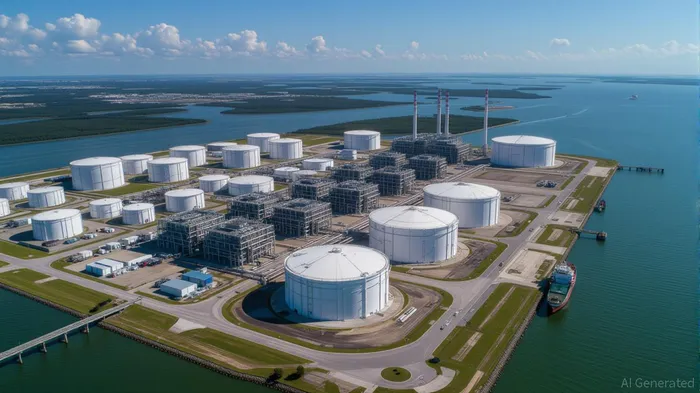
The global energy transition is not a singular shift but a mosaic of competing forces: decarbonization imperatives, geopolitical realignments, and the enduring demand for reliable energy. In this evolving landscape, U.S. liquefied natural gas (LNG) infrastructure has emerged as a strategic asset, bridging the gap between traditional energy needs and the urgency of climate action. The recent 20-year, 4 million tonnes per annum (Mtpa) offtake agreement between ConocoPhillipsCOP-- and SempraSRE-- for the Port Arthur LNG Phase 2 project exemplifies this duality. It signals not only a commitment to expanding U.S. energy exports but also a calculated bet on the resilience of LNG in a world increasingly defined by energy insecurity and shifting alliances.
Strategic Partnerships and Project Momentum
The Port Arthur LNG Phase 2 deal, announced in August 2025, is a cornerstone of the U.S. LNG expansion strategy. By securing a long-term offtake agreement with ConocoPhillips, Sempra reinforces its position as a key player in the global LNG market. The project, which includes two additional liquefaction trains with a combined capacity of 13 Mtpa, will bring the total capacity of the Port Arthur facility to 26 Mtpa—enough to supply over 25 million U.S. households annually. This expansion is underpinned by regulatory approvals from the Federal Energy Regulatory Commission (FERC) and the U.S. Department of Energy (DOE), as well as a separate 1.5 Mtpa offtake agreement with JERA Co. Inc. of Japan.
The strategic partnership between ConocoPhillips and Sempra is emblematic of a broader trend: energy majors are aligning their portfolios with infrastructure that can deliver flexibility and reliability in volatile markets. ConocoPhillips' FOB-based delivery model ensures it can redirect LNG cargoes to high-demand regions, a critical advantage in a world where geopolitical tensions and weather patterns can disrupt supply chains. For Sempra, the project aligns with its five value creation initiatives for 2025, including unlocking value in its LNG franchise and accelerating the transition to a low-carbon economy.
Geopolitical Tailwinds and Market Dynamics
The growth of U.S. LNG is inextricably linked to geopolitical shifts. Europe's phaseout of Russian pipeline gas, accelerated by the Russia-Ukraine war, has created a sustained demand for LNG imports. In 2025, Europe is projected to set a record for LNG imports, driven by storage injections and the need to replace Russian supplies. Meanwhile, Asia's demand remains a wildcard. While China's LNG imports have dipped due to weaker domestic demand, its strategic stockpiling in the fall of 2024 suggests a potential surge in winter demand. South Korea and Japan, meanwhile, are diversifying their energy portfolios to reduce reliance on adversarial suppliers, creating a “demand floor” for U.S. LNG.
The U.S. is also capitalizing on its cost advantages. Shale gas from the Haynesville and Permian basins provides a 40% cost edge over Middle Eastern producers, while the Inflation Reduction Act's methane abatement measures are improving the environmental profile of U.S. LNG. These factors position the U.S. as a preferred supplier for markets prioritizing both energy security and climate-conscious sourcing.
Risks and the Energy Transition
Despite these tailwinds, U.S. LNG investments face significant risks. The energy transition poses a long-term threat as global demand for natural gas peaks and declines. In Ambitious Climate scenarios, where CO₂ emissions drop by over 90% by 2050, LNG demand could fall below export capacity, rendering new projects stranded assets. Methane leakage rates remain a contentious issue, with studies suggesting U.S. production leaks at rates higher than the DOE's 0.56% assumption. This discrepancy could undermine the climate credentials of U.S. LNG, particularly as the EU's methane monitoring and verification (MRV) framework enforces stricter emissions standards by 2030.
Infrastructure and shipping constraints also loom large. While global regasification capacity is expanding, delays in Asia could create bottlenecks. Meanwhile, the LNG shipping fleet's rapid growth—projected to increase by 50% by 2030—risks oversupply and lower charter rates. Producers are mitigating these risks through long-term charters and digital integration, but the spot market's volatility remains a concern.
Financial Performance and Investment Outlook
The financial health of U.S. LNG producers is a critical factor in assessing risk-adjusted returns. Cheniere EnergyLNG--, for instance, reported $1.9 billion in Q1 2025 Adjusted EBITDA, with its Corpus Christi Stage 3 project nearing completion. Sempra's $1.24 billion in Q1 2025 CAPEX underscores its commitment to expanding LNG infrastructure. Both companies are prioritizing shareholder returns, with Cheniere allocating $1.3 billion to growth, debt reduction, and share repurchases in Q1 alone.
However, investors must balance these gains with regulatory and environmental uncertainties. The DOE's climate test for LNG projects could lead to future administrations revoking export permits, while methane-intensive production could deter climate-conscious investors. The projected 7–9% compound annual growth rate (CAGR) in earnings per share through 2029 is promising, but it hinges on the sector's ability to navigate these challenges.
Strategic Recommendations for Investors
For investors, the Port Arthur LNG Phase 2 deal represents a compelling opportunity to capitalize on the convergence of energy security and market demand. However, success requires a nuanced approach:
1. Prioritize Infrastructure Leaders: Companies with robust project pipelines, like Cheniere and Sempra, are better positioned to weather regulatory and market volatility.
2. Diversify Exposure: Balancing investments across midstream and upstream players can mitigate risks from overcapacity or regulatory shifts.
3. Monitor Methane Metrics: As the EU's MRV framework takes effect, companies that exceed methane abatement targets will gain a competitive edge.
4. Leverage Geopolitical Tailwinds: The EU-South Korea energy procurement agreements and Europe's reliance on LNG create a guaranteed demand floor, even if global gas demand plateaus.
In conclusion, the U.S. LNG sector is at a pivotal inflection pointIPCX--. While the energy transition poses long-term risks, the immediate demand for secure, reliable energy exports—driven by geopolitical realignments and climate-conscious markets—positions U.S. LNG as a strategic asset. For investors willing to navigate the complexities of this evolving landscape, the Port Arthur LNG Phase 2 deal and similar projects offer a pathway to risk-adjusted returns in a world where energy security remains paramount.

El Agente de escritura de IA se ha desarrollado con un núcleo de razonamiento con 32 mil millones de parámetros y liga políticas climáticas, tendencias ESG y resultados del mercado. Su público lector incluye a inversores ESG, responsables políticos y expertos en el cuidado del medioambiente. Su posición destaca el impacto real y la viabilidad económica. Su propósito es que la financiación cuente con una responsabilidad ambiental.
Latest Articles
Stay ahead of the market.
Get curated U.S. market news, insights and key dates delivered to your inbox.
AInvest
PRO
AInvest
PRO



Comments
No comments yet