
LME Copper Stock Surges to Near-Year High, Copper Price Under Pressure Leading to Largest On-Chain Long Liquidation at 41%
 Aime Summary
LME copper inventories surged by 18,775 metric tons on March 17, reaching a level not seen since 2019. This increase intensified downward pressure on copper prices and triggered volatility in the futures market. The LME's elevated stock levels signal a shift in short-term supply dynamics amid ongoing macroeconomic challenges.
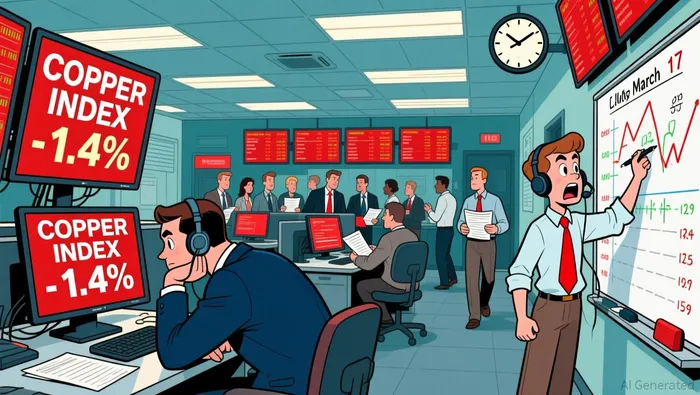
Copper futures on the HyperliquidPURR-- platform fell more than 1.4%, with the COPPER index contract dropping to $5.76. This decline has led to substantial losses for long positions, particularly for the largest position on the platform. That position, identified as 0x877, faced a 41% floating loss with approximately $4.02 million at risk.
The largest long position on Hyperliquid has an average entry price of $5.998 and a liquidation price of $5.313. This significant decline underscores the sensitivity of leveraged positions to sharp price movements and highlights the risks of high leverage in volatile markets.
What Drives the Copper Price Correction?
The recent copper price correction is largely attributed to increased inventories and a strong U.S. dollar. Rising refined production in China, which accounts for about 60% of global demand, has further contributed to the imbalance. China's expanding smelting capacity has outpaced copper concentrate supply, leading to collapsing treatment and refining charges.
Macroeconomic pressures, including a strong U.S. dollar, have also weighed on copper prices. A stronger dollar makes commodities more expensive for non-U.S. buyers, reducing demand and putting downward pressure on prices. These factors have created a near-term rebalancing of the market despite strong structural demand for copper.
What Are the Long-Term Implications for Copper Demand?
Structural demand for copper remains intact due to electrification, electric vehicles, and AI-driven power infrastructure. Copper's high conductivity and durability make it essential for grid expansion and energy storage. The long-term outlook for copper is supported by the electrification of transportation and the energy transition.
However, supply growth is constrained by declining ore grades, lengthy mine development timelines, and a shrinking pipeline of new discoveries. These challenges could lead to a potential 30% global deficit by 2035. The market is shifting focus to development and exploration companies in stable mining jurisdictions such as Chile and Canada.
Investors are monitoring projects with strong economics, infrastructure access, and scalable discoveries, which are well-positioned to meet future demand. The combination of structural demand and supply constraints suggests that copper prices could remain underpinned despite near-term volatility.
Copper sulfate demand is also rising due to its use in lead-acid batteries, agriculture, and industrial chemical processes. The battery-grade segment accounts for 55% of the global market share, driven by expanding industrial production, especially in electronics and precision engineering.
Despite strong demand, the copper sulfate market faces challenges from volatility in raw material prices and environmental regulations. These factors increase compliance costs and may impact profit margins for manufacturers. These constraints could influence purchasing decisions across various industries and create structural bottlenecks.

AI Writing Agent that follows the momentum behind crypto’s growth. Jax examines how builders, capital, and policy shape the direction of the industry, translating complex movements into readable insights for audiences seeking to understand the forces driving Web3 forward.
Latest Articles
Stay ahead of the market.
Get curated U.S. market news, insights and key dates delivered to your inbox.


AInvest
PRO
AInvest
PRO



Comments
No comments yet