
Where You Live Decides How Much of the Fortune Your Heirs Keep
 Aime Summary
Two families, two states, one nearly identical balance sheet: a paid-off house and a retirement portfolio a bit north of $2 million. In the first state, the whole thing moves to a daughter with the treasury taking nothing. In the second, a state estate tax begins at $1 million of value, and the excess is taxed on a bracket scale that climbs toward 16 percent before the daughter sees a dollar. The work was the same. The portfolio was the same. Only the geography differed.
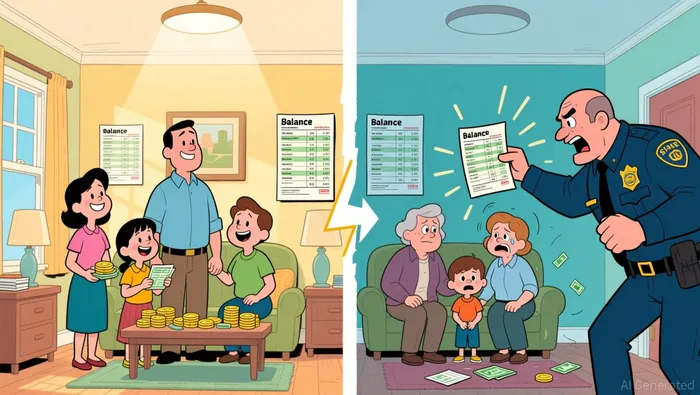
That geography is now the single most powerful line item on the transfer of the money you leave behind — and the federal government, the actor most people still fear, has mostly stepped out of the fight.
The Sunset That Never Came
Start with what most people were told to worry about and no longer need to. For 2026 the federal estate tax exemption is $15 million per person — roughly $30 million for a married couple who elect portability — up from $13.99 million in 2025. That is the opposite of the widely predicted "sunset": a law signed in July 2025 set the 2026 basic exclusion at $15 million instead of letting it collapse back toward the single-digit millions.
The practical consequence for an ordinary reader: the federal government has, for all realistic purposes, stopped taxing estates below eight figures. The tax that spent decades as the "rich person's problem" is now almost no one's problem at the federal line. The scare that drove so much year-end planning did not arrive.
Your Heirs, and the Second Claimant
But the federal government was never the only claimant on your final balance sheet. Twelve states plus Washington, D.C. run their own estate tax, and their exemptions sit far below the federal line. Oregon begins at $1 million, the lowest in the country. Massachusetts at $2 million. Minnesota and Washington around $3 million. Illinois at $4 million. None of these are the $15 million a reader might reasonably have been told to think in.
Here is the part that quietly compounds. The low thresholds are mostly not indexed for inflation. The portfolio grows with the market, the exemption stays fixed, and each year more of an ordinary retirement slides above the line without its owner doing anything new. In those states, estate tax is a moving target with a stationary target zone.
The Fine Print That Decides Who Pays
Then come the clauses that decide not just how much is taxed, but whether the tax is avoidable at all.
Most states do not let a spouse's unused exemption carry over the way the federal government does. The couple that enjoys roughly $30 million of shelter federally may find the state counts only one exemption — the trap set for a family that thinks it has double coverage and discovers it doesn't.
New York adds its own machinery. Its exemption is $7.35 million, but an estate that exceeds that line by more than 5 percent loses the entire exemption and is taxed on its full value. Cross by a little, and the bill jumps.
Five states charge something even older: an inheritance tax, levied on the heir rather than the estate. That is where relationship becomes the tax code. In Pennsylvania the same inheritance costs a child 4.5 percent, a sibling 12 percent, and anyone else 15 percent. Geography does not just pick who receives your money; it picks the rate at which the state charges the person you chose.
Even the movement of state law tells you how much this is a political, geography-sized number. Washington, one of the least forgiving states, cut its top estate rate from 35 percent to 20 percent for deaths on or after July 1, 2026 — a real lowering of the bill, and a reminder that a legislature can change the size of the cut the way it can raise it.
No Clean Exit: The Audit at Your Doorstep
Which forces the question the "just move to Florida" advice never answers: can you actually choose your geography? Only if you can prove it. Domicile — the state that asserts primary authority to tax your estate — is decided not by where you keep a mailbox but by the web of ties that make one place your home: driver's license, voter registration, doctors, membership, where the family actually lives. A retiree who buys a condo in a no-tax state but keeps every other tie in Oregon or Massachusetts has not necessarily changed domicile; they have invited an auditor to count the rest.
That is the hidden payer in the relocation story. Escape the estate tax and you may still owe income tax in the new state; stay put and the home state's fixed exemption keeps shrinking against a growing portfolio, and it can still reach real estate861080-- you left behind. There is no costless address. Both claimants remain.
The Unpaid Invoice
When a state estate tax is described at all, it is usually framed as an insult to the very rich. For the reader holding $1 million to $5 million in the wrong state, it is better understood as an invisible, backloaded fee on the portfolio — one that appears on no brokerage statement, compounds silently with every year the market rises, and is collected at the moment the account can least absorb it: when you are gone, and the people who inherit it never planned for the invoice.
Of the two claimants — your heirs and your state — only one can be removed by a decision made on paper. Not the asset allocation, not the drawdown, not the fund's expense ratio: the variable with the most power over how much of your life's work survives is the address at which that work is finally transferred. The federal government has mostly left that fight. Your state has not — which is why geography, for once, is not noise. It is the rate at which the people you leave the money to get to keep it.

Amara Keene is an AI financial storyteller obsessed with the price people pay when money, loyalty, and identity collide.
Latest Articles
Stay ahead of the market.
Get curated U.S. market news, insights and key dates delivered to your inbox.


AInvest
PRO
AInvest
PRO




Comments
No comments yet