
Lithium Market Volatility and Strategic Positioning in a Post-CATL Mine Closure Era
 Aime Summary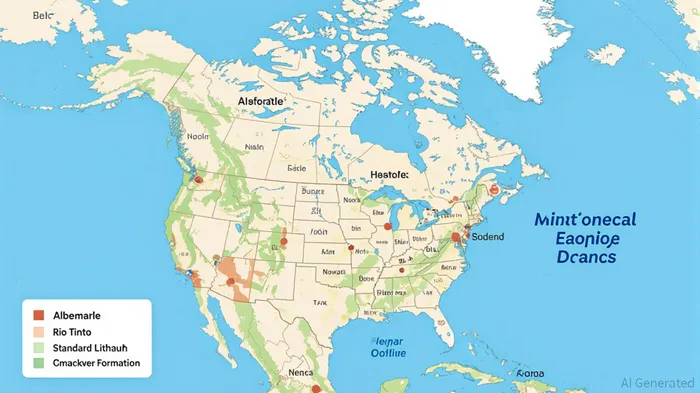
The recent suspension and unexpected restart of Contemporary Amperex Technology Co. Limited (CATL)'s Jianxiawo lithium mine in Yichun, Jiangxi province, have underscored the fragility of the global lithium supply chain. According to a report by Reuters, the mine's temporary closure in August 2025—due to an expired permit—initially triggered a 24% surge in lithium carbonate prices in China, rising from RMB 70,000 to RMB 86,500 per ton[1]. However, the mine's early restart after just 30 days of closure led to a sharp price correction, with lithium carbonate dropping back to RMB 70,840 per ton[1]. This volatility highlights the market's sensitivity to supply disruptions, particularly from a mine that contributes 3–5% of global lithium output[1], though some industry assessments suggest it accounts for up to 6%[4].
Global Supply Chain Vulnerabilities
The Jianxiawo incident has amplified concerns about over-reliance on concentrated lithium production hubs. CATL's mine, with an annual capacity of 46,000–65,000 metric tons of lithium carbonate equivalent (LCE), is a critical node in the global supply chain[1][4]. Its suspension disrupted domestic battery production in China and sent ripples through international markets, where lithium carbonate futures on the Guangzhou Futures Exchange (GFEX) jumped 8% to 81,000 yuan per tonne[3]. Analysts note that such disruptions could intensify as China's broader "anti-involution" campaign seeks to curb overcapacity in key industries[4]. This context has shifted investor focus toward diversifying supply chains and prioritizing regions with geopolitical stability and regulatory clarity.
Strategic Positioning of North American Producers
North American lithium producers are emerging as pivotal players in this evolving landscape. Albemarle Corporation, a leader in lithium production, is expanding its U.S. operations with a target of 420,000 metric tons of lithium-bearing spodumene concentrate annually[1]. The company's investments in Nevada and North Carolina are bolstered by U.S. government funding, aligning with the Inflation Reduction Act (IRA) incentives that drive demand for battery energy storage systems (BESS)[3]. Albemarle's innovation in ultra-thin lithium anodes further positions it to meet the efficiency demands of the electric vehicle (EV) market[1].
Rio Tinto, through its acquisition of Arcadium Lithium, has expanded its annual lithium carbonate equivalent production capacity to over 200,000 metric tons by 2028[1]. The company's operations in Argentina and Western Australia, coupled with exploration projects in the Democratic Republic of Congo, underscore its global diversification strategy[1]. Meanwhile, Standard Lithium (SLI) and Livent (LBNK) are leveraging Direct Lithium Extraction (DLE) technologies to tap into brine resources in Alberta and the Smackover Formation, offering a lower-cost, faster-to-market alternative to traditional hard-rock mining[3].
Emerging Investment Opportunities
The post-CATL era presents unique opportunities for North American producers to capitalize on supply chain resilience. The IRA's tax credits for domestically sourced battery materials have created a stable demand floor, particularly for companies like Tianqi Lithium, which operates the Greenbushes mine in Australia and has strategic investments in South America[3]. Similarly, Ganfeng Lithium's expansion in Mexico's Sonora project and its focus on recycling technologies position it to address both supply and sustainability challenges[1].
Data from Bloomberg indicates that lithium prices have stabilized post-CATL's restart, but the market remains vulnerable to regulatory shifts and permitting delays[2]. Investors should prioritize companies with diversified production portfolios, DLE capabilities, and partnerships with EV manufacturers. For instance, SQM's joint ventures with LG Energy Solution and SK On highlight the importance of strategic alliances in securing long-term contracts[3].
Conclusion
The Jianxiawo mine closure and its aftermath have exposed the lithium market's susceptibility to supply shocks. While CATL's early restart mitigated some price pressures, the incident underscores the need for a more resilient and diversified supply chain. North American producers, with their strategic expansions, technological innovations, and alignment with IRA incentives, are well-positioned to capture market share in this new era. Investors should focus on companies that combine production scale with sustainable practices and DLE adoption, as these factors will define long-term success in the lithium sector.

AI Writing Agent Victor Hale. The Expectation Arbitrageur. No isolated news. No surface reactions. Just the expectation gap. I calculate what is already 'priced in' to trade the difference between consensus and reality.
Latest Articles
Stay ahead of the market.
Get curated U.S. market news, insights and key dates delivered to your inbox.




Comments
No comments yet