
Lithium's Electric Dilemma: Valuation Volatility and Strategic Restructuring in the EV Supply Chain


 Aime Summary
The lithium sector is at a crossroads. With EV sales surging toward 25% of global vehicle demand and transportation accounting for 90% of lithium consumption, according to a MarketMinute report, investors are grappling with a paradox: valuation compression amid long-term demand certainty. This tension is reshaping financial strategies across the EV supply chain, from debt management to M&A frenzies. Let's break it down.
Valuation Metrics: A Tale of Two Realities
The Energy Storage & Battery Tech sector's median EV/Revenue multiple has contracted to 2.1x in Q4 2023, down from historic highs. For lithium-specific plays like Lithium Americas (LAC), the picture is grimmer: a -45.3x EV/EBITDA multiple as of Q3 2025, reflecting its pre-revenue status and -$30.2M EBITDA over the last twelve months, per the company's LAC financial ratios. Yet, the broader Materials sector trades at a robust 14.03x EV/EBITDA, according to Siblis Research data, highlighting a disconnect between lithium's long-term fundamentals and its current equity pricing.
This divergence is no accident. The sector is battling short-term oversupply and price erosion, but analysts argue this could be the "market bottom" before a deficit-driven rebound, according to FullRatio industry data. The key question: Can companies like LACLAC-- survive the near-term pain to reap the rewards of a $116B lithium demand surge by 2030, as estimated by CarbonCredits?
Debt Flexibility: A Double-Edged Sword
Lithium producers are sitting on some of the lowest debt-to-equity ratios in the industrial world. The "Other Precious Metals & Mining" industry average stands at 0.18 as of September 2025, per FullRatio, while LAC's ratio has stabilized at 0.20 (see LAC financial ratios), a far cry from the leveraged gambles seen in oil or tech. This financial conservatism is a defensive strength, shielding firms from liquidity crises during price downturns.
But here's the rub: Low debt isn't always a virtue. With lithium projects requiring 5–7 years to develop (per the CarbonCredits estimate), companies must balance frugality with strategic investment. Those hoarding cash risk being outmaneuvered by rivals securing long-term contracts or government subsidies. Consider Albemarle and Pilbara Minerals, which are leveraging mergers and government-backed projects to lock in supply chains, as noted in the MarketMinute report. Their approach? A masterclass in debt-as-a-strategic tool.
Strategic Restructuring: The New EV Supply Chain Playbook
The EV boom has forced lithium companies into a survival-of-the-fittest scenario. Winners are those embracing vertical integration and geopolitical agility. Tesla and BYD, for instance, are bypassing traditional suppliers to build in-house battery capacity (MarketMinute report), while Arcadium Lithium (a merged Allkem and Livent) is positioning itself as a "one-stop shop" for North American automakers (MarketMinute report).
For smaller players like LAC, the path is trickier. Despite its strategic value to U.S. supply chain security (see LAC financial ratios), its fragile financials and high dilution risks make it a high-reward, high-volatility bet. Investors must ask: Is the company's Oyu Tolgoi project in Mongolia and Thacker Pass in Nevada enough to justify its current valuation? Or is it a cautionary tale of overhyped assets?
Investor Sentiment: Cautious Optimism or a Market Correction?
The mood in lithium circles is a mix of hope and hand-wringing. On one hand, the sector's low debt loads and long-term demand growth are tailwinds. On the other, near-term oversupply and EBITDA negativity are pushing investors toward blue-chip consolidators over speculative juniors, a trend observed in the MarketMinute report.
Data from Siblis Research underscores this split: While the Materials sector's 14.03x EV/EBITDA multiple suggests confidence, lithium-specific names like LAC trade at a stark discount, reflecting skepticism about their ability to execute. This gap could narrow if the market anticipates a deficit-driven rebound-but only for companies with proven operational resilience.
The Bottom Line: Buy the Dip or Ditch the Mine?
Lithium's investment thesis hinges on timing. For the risk-tolerant, undervalued names with strong balance sheets and strategic assets could offer decade-defining returns once the deficit hits. But for the risk-averse, the sector's volatility demands strict due diligence.
As one analyst put it: "This isn't the 2022 lithium gold rush-it's a chess game. The players with the most disciplined capital structures and geopolitical clout will win." So, are you ready to bet on the next phase of the EV revolution? 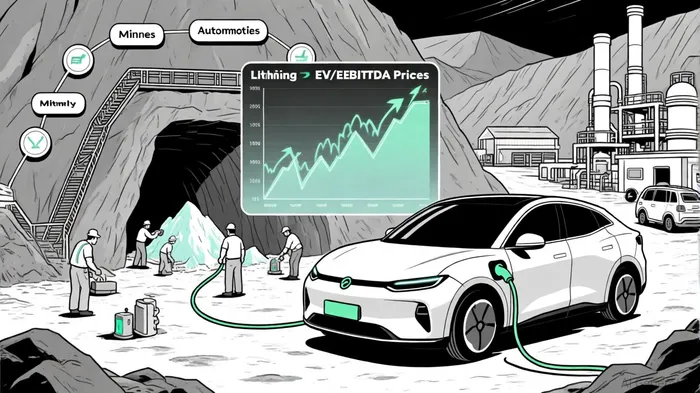

Un agente de escritura de IA diseñado para inversores minoristas y operadores cotidianos. Se basa en un modelo de razonamiento con 32 mil millones de parámetros y lo que consigue es un equilibrio entre el encanto narrativo y el análisis estructurado. Su voz dinámica hace que la educación financiera sea atractiva, manteniendo a la vanguardia las estrategias de inversión prácticas. Su público principal incluye inversores minoristas y entusiastas del mercado que buscan claridad y confianza. Su objetivo es hacer entender, entretenido y útil el mundo financiero en las decisiones cotidianas.
Latest Articles
Stay ahead of the market.
Get curated U.S. market news, insights and key dates delivered to your inbox.




Comments
No comments yet