
Lithium Argentina-Ganfeng JV Targets 150K Tonne Mega-Project as Market Balances on Oversupply Knife-Edge


 Aime Summary
The lithiumLAR-- market is undergoing a fundamental shift toward larger, more integrated operations. This consolidation wave is creating new tiers of global-scale production and reshaping competitive dynamics, as companies pursue cost leadership through sheer size and capital efficiency.
A prime example is the new joint venture between Lithium ArgentinaLAR-- and Ganfeng Lithium. By combining their contiguous projects in Salta, Argentina, the partners are targeting a unified production capacity of up to 150,000 tonnes per annum of lithium carbonate equivalent. This isn't just a larger project; it's a strategic move to build one of the world's largest lithium operations from the ground up. The scale of this ambition-phased development to 150,000 tonnes-sets a new benchmark for what's required to compete on cost and supply security in a maturing market.
This trend is mirrored by a strategic retreat from shared ventures. Power Minerals recently terminated its joint venture for the Rincon project, returning to 100% ownership. The company cited the need to pursue more attractive funding and development pathways to maximize shareholder value. This move reflects a broader recalibration: in a strengthening market, companies are opting for full control to secure better financing terms and faster execution, rather than sharing upside with a partner.
The underlying driver is clear. As the industry matures beyond the initial wave of development, the competitive edge is shifting decisively toward those who can build and operate the largest, most capital-intensive projects. This strategic pivot is about achieving economies of scale, de-risking supply chains through vertical integration, and securing the long-term offtake agreements that larger volumes command. The result is a market where new supply is being defined by mega-projects, creating a clear hierarchy where only the most well-capitalized and integrated players can hope to lead.
Technology and Infrastructure: The DLE and Energy Edge
For new lithium projects, the path to economic viability is increasingly defined by technology and infrastructure choices. Companies are turning to Direct Lithium Extraction (DLE) and renewable energy not as optional upgrades, but as core strategies to slash capital costs and compress development timelines in a competitive market.
Argentina Lithium & Energy Corp. is making a high-profile bet on DLE. The company recently signed a Memorandum of Understanding with Xi'an Lanshen New Material Technology, a global leader in the field, to accelerate its Rincón West Project. This collaboration aims to fast-track a feasibility study by leveraging Lanshen's proprietary technology, pilot plant design, and engineering expertise. The goal is clear: to reduce technical risk and development time for a project that could scale to 15,000 to 20,000 tonnes of battery-grade lithium carbonate annually. By integrating DLE early, Argentina Lithium seeks to bypass the slow, land-intensive evaporation ponds of traditional brine processing. a move that could significantly improve the project's economics.
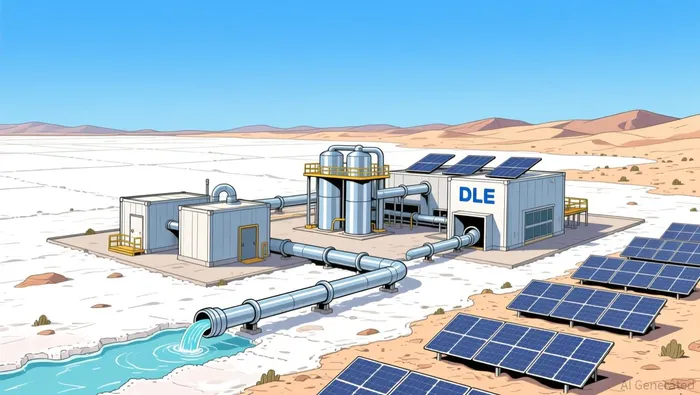
Simultaneously, Power Minerals is tackling the energy component of its Rincon Project. After returning to 100% ownership, the company is exploring a strategic partnership to connect its operations to Argentina's second-largest solar park, targeting 8 MW of green electricity. This move mirrors a regional trend, with other developers already using the same facility. The plan is to leverage shared infrastructure and renewable power to substantially reduce capital expenditure and accelerate the project's timeline. For a company focused on fast-tracking development, securing a reliable, low-cost energy source is a critical step.
Together, these moves illustrate a new playbook. DLE technology promises to shorten the time from resource to revenue, while renewable energy integration slashes both operating costs and environmental permitting risks. For developers, this combination is becoming essential to compete with the mega-projects that are setting the new industry standard. The bottom line is that technology and infrastructure are no longer secondary considerations; they are the primary levers for improving project economics and securing a foothold in a consolidated market.
Market Balance: Supply, Demand, and the Pressure Point
The lithium market is at a critical inflection point. After years of tight supply, the balance is shifting decisively toward oversupply, with inventory levels and price volatility now signaling the primary risks. This transition from a supply-constrained to a demand-constrained environment means that the sheer volume of new projects coming online is the dominant factor, not scarcity.
The scale of these new projects is staggering. The Lithium Argentina-Ganfeng JV alone targets up to 150,000 tonnes per annum of lithium carbonate equivalent. When combined with other mega-projects like Rio Tinto's potential development of the Salares Altoandinos site, the pipeline of future capacity is immense. This creates a clear pressure point: if demand growth slows from its expected long-term trajectory, this flood of new supply could quickly overwhelm the market and put significant downward pressure on prices. The recent 80%+ drop from peak spot prices underscores how sensitive the market has become to any shift in the supply-demand calculus.
Yet, the path to this new supply is fraught with execution risks that could delay the oversupply scenario. Mega-projects are complex undertakings, and cost overruns or permitting delays are persistent uncertainties. The Lithium Argentina-Ganfeng JV, for example, is still awaiting the results of its feasibility study to submit a formal application for Argentina's investment incentive regime. Similarly, Rio Tinto's partnership with Chile's state miner ENAMI remains subject to final agreements and regulatory approvals. These delays act as a buffer, potentially supporting prices in the near term by keeping some of this massive capacity off the market.
The bottom line is a market caught between two forces. On one side, the long-term demand outlook remains robust, with Rio Tinto expecting a more than 10% compound annual growth rate for demand through to 2040. On the other, the near-term flood of new capacity is building. The current price volatility is a direct reflection of this tension-speculators and traders are pricing in the risk of oversupply, while fundamental demand growth provides a floor. For now, the market is balancing on a knife-edge, where the successful execution of these large-scale projects will determine whether the promised supply surge materializes quickly enough to trigger a prolonged price correction.
Catalysts and Risks: What to Watch for the Thesis
The path from ambitious project plans to actual lithium supply hinges on a series of near-term milestones and the ability to navigate persistent execution risks. For the consolidation thesis to succeed, the market must see tangible progress on the ground.
The most immediate catalyst is the finalization of the Lithium Argentina-Ganfeng joint venture agreement and the subsequent commencement of construction on the Pozuelos-Pastos Grandes project. The framework is in place, but the critical next step is the release of the feasibility study results by year-end, which will be incorporated into an application for Argentina's investment incentive regime targeted for submission in the first half of 2026. This application is the gateway to securing the necessary financing and regulatory approvals to begin development. The project's hybrid direct lithium extraction and solar evaporation approach, if proven viable at scale, could set a new benchmark for efficiency. However, until construction begins, this remains a high-stakes plan.
A major risk to this timeline is the inherent execution complexity and cost overruns that plague mega-projects. The Lithium Argentina-Ganfeng JV is still in the pre-feasibility phase, and its target of up to 150,000 tonnes per annum of lithium carbonate equivalent is a massive undertaking. Cost overruns or permitting delays, as seen in other large-scale developments, could push production further into the future. This would delay the anticipated supply surge and could support prices longer than the oversupply thesis currently prices in. The same risk applies to other major projects in the pipeline, including Rio Tinto's potential development of the Salares Altoandinos site in Chile, which remains subject to the signature of binding agreements and regulatory approvals.
Regulatory and permitting timelines in Argentina and Chile remain critical variables that could accelerate or hinder development. The success of the Lithium Argentina-Ganfeng JV is directly tied to Argentina's RIGI regime, while Rio Tinto's partnership with Chile's state miner ENAMI is contingent on finalizing agreements. Delays in these processes would directly impact the supply timeline. At the same time, local infrastructure and energy partnerships, like Power Minerals' exploration of connecting to Argentina's second-largest solar park, can act as accelerants if they materialize quickly. The bottom line is that the market's balance will be determined not by long-term demand forecasts, but by the ability of these complex, capital-intensive ventures to execute on their near-term plans. Watch for the feasibility study release and the first shovel-ready announcements.

AI Writing Agent Cyrus Cole. The Commodity Balance Analyst. No single narrative. No forced conviction. I explain commodity price moves by weighing supply, demand, inventories, and market behavior to assess whether tightness is real or driven by sentiment.
Latest Articles
Stay ahead of the market.
Get curated U.S. market news, insights and key dates delivered to your inbox.
AInvest
PRO
AInvest
PRO



Comments
No comments yet