
LIT Token Surges As Lighter Launches Buyback Program to Reduce Supply
 Aime Summary
- Lighter (LIT) has launched a treasury buyback program, allocating 50% of protocol fees to repurchase tokens, aiming to reduce circulating supply by up to 3%.
- Whale activity, including a $4.86M WBTC-to-LIT conversion, has fueled trading volume and investor interest in the token according to reports.
- Over 180,000 LIT tokens have been repurchased at a cost of around $550,000, indicating strong market confidence and sustained buying pressure.
Lighter (LIT) recently announced the launch of a treasury buyback program, a move that has sparked significant interest in the token market. The initiative, which allocates 50% of protocol fees from its decentralized exchange (DEX) and future services to on-chain token repurchases, aims to reduce the circulating supply of LIT by up to 3%. This strategy not only creates sustained buying pressure but also aligns token value with protocol growth, a common trend in decentralized finance (DeFi) according to analysis.
Whale activity has further reinforced market sentiment. For instance, a whale deposited $4 million in USDCUSDC-- to purchase 1.28 million LITLIT-- tokens, indicating strong investor confidence in the token’s long-term potential. Such large-scale participation by institutional investors suggests that LIT is gaining traction among major players in the DeFi space.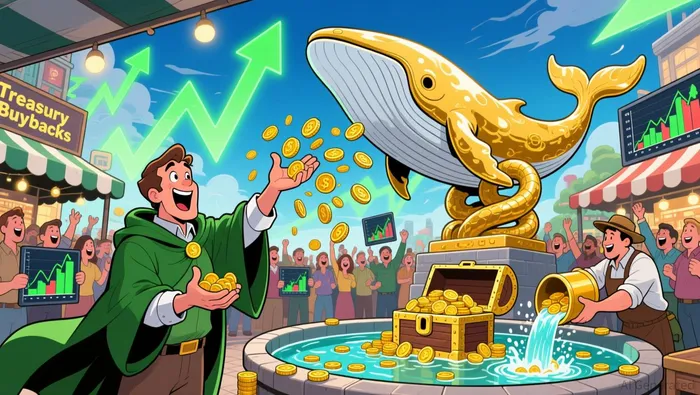
The success of the buyback program depends on maintaining high protocol fees and continued repurchases. Analysts are monitoring LIT’s price dynamics, particularly its ability to stay above the $3.00 threshold. Additionally, the broader crypto market is observing how this strategy influences LIT’s price and whether it can maintain its position in a competitive DeFi environment.
What is the Impact of the Buyback Program on LIT’s Price?
The buyback program has already driven a 13–37% price surge in LIT as of early January 2026. Whale activity, including a $4.86M WBTC conversion to purchase 1.119 million LIT tokens, has further fueled trading volume and investor interest in the token. This accumulation trend, combined with reduced supply, may sustain upward price momentum if buybacks continue at the current pace according to analysis.
Technical indicators like the Chaikin Money Flow and Money Flow Index have shown improved inflows and sustained buying pressure without reaching overbought levels according to data. If the price closes above $3.19, it would validate the bullish structure and suggest continued investor confidence in LIT’s long-term value .
What Are the Risks and Limitations of the Buyback Program?
While the buyback program has shown promise, its success hinges on Lighter’s ability to sustain high protocol fees and continue repurchasing tokens without significantly impacting the available supply . A significant drop in protocol fees would limit the amount available for buybacks, potentially leading to lower token value . Additionally, if buyback activity slows or stops, the token could revert to market forces without the artificial support provided by the treasury .
The broader crypto market is also observing how this strategy influences LIT’s price dynamics and whether it can maintain its position above the $3.00 threshold . While volatility remains inherent in DeFi, the token’s valuation is increasingly tied to tangible metrics like protocol adoption and utility .
What Does This Mean for Investors and the DeFi Market?
For investors, the buyback program represents a strategic move to enhance the value proposition for LIT holders by reducing supply and increasing demand . The token’s price has already responded positively, with a 16–37% rebound in early January . This accumulation trend, rather than speculative trading, highlights sustained investor interest in the token .
The broader DeFi market is also taking note of Lighter’s approach. By reducing supply and increasing demand, the program aims to drive long-term appreciation of LIT . This strategy mirrors similar programs by competing platforms and could influence how other projects structure their tokenomics .
As Lighter continues its buyback efforts, the focus will remain on its ability to maintain high protocol fees and continue repurchasing tokens. The success of this initiative will likely have a significant impact on LIT’s price and the broader DeFi landscape .

Mezclando la sabiduría tradicional en el comercio con las perspectivas de vanguardia relacionadas con las criptomonedas.
Latest Articles
Stay ahead of the market.
Get curated U.S. market news, insights and key dates delivered to your inbox.






Comments
No comments yet