
LIT Surges as Lighter Launches Treasury Buyback Program
 Aime Summary
- Lighter initiated a treasury buyback program in January 2026 using 50% of DEX fees to repurchase LITLIT-- tokens, aiming to reduce supply by up to 3%.
- Whale activity, including a $4.86 million WBTC-to-LIT conversion, has reinforced investor sentiment and demonstrated confidence in LIT's long-term value.
- Institutional and high-net-worth investors holding 13.2 million LIT tokens valued at nearly $40 million have shown strong belief in the token's long-term potential.
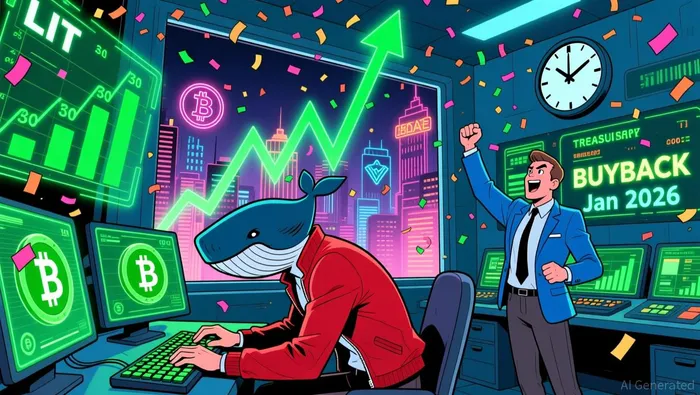
Lighter launched a treasury buyback program in January 2026, allocating 50% of protocol fees from its decentralized exchange and future services to on-chain repurchases of LIT tokens. This initiative aims to reduce the circulating supply by up to 3%, aligning token value with protocol growth and creating sustained buying pressure. As of early January 2026, the treasury had repurchased over 180,000 LIT tokens at a cost of around $550,000.
Whale activity has been a significant factor in reinforcing market confidence. A single whale's $4.86 million WBTC-to-LIT conversion, for instance, has demonstrated the token's appeal and potential to large investors. This whale activity, combined with institutional interest, has driven LIT's price up by 13–37% as of early January 2026.
Transparency in the buyback program has also been a key component of investor trust. Lighter confirmed that the treasury account would track protocol revenue and buyback activity, reinforcing transparency and long-term alignment with token holders. Institutional and high-net-worth investors, including those holding 13.2 million LIT tokens valued at nearly $40 million, have shown strong belief in the token's long-term potential.
What is the impact of Lighter's buyback program on LIT's price?
The buyback program aims to reduce the circulating supply of LIT by up to 3%, aligning token value with protocol growth. As of the first week of January 2026, the treasury repurchased over 180,000 LIT tokens at a cost of around $550,000. This sustained buying pressure is designed to increase the token's value by reducing supply while increasing demand.
The initiative has been reinforced by whale activity, including a $4.86M WBTCWBTC-- conversion and a $4M USDCUSDC-- deposit used to acquire LIT tokens. These signals suggest growing institutional interest and belief in the token's long-term potential.
How does whale activity affect market sentiment for LIT?
Whale activity has reinforced investor confidence, with a $4.86M WBTC-to-LIT conversion reinforcing LIT's price momentum. Large investors have shown significant belief in the token's long-term potential, with one wallet holding 13.2 million LIT tokens valued at nearly $40 million.
Despite this, large holdings pose potential volatility risks. If these whales decide to sell, it could create downward pressure on the token’s price. However, the current trend suggests strong accumulation and long-term holding intent.
What role does institutional investment play in LIT's trajectory?
Institutional and high-net-worth investors have shown strong belief in LIT's long-term potential. One whale, for example, held 13.2 million LIT tokens valued at nearly $40 million as of early January 2026. This institutional confidence is reinforced by the transparency and alignment of the buyback program with long-term token holder interests.
Lighter confirmed that the treasury account would track protocol revenue and buyback activity, reinforcing transparency and long-term alignment with token holders. This transparency is critical for building trust in a market where retail investors often face uncertainty from large holder behavior.
Institutional interest also adds to the overall demand for the token, potentially stabilizing its price and reducing short-term volatility. This is particularly important for LIT, as the token has experienced significant price swings in recent weeks.

Blending traditional trading wisdom with cutting-edge cryptocurrency insights.
Latest Articles
Stay ahead of the market.
Get curated U.S. market news, insights and key dates delivered to your inbox.






Comments
No comments yet