
LIT Surges as Lighter Launches Buyback Program and Staking Features
 Aime Summary
Lighter, the decentralized exchange platform, has launched a treasury buyback program, allocating 50% of protocol fees to repurchase LITLIT-- tokens, with the objective of reducing the circulating supply by up to 3%.
In parallel, a new staking feature has been introduced, offering users 10 USDC in the Lighter Liquidity Pool for every 1 LIT staked, along with fee discounts and zero withdrawal charges for those staking 100 LIT.
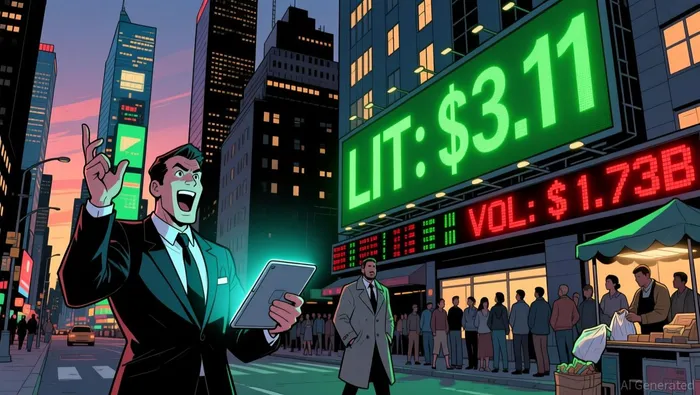
These initiatives have sparked significant interest, with a 18.3% price surge in LIT to $3.11 and a 89% increase in 24-hour trading volume. However, challenges remain, including a risk of selling pressure below $2.97 and a broader bearish sentiment following a 30% weekly decline to a new all-time low near $2.05.
What are the implications of Lighter's buyback program and staking features for LIT holders?
The buyback program is designed to align token value with protocol growth and has already repurchased over 180,000 LIT tokens, spending $550,000. Whale activity, including a $4.86 million WBTC conversion, suggests strong institutional confidence in Lighter's long-term strategy.
The staking feature is intended to incentivize long-term participation by offering yield generation opportunities and reducing circulating supply. Stakers are rewarded with fee discounts and the lowest fee tier, ensuring cost efficiency for high-frequency traders.
A two-week grace period until January 28 is provided to allow existing users to adjust to the new model, with mandatory staking to be enforced afterward. Retail trading will remain free, making the feature accessible to a wide user base.
What are the risks and challenges associated with Lighter's recent initiatives?
Despite the positive signals, LIT has experienced declining volume, with daily trading dropping from $7 billion–$12 billion to $1.73 billion. This highlights the volatility of the token and the mixed sentiment in the market.
The token's decline to a new all-time low near $2.05 underscores the broader bearish sentiment following the post-airdrop sell-off, with 49% of the airdropped LIT already sold. While 27.69% of that sold supply has been repurchased, the net effect remains bearish.
Furthermore, Lighter's token collapse exposed systemic risks in the PerpPERP-- DEX sector, including architectural overreach and the fragility of speculative incentives. Investors are advised to prioritize platforms with technical resilience and sustainable fee structures.
What does the future look like for LIT and Lighter's market strategy?
The future of LIT depends on the sustainability of protocol revenue, market participation, and institutional adoption. The success of the buyback and staking initiatives will be influenced by continued whale activity and broader market trends.
Lighter has secured $68 million in funding at a $1.5 billion valuation, which supports further buybacks and signals confidence in long-term potential. However, risks include a shift in trader focus to airdrop platforms and leveraged bearish bets.
The staking feature is expected to boost liquidity and attract long-term token holders, competing with platforms like Hyperliquid in decentralized trading adoption. Annualized rates for staking rewards will be disclosed once the feature is active, with the feature soon available for mobile users.
The Perp DEX sector is at a crossroads, with platforms that deliver both decentralization and performance while aligning user and capital incentives poised to endure. Investors must closely monitor on-chain activity and broader market trends to make informed decisions.

Blending traditional trading wisdom with cutting-edge cryptocurrency insights.
Latest Articles
Stay ahead of the market.
Get curated U.S. market news, insights and key dates delivered to your inbox.


AInvest
PRO
AInvest
PRO



Comments
No comments yet