
AInvest Newsletter
Daily stocks & crypto headlines, free to your inbox

 Aime Summary
Lighter's treasury buyback program, funded by 50% of DEX fees,
.Whale activity, such as a $4.86 million
conversion to 1.119 million tokens, .A whale deposited $1 million
into HyperLiquid and opened a 1x leveraged short position in LIT, .Lighter launched a treasury buyback program using 50% of DEX fees to repurchase LIT tokens,
. This initiative is part of broader DeFi strategies aimed at stabilizing and enhancing token value.As of early January 2026,
at a cost of around $550,000, with a transparent account tracking all activity.Whale activity has played a significant role in reinforcing investor sentiment around LIT. A $4.86 million WBTC conversion to LIT tokens
in the token's long-term trajectory.In contrast, a whale has also opened a leveraged short position in LIT,
.The buyback program is expected to create sustained buying pressure by tying token demand directly to protocol usage and performance.
on maintaining high protocol fees and consistent buybacks.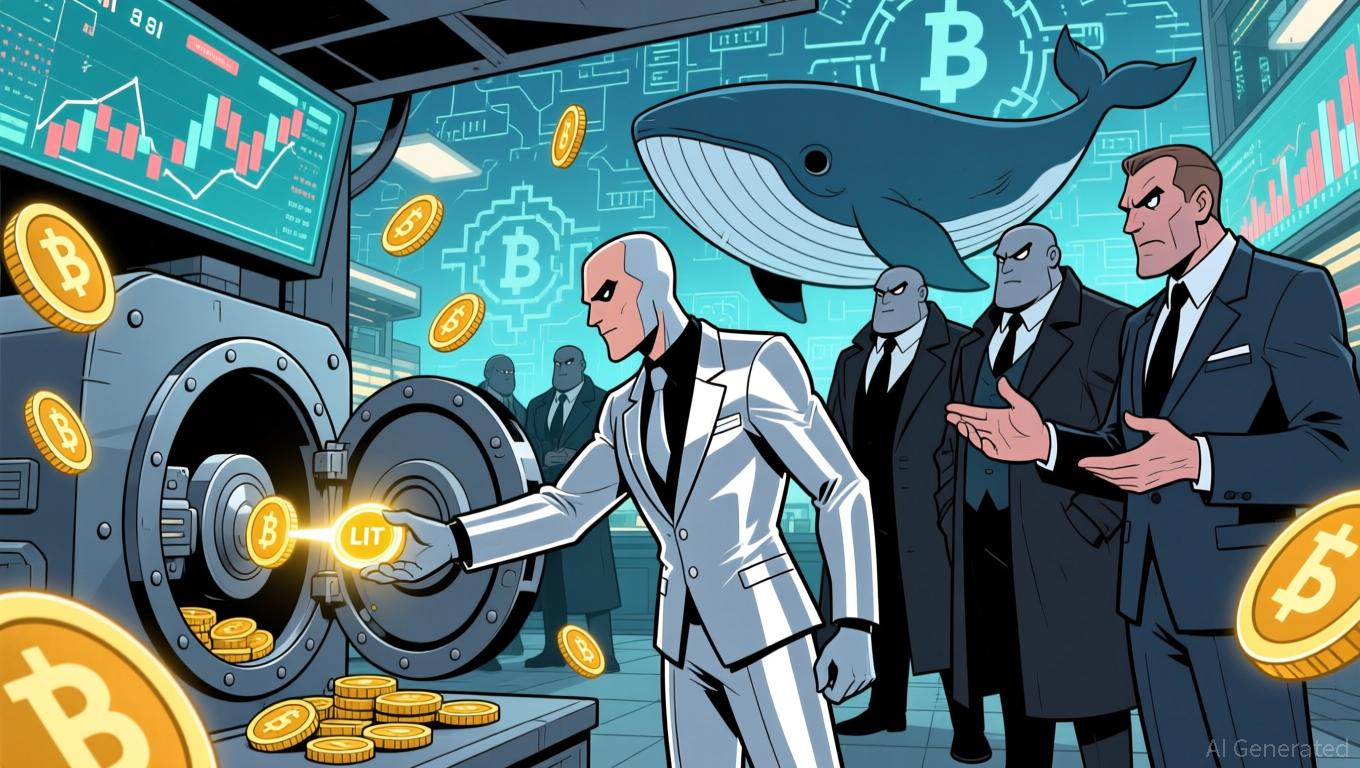
What Is the Current Market Impact of LIT's Buyback Program?
The buyback strategy is intended to stabilize and enhance token value by reducing supply and creating sustained demand. The initiative
where tokenomics play a central role in value creation.On-chain data indicates that
, signaling continued commitment to the buyback strategy. This transparency is designed to align token value with protocol growth and create long-term value for holders.How Are Institutional and Whale Investors Responding to LIT's Strategy?
Institutional and high-net-worth investors have shown strong interest in LIT. Whale activity, such as the $4.86 million WBTC conversion,
in the token's long-term potential.However, bearish signals are also present. A whale deposited $1 million USDC into HyperLiquid and opened a 1x leveraged short position in LIT,
. This whale activity could amplify selling pressure if LIT trades around key support levels.What Are the Risks and Limitations of the Buyback Strategy?
Long-term success of the buyback program depends on maintaining high protocol fees and consistent buybacks.
, the token could face downward pressure from increased selling or reduced investor confidence.Whale actions, both bullish and bearish, highlight the volatile nature of the cryptocurrency market. For example,
with high leverage, facing significant unrealized losses. Such activity reflects a broader bearish sentiment that could influence LIT's price dynamics.The market is closely observing how LIT's strategy influences its price and ability to sustain a position above the $3.00 threshold. While whale accumulation near support levels suggests potential undervaluation,
.Institutional players, including
and whales, have also been net buyers of LIT, . The broader on-chain landscape in Q4 2025 highlights a structural reorganization of capital flows, which may complicate accumulation signals.
Blending traditional trading wisdom with cutting-edge cryptocurrency insights.

Jan.13 2026

Jan.13 2026
Jan.13 2026
Jan.13 2026

Jan.13 2026
Daily stocks & crypto headlines, free to your inbox






Comments
No comments yet