
LIT Faces Mixed Signals as Whale Activity and Buyback Programs Shape Market Dynamics
 Aime Summary
- A whale's 1x long position in LITLIT-- suffered a $1.8 million floating loss, raising concerns about the project's sustainability.
- Lighter's revenue of $8,450 raises doubts about its utility and long-term relevance.
- Rising futures open interest and liquidity clustering above $2.7 may signal potential recovery if the price breaks through with momentum according to market analysis.
Lighter's token (LIT) has experienced a challenging start to 2026, with significant market volatility impacting investor sentiment. One of the most notable events was a whale's 1x long position that dropped into a $1.8 million floating loss, intensifying concerns about the token's resilience in the face of broader market pressures. The incident occurred as LIT struggled to maintain previous price levels, with daily revenue figures only reaching $8,450, a sharp contrast to the expectations of a thriving digital assets ecosystem as reported.
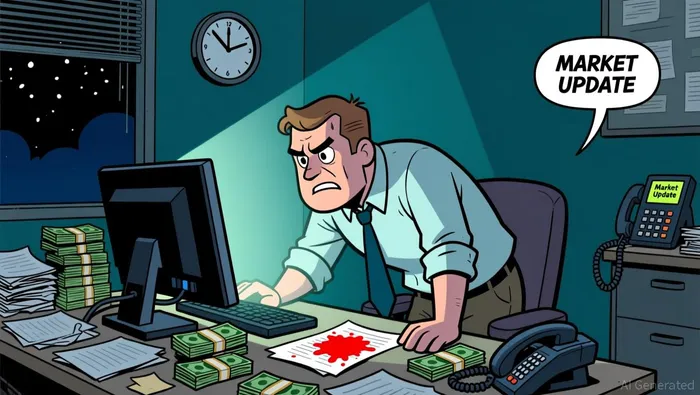 The project's future remains uncertain as liquidity clusters form above the $2.7 threshold. These liquidity concentrations could either support a rebound if the price breaks through with strong momentum or fail to provide a meaningful floor, further deepening bearish sentiment. Analysts and on-chain data suggest that such liquidity clusters often act as magnets for market participants, particularly when combined with increasing open interest and trading volume.
Despite these bearish indicators, contrarian signals also emerge from whale activity. Some large holders have been methodically accumulating LIT, suggesting deliberate positioning rather than impulsive trading. On-chain data reveals that these accumulations occurred during market consolidation phases, stabilizing prices and potentially signaling long-term value for buyers willing to ride out short-term volatility.
What Drives LIT's Price Volatility in Q4 2025?
LIT's price volatility in the fourth quarter of 2025 was characterized by conflicting signals between leveraged shorts and whale accumulation. Leveraged short positions surged, reflecting broader bearish sentiment as a $2.6M USDCUSDC-- whale opened a 1x short position in LIT. This action mirrored similar trends seen in BitcoinBTC-- and EthereumETH-- markets, where whales ramped up short exposure amid uncertainty and fear-driven trading psychology as observed.
Contrarian buying activity, however, emerged as a countervailing force. Whale accumulators stabilized LIT's price during consolidation periods by strategically acquiring large quantities of the token. These actions were seen as attempts to establish a price floor, contrasting sharply with the trend of ETF-driven Bitcoin redemptions that occurred simultaneously according to analysis.
How Does Lighter's Buyback Program Affect LIT's Market Position?
In early 2026, Lighter launched a buyback program using 50% of DEX fees to repurchase LIT tokens. The initiative aimed to reduce the token's circulating supply by up to 3%, creating deflationary pressure and aligning token value with protocol growth. As of January 6, 2026, the program had repurchased over 180,733 LIT tokens at a cost of $564,609, reinforcing market confidence and contributing to a 13–37% price surge as reported.
Whale activity further reinforced this positive momentum. Notably, a $4.86M WBTC-to-LIT conversion and a $4M USDC deposit highlighted growing institutional and high-net-worth investor interest in LIT's long-term potential. The transparency of on-chain treasury activity and whale accumulation patterns contributed to a bullish sentiment in the market according to market data.
What Are the Key Risks for LIT in 2026?
Despite the positive developments, LIT remains exposed to several key risks. The whale-driven floating loss of $1.8 million and Lighter's stagnant revenue raise concerns about the project's sustainability. Without a significant shift in growth metrics, LIT may struggle to compete with other digital assets that offer clearer value propositions as noted.
Furthermore, the volatility of LIT's market structure is influenced by broader trends in Bitcoin and Ethereum. While the structural reorganization of capital flows has shifted much of Bitcoin's value to ETFs and brokerage platforms, LIT's price action remains relatively insulated from these macro trends. This insulation could either provide a unique advantage or expose LIT to uncorrelated market shocks according to analysis.
In summary, LIT's 2026 outlook is shaped by a mix of bearish and bullish factors. The project's ability to navigate these conflicting signals and sustain positive momentum will be crucial for its long-term success. Investors must weigh the immediate risks from leveraged shorts and whale-driven accumulation against the potential for recovery and growth.

Blandiendo la sabiduría tradicional de comercio con las perspectivas de criptomonedas de vanguardia.
Latest Articles
Stay ahead of the market.
Get curated U.S. market news, insights and key dates delivered to your inbox.






Comments
No comments yet