
Liquidity Signals a Long Bull Forming Despite Ongoing Caution, as Rationality Returns with a Normalizing Yield Curve
The market showed resilience this week despite Donald Trump's latest threats and the potential for further escalation with Iran, alongside surging oil prices. We are entering a more normalized yet cautious phase, where liquidity conditions continue to support a longer-term bullish structure even as near-term uncertainty remains elevated. Although the recent rebound and weak technicals reinforce a fragile risk environment, current price action differs from the prior wave of panic-driven selling. Instead, it reflects a gradual return of rationality rather than disorderly liquidation, which is a constructive development for investors.
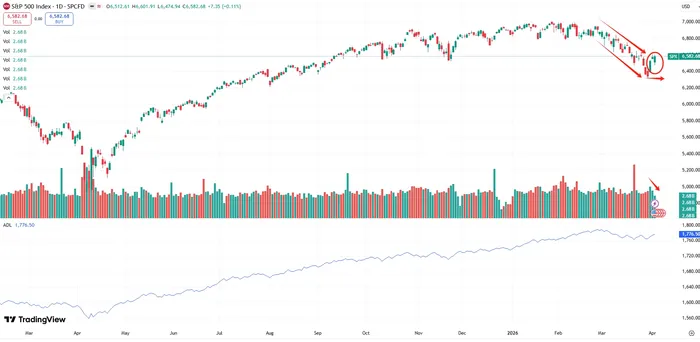
From a technical perspective, the S&P 500 continues to trade within a broader lower high and lower low structure and remains below key resistance. The recent rebound, partly driven by short covering, has already begun to lose momentum following renewed geopolitical pressure. The RSI has recovered from extreme oversold levels and returned to a more neutral range, removing immediate squeeze dynamics while reopening the path for potential downside continuation. The key level to monitor remains the prior low near 6316. A decisive break below this threshold would likely trigger another leg lower, potentially establishing a fresh session low before any meaningful support emerges.
Volume dynamics further confirm the fragile nature of the rebound. Early in the week, a sharp increase in trading activity reflected a combination of dip buying and short covering. However, participation quickly faded, indicating that institutional conviction remains limited. Without tangible progress on geopolitical fronts, market sentiment has shifted back toward caution, with investors reluctant to aggressively position for upside.
Market breadth is also showing signs of strain. The advance decline line has entered a consolidation phase, signaling that macro forces remain the dominant driver of price action. At the same time, a slight upward bias within this consolidation hints at early stabilization beneath the surface. Despite persistent bearish sentiment, the absence of further deterioration suggests that selling pressure is not accelerating in a disorderly manner.
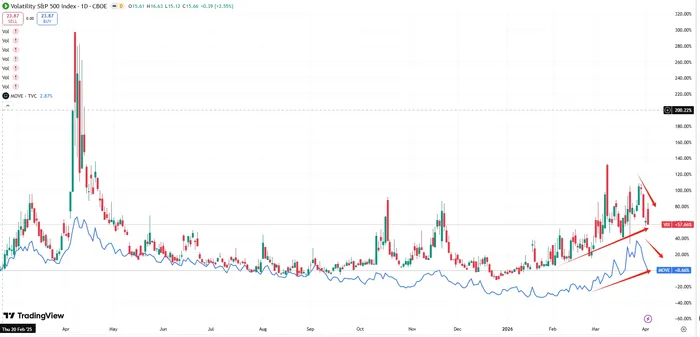
Volatility indicators reinforce this transitional backdrop. Both the VIX and the MOVE index have retreated from their recent highs despite escalating rhetoric, indicating that hedging demand, while still elevated, is no longer intensifying. Importantly, volatility remains well above pre-conflict levels, and the presence of higher lows suggests that downside protection is still actively sought. This keeps the market in a cautious regime where confidence has not yet fully returned.
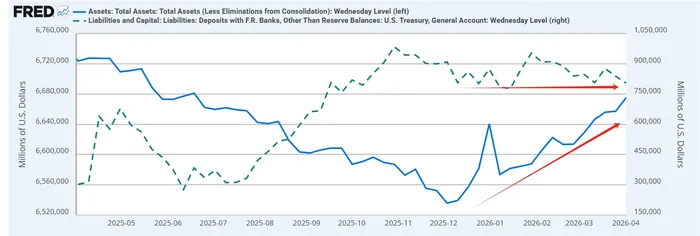
However, longer-term liquidity is showing more constructive signals. The Fed's balance sheet continues to trend upward following the halt of runoff since December, while the Treasury General Account has stabilized and even declined in recent sessions. This combination implies that dollar liquidity is not being meaningfully withdrawn from the system. As a result, the macro backdrop remains supportive for risk assets once uncertainty begins to ease. The market is not facing a structural liquidity constraint, but rather a temporary pause as participants reassess evolving risks.
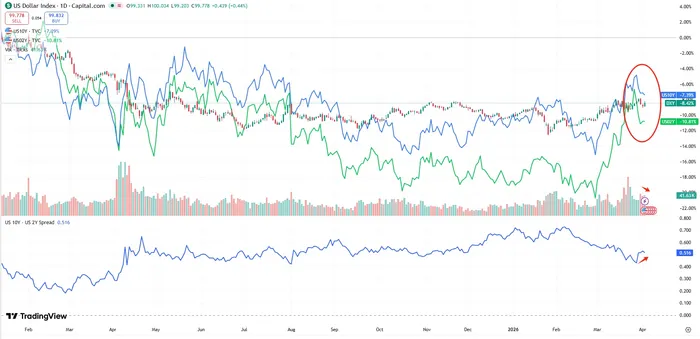
Currency and rates markets provide additional evidence of improving macro stability. The U.S. dollar remains firm, supported by elevated oil prices and geopolitical demand for safety. However, the decline in the 2 year Treasury yield, combined with a relatively steadier long end, has allowed the 10 year minus 2 year spread to widen modestly. This partial normalization of the yield curve reflects a shift toward more balanced expectations. That could largely be attributed to Powell's view that the current oil shock is transitory, which reduces the likelihood of rate hikes this year.As the bond market stabilizes, pressure on equities may gradually ease, limiting the scope of further downside unless a new shock emerges.
Meanwhile, gold has regained strength as investors seek traditional hedges amid uncertainty, while BitcoinBTC-- has weakened, reintroducing a negative correlation between the two. This divergence suggests that capital is being allocated more selectively rather than exiting risk indiscriminately. The absence of synchronized declines across these assets indicates that systemic deleveraging is not taking hold. Instead, markets are adjusting in a more controlled manner, consistent with a normalization phase rather than a crisis.
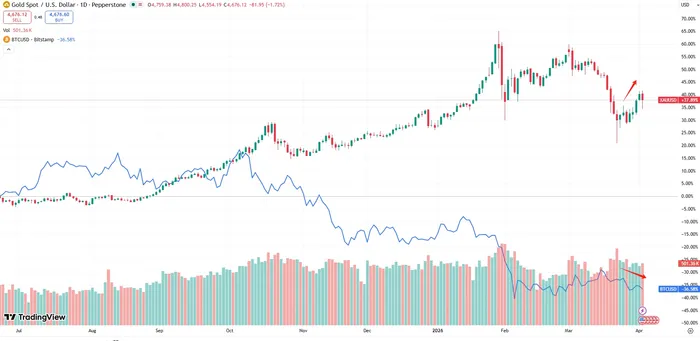
Therefore, current signals from both equity and bond markets indicate that macro conditions have improved compared to the prior week, even as geopolitical risks remain unresolved. Liquidity continues to expand, the yield curve is showing early signs of normalization, and speculative positioning is becoming more selective. While near-term caution is still warranted due to headline risk, the broader structure points toward a developing long-term bullish phase supported by ample liquidity. The downside appears increasingly limited unless a significant negative catalyst emerges.
From a trading perspective, this environment favors a balanced approach. Short-term strategies should remain defensive, focusing on volatility management and key technical levels such as the recent S&P 500 low. At the same time, the improving liquidity backdrop creates opportunities to gradually position for alpha, particularly in areas that benefit from stabilizing rates and normalized conditions. The market is transitioning away from panic toward rational repricing, and that shift often marks the early stages of more sustainable upside once uncertainty clears.

Independent investment research powered by a team of market strategists with 20+ years of Wall Street and global macro experience. We uncover high-conviction opportunities across equities, metals, and options through disciplined, data-driven analysis.
Latest Articles
Unlock Market-Moving Insights.
Subscribe to PRO Articles.
Already have an account? Sign in
Unlock Market-Moving Insights.
Subscribe to PRO Articles.
Already have an account? Sign in
Stay ahead of the market.
Get curated U.S. market news, insights and key dates delivered to your inbox.


AInvest
PRO
AInvest
PRO



