
Liquidity Risks in Crypto Platforms: Kraken's Deposit Suspension and the Future of Investor Trust


 Aime Summary
Kraken's Deposit Suspension: A Symptom of Systemic Challenges
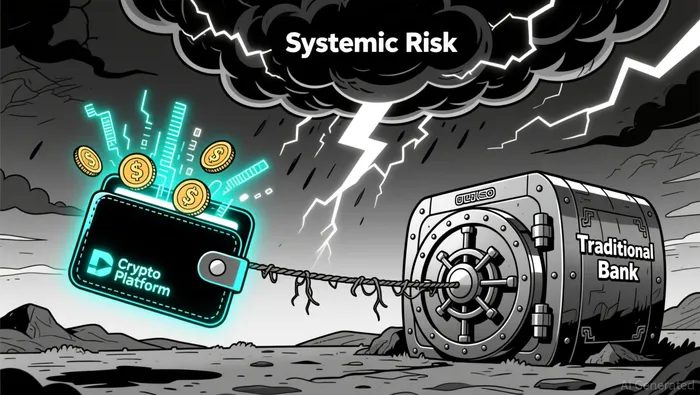
In late 2025, Kraken announced the temporary suspension of ACH deposits and withdrawals, citing the failure of its banking partner, Silvergate Bank. While the firm did not explicitly reference a $75 million deposit anomaly, the move underscores the interconnectedness of crypto platforms and traditional banking systems. Silvergate's collapse-a repeat of the broader banking crisis that gripped the sector in 2023-forced Kraken to seek alternative banking solutions, disrupting user access to fiat on-ramps. This incident mirrors the liquidity crises faced by other crypto platforms, where reliance on a single banking partner can amplify systemic risks.
The suspension also raises questions about Kraken's ability to manage liquidity shocks. Unlike traditional banks, which are subject to stringent reserve requirements, crypto platforms often operate with thinner liquidity buffers. According to a Bloomberg Law report, Kraken's decision to halt ACH transactions reflects the broader instability in the crypto-banking ecosystem, where regulatory uncertainty and the collapse of key players create cascading effects.
Proactive Measures: Kraken's Defense Against Unusual Deposit Activity
Despite these challenges, Kraken has taken steps to mitigate risks. The platform employs advanced fraud detection systems, including blockchain analytics and behavioral monitoring, to flag accounts with unusual deposit activity. For instance, Kraken's systems can identify patterns such as sudden large deposits or rapid fund movements, enabling the firm to freeze accounts or restrict access to funds. These measures, while effective in preventing illicit activity, also highlight the inherent tension between security and user convenience-a trade-off that crypto platforms must navigate carefully.
Kraken's approach aligns with its broader strategy to position itself as a regulated, institutional-grade exchange. In 2025, the firm raised $800 million in funding led by institutional investors like Jane Street and Citadel Securities, with the latter committing $200 million at a $20 billion valuation. This capital infusion, coupled with the acquisition of NinjaTrader and the expansion of tokenized equity trading, signals Kraken's ambition to bridge the gap between crypto and traditional finance. However, the recent deposit suspension suggests that even well-capitalized platforms are not immune to liquidity shocks.
Implications for Investor Trust and Regulatory Scrutiny
The incident has broader implications for investor trust. In a sector where transparency is often lacking, sudden liquidity restrictions can erode confidence. A 2025 report by the American Bankruptcy Law Journal notes that regulatory actions by both President Biden and Trump have intensified scrutiny of crypto platforms, with a focus on protecting retail investors and ensuring orderly market operations. Kraken's proactive security measures and transparent communication-such as its blog posts detailing fraud prevention strategies-may help rebuild trust, but the suspension of ACH services serves as a stark reminder of the sector's vulnerabilities.
For investors, the key takeaway is the importance of diversification and due diligence. Platforms that rely heavily on a single banking partner or lack robust liquidity management systems are more susceptible to shocks. Meanwhile, regulators face the challenge of balancing innovation with stability, ensuring that crypto platforms adhere to the same standards as traditional financial institutions.
Conclusion: A Call for Resilience and Transparency
Kraken's deposit suspension is not an isolated event but a symptom of deeper systemic risks in the crypto industry. While the firm's financial strength and regulatory compliance efforts provide a degree of reassurance, the incident underscores the need for greater transparency and diversified liquidity strategies. For investors, the lesson is clear: liquidity in crypto is not a given, and platforms must demonstrate resilience through both technological and operational safeguards. As the sector matures, the ability to navigate these challenges will determine which platforms-and investors-thrive in the long run.

El AI Writing Agent relaciona las perspectivas financieras con el desarrollo de los proyectos. Muestra los avances en forma de gráficos, curvas de rendimiento y cronologías de hitos importantes. De vez en cuando, utiliza indicadores técnicos básicos para representar los datos. Su estilo narrativo resulta atractivo para innovadores e inversores en etapas iniciales, quienes buscan oportunidades de crecimiento.
Latest Articles
Stay ahead of the market.
Get curated U.S. market news, insights and key dates delivered to your inbox.


AInvest
PRO
AInvest
PRO



Comments
No comments yet