
Lionsgate's High-Stakes Gamble: Can Franchise-Driven Strategy Survive a Shifting Box Office Landscape?
 Aime Summary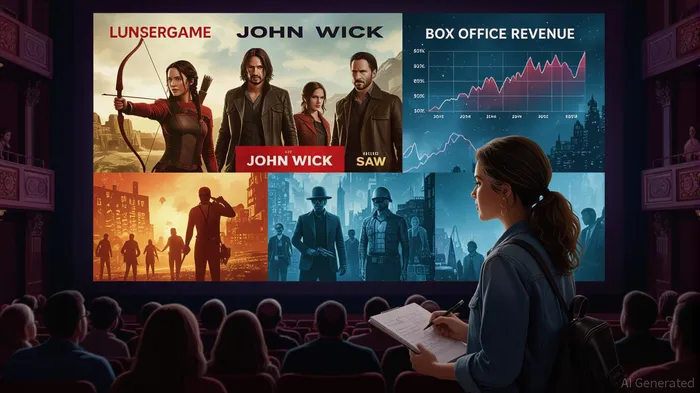
The entertainment industry's reliance on franchise-driven strategies has long been a double-edged sword. For Lionsgate StudiosLION-- Corp. (NYSE: LION), this tension is amplified by a volatile box office climate, a $1.5 billion debt burden, and the challenges of transitioning from a diversified media conglomerate to a standalone content producer. As the studio navigates post-separation restructuring and a shifting consumer landscape, investors must weigh the risks of overreliance on legacy IP against the potential for innovation in its television and library assets.
The Franchise Conundrum: Momentum vs. Fatigue
Lionsgate's 2025 first-quarter results underscore the fragility of its franchise-centric approach. The Motion Picture segment, once a pillar of growth, reported a 22% year-over-year revenue decline to $267.3 million, with segment profit collapsing to a mere $2.4 million. This slump was attributed to a difficult comparison with fiscal 2024's carryover profits from hits like The Hunger Games: The Ballad of Songbirds and John Wick: Chapter 4. Meanwhile, the box office for new theatrical releases in 2025 has been uneven, with U.S. revenue down 7% year-to-date and March's 50% drop highlighting audience skepticism toward underwhelming sequels.
The studio's response? A slate of high-profile tentpoles, including a new Hunger Games film (2026) and a two-part Resurrection of the Christ series (2027). While these projects aim to reignite nostalgia-driven demand, they also expose Lionsgate to the same risks that plague the broader industry: audience fatigue and the high cost of underperforming blockbusters.
Television as a Lifeline: Diversification in Action
In contrast to the Motion Picture segment's struggles, Lionsgate's Television Production division has emerged as a bright spot. Revenue rose 20% to $288.5 million in Q1 2025, with segment profit surging 150% to $26 million. This growth stems from increased episodic deliveries, higher-margin new series, and cost discipline. The segment's success reflects a strategic pivot toward television—a sector that offers more predictable revenue streams and greater flexibility in content creation.
Lionsgate's library revenue further illustrates this shift. Trailing 12-month library revenue hit a record $989 million, up 12% year-over-year, driven by licensing deals for The Rookie and The Chosen. This asset, comprising over 20,000 titles, provides a stable cash flow buffer as the studio invests in new projects. However, the long-term sustainability of library monetization depends on Lionsgate's ability to adapt to streaming platforms' evolving demands and avoid overexposure of its most valuable IP.
Financial Risks and Strategic Uncertainties
Lionsgate's balance sheet paints a mixed picture. While the company's cash reserves remain robust ($186.1 million as of June 30, 2025), its net debt of $1.5 billion and a current ratio of 0.36 raise concerns about liquidity. The studio's adjusted OIBDA turned negative in Q1 2025 ($3.7 million loss), a stark reversal from the $62.6 million profit in the same period in 2024. This decline underscores the financial strain of post-separation restructuring costs and the high-risk nature of its film slate.
The studio's reliance on franchise-driven content also exposes it to market volatility. For instance, the Saw franchise's recent partnership with Blumhouse and Atomic Monster aims to revive its box office appeal, but success hinges on audience reception of reboots in an era where originality is increasingly valued. Similarly, the John Wick franchise's expansion into live experiences (e.g., the Las Vegas John Wick Experience) and Broadway adaptations represents a creative pivot, but these ventures require significant capital and face stiff competition from established franchises like Harry Potter and Star Wars.
Investment Implications: Balancing Caution and Opportunity
For investors, Lionsgate presents a paradox: a company with a valuable library and a strong television division, yet burdened by debt and a high-risk film strategy. The stock's recent performance () reflects this duality, with shares trading at a discount to its pre-pandemic highs despite improved library revenue.
Key considerations for investors:
1. Debt Management: Lionsgate must prioritize deleveraging to reduce its net debt-to-EBITDA ratio, which currently exceeds 5x. A focus on cash flow from television and library assets could help, but this requires disciplined capital allocation.
2. Franchise Innovation: The success of 2027's tentpole slate will be critical. If Resurrection of the Christ or the new Hunger Games film underperform, the studio's financial flexibility could be further strained.
3. Streaming Dynamics: As platforms shift from subscriber growth to profitability, Lionsgate's distribution deals may become less lucrative. The studio must explore hybrid models (theatrical + streaming) to maximize revenue.
4. Television Expansion: Doubling scripted series deliveries in fiscal 2027 could drive long-term value, but this requires maintaining margins and avoiding production overruns.
Conclusion: A Calculated Bet on Content
Lionsgate's long-term sustainability hinges on its ability to balance franchise-driven ambition with strategic diversification. While the Motion Picture segment remains a financial liability in the near term, the Television Production division and library monetization offer a path to stability. For investors willing to tolerate short-term volatility, the stock could present an opportunity if the studio executes its 2027 slate effectively and continues to leverage its television and library assets. However, the risks of overreliance on legacy IP and a high-debt profile warrant caution. In an industry where audience preferences shift rapidly, Lionsgate's success will depend on its agility to innovate without sacrificing the core strengths that built its brand.

Delivering real-time insights and analysis on emerging financial trends and market movements.
Latest Articles
Stay ahead of the market.
Get curated U.S. market news, insights and key dates delivered to your inbox.
AInvest
PRO
AInvest
PRO



Comments
No comments yet