
LINK Unlocks 19M Tokens, Market Reacts to Unlock Price Movement
 Aime Summary
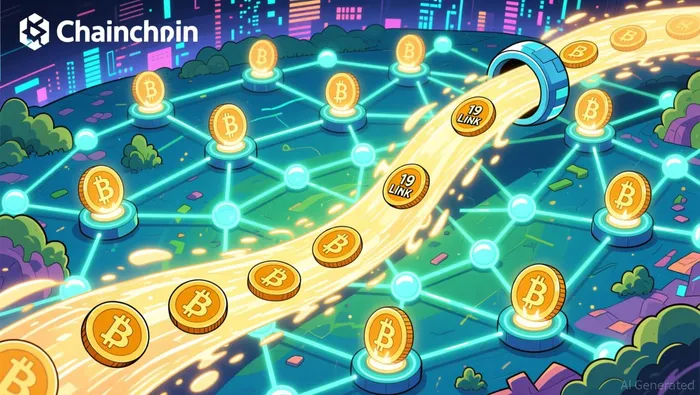
Chainlink’s scheduled quarterly token unlock released approximately 19 million LINK tokens to the market in mid-April 2026, following its recurring pattern of unlocking 10–20 million tokens every quarter to support network incentives and staking rewards according to reports. - The majority of the tokens, valued at $125 million, were transferred to Binance, while 4.62 million were allocated to a multi-signature wallet for staking rewards, aiming to maintain network security and decentralization as data shows.
The quarterly token unlock is a routine part of Chainlink’s tokenomics strategy, designed to maintain the network’s operational sustainability by rewarding stakers and node operators according to analysis. This mechanism helps incentivize participation in the ChainlinkLINK-- oracle network, ensuring its continued reliability and security. However, the immediate impact of the unlock is the injection of new supply into the market, which can increase short-term liquidity and potentially pressure the token price according to market observation.
Market observers have noted that large transfers of tokens to exchanges like Binance are often followed by increased volatility, as traders and market makers may take positions based on the newly available liquidity as reported. This trend has been seen in past unlocks, where tokens moving to exchanges were associated with price fluctuations. However, increased liquidity can also stabilize prices over time, depending on the balance between supply and demand according to data.
On-chain data reveals a positive trend for Chainlink, with a 25% increase in whale wallets holding over one million LINK tokens in the past year according to analysis. This indicates growing interest from institutional and high-net-worth investors, who may be positioning for a future price reversal despite the recent price decline. Whale accumulation is often seen as a bullish signal in the crypto market, as it reflects long-term confidence in the token’s value proposition.
Chainlink’s token unlock also highlights the broader narrative of infrastructure development in the digital asset space according to industry reports. As a foundational provider in DeFi and cross-chain protocols, Chainlink continues to attract institutional interest, as seen in its partnerships with major players like Mastercard and J.P. Morgan. These collaborations underscore its role in connecting traditional finance with blockchain innovation.
Despite the potential short-term pressures from the unlock, Chainlink’s ecosystem appears to be strengthening according to market analysis. The systematic allocation of tokens to staking and liquidity pools suggests a deliberate approach to network growth and stability. Additionally, derivatives positioning and U.S. spot ETF interest indicate growing institutional demand for long positions in LINK, which could signal confidence in its long-term value.
What Are the Risks and Opportunities for Investors?
The increased circulating supply from the quarterly unlock raises concerns about token dilution and its impact on valuation according to analysis. Without mechanisms to reduce quarterly exchange distributions or align institutional use with public demand, the token’s price trajectory may remain under pressure. However, whale accumulation and cross-chain staking integrations indicate growing utility and adoption potential.
Investors should monitor the balance between supply and demand dynamics in the weeks following the unlock according to market data. If institutional interest continues to grow, it could provide a floor for the price and support a potential reversal if broader market conditions improve. The tokenomics of Chainlink remain a key factor in determining its long-term performance, and the systematic release of tokens for staking and incentives reflects a long-term vision for the network.
How Does the Unlock Affect Staking and Network Security?
A portion of the unlocked tokens is directed to the staking rewards contract, which is essential for maintaining the security and decentralization of the Chainlink network as reported. The staking mechanism ensures that node operators are compensated for their services, which helps protect the integrity of the oracle network. By allocating a portion of the quarterly unlock to staking rewards, Chainlink continues to incentivize participation in the network.
As the network continues to grow, the demand for staking services is likely to increase according to analysis. This could further strengthen the network's security and reliability, making it more attractive to institutional participants. The increased participation in staking also helps in maintaining a healthy and secure ecosystem, as it ensures that the network remains decentralized and resistant to attacks.
What Does the Future Hold for Chainlink?
The combination of whale accumulation and the routine unlock suggests that the market is in a period of consolidation according to market data. While the immediate effect of the unlock may create some downward pressure, the long-term fundamentals of the project are being supported by strong investor confidence. The accumulation by whales indicates that these investors are positioning themselves for a potential increase in price once the market sentiment improves.
Historically, periods of increased whale activity have been followed by price movements, as larger investors look to take advantage of market conditions according to reports. The current trend of accumulation suggests that these investors are positioning themselves for a potential increase in price once the market sentiment improves. This could signal a potential breakout in the future, provided that broader market conditions support it.

Blending traditional trading wisdom with cutting-edge cryptocurrency insights.
Latest Articles
Stay ahead of the market.
Get curated U.S. market news, insights and key dates delivered to your inbox.


AInvest
PRO
AInvest
PRO



Comments
No comments yet