
LINK Expands Institutional Adoption Through Real-World Asset Integration and Enterprise Partnerships
 Aime Summary
Chainlink's U.S. Equities Streams initiative provides continuous pricing data for off-chain assets like stocks and ETFs according to Chainlink. Enterprise partnerships with U.S. Commerce, MastercardMA--, and U.S. financial institutions are accelerating adoption as reported. Blockchain-based fund tokenization automates operations and enhances transparency in asset management as detailed in Chainlink's article.
Chainlink's 2026 product updates include CCIP v1.5 and the Automated Compliance Engine to enhance cross-chain integration according to Chainlink. These improvements are positioning the network to support a broader array of financial instruments and institutional-grade operations. The U.S. Equities Streams initiative is a key step in bridging traditional finance with DeFi by providing accurate real-world data to smart contracts 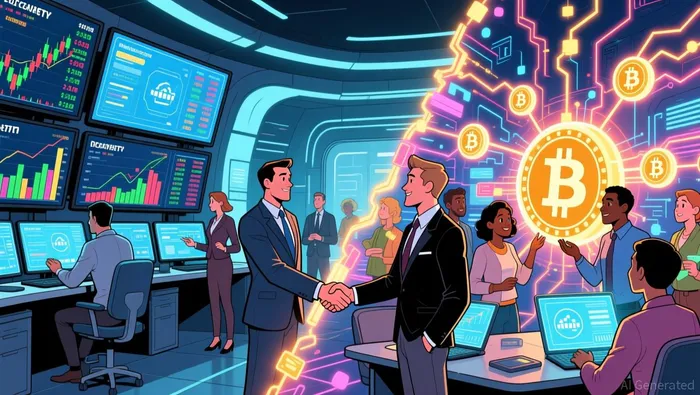 as Chainlink reports.
Tokenization is reshaping fund management by replacing manual, paper-based processes with smart contracts that automate dividend distributions and compliance checks according to Chainlink. This shift introduces greater efficiency and transparency for asset managers and investors. Fractional ownership in traditionally illiquid assets like private equity and real estate is also becoming possible as detailed.
How Does Blockchain Integration Affect Institutional Trust in DeFi?
Chainlink's partnerships with major financial entities are reinforcing institutional trust in DeFi by ensuring tamper-proof valuations and secure data feeds according to Chainlink. The 24/5 U.S. Equities Streams initiative addresses a key limitation in off-chain asset pricing, making tokenized assets more attractive to a broader range of investors. These developments are especially relevant in a regulatory environment that is becoming more supportive of crypto as reported.
What Are the Operational Impacts of Fund Tokenization on Asset Managers?
Asset managers benefit from reduced operational costs and streamlined investor onboarding through blockchain and smart contracts as Chainlink states. By replacing intermediaries with automation, tokenization allows for more efficient fund operations and compliance checks. However, challenges remain in the form of regulatory uncertainty and the need for secure data verification according to Chainlink.
What Limitations Exist in Real-World Asset Tokenization?
While tokenization introduces numerous benefits, challenges such as infrastructure gaps and the need for secure verification remain as detailed in Chainlink's article. Institutional-grade operations require robust infrastructure to support high-value transactions and compliance with evolving regulations. Despite these hurdles, the growth of SEC-approved LINK ETFs and supportive U.S. crypto regulations are positive indicators for the future according to Chainlink.
Chainlink's role in securing and verifying real-world asset valuations is central to the long-term viability of tokenized assets as Chainlink reports. The expansion of oracle services into U.S. equities and ETFs is a major milestone, demonstrating the potential for blockchain to integrate with traditional financial systems. As institutional adoption grows, the demand for accurate and secure data feeds is expected to increase, further solidifying Chainlink's position in the evolving DeFi ecosystem according to Chainlink.

Mezclando la sabiduría tradicional en el comercio con las perspectivas de vanguardia en el área de las criptomonedas.
Latest Articles
Stay ahead of the market.
Get curated U.S. market news, insights and key dates delivered to your inbox.




Comments
No comments yet