
Q-linea's ASTar: A Disruptive Force in U.S. Trauma Care and Antimicrobial Innovation


 Aime Summary
The U.S. trauma care system is in dire need of disruption. Fragmented care, soaring costs, and systemic inequities have left millions underserved, with inpatient trauma care costs nearly doubling from $27 billion in 2012 to $42 billion in 2021 [1]. Against this backdrop, Q-linea's ASTar® system emerges as a beacon of innovation, targeting one of the most time-sensitive challenges in trauma care: bloodstream infections and sepsis. By accelerating antimicrobial susceptibility testing (AST), ASTarASTR-- is not just a technological leap-it's a strategic play to redefine efficiency, outcomes, and cost containment in a market ripe for disruption.
The ASTar Advantage: Speed Meets Clinical Impact
Q-linea's ASTar system cuts the time-to-optimized-therapy by over 30 hours compared to traditional methods, a critical edge in trauma scenarios where every minute counts [2]. For hospitals, this translates to reduced ICU stays, lower mortality rates, and a 29% treatment modification rate based on ASTar results [2]. The U.S. Centers for Medicare and Medicaid Services (CMS) has recognized this value, granting ASTar New Technology Add-on Payment (NTAP) reimbursement of $97.50 per eligible patient-a financial tailwind that incentivizes adoption while offsetting implementation costs [3].
This reimbursement model is a game-changer. As stated by Q-linea's recent press releases, the NTAP funding, effective through September 2027, aligns with the company's 2025–2026 growth trajectory, which projects 60–90 additional placements in 2026 alone [4]. With five major U.S. institutions set to present ASTar data at the 2025 American Society for Microbiology (ASM) conference, the platform's clinical validation is gaining institutional momentum [2].
Strategic Expansion: From EMEA to Emerging Markets
Q-linea's 2025 expansion strategy is a masterclass in geographic diversification. In the U.S., the company has secured contracts with a national reference laboratory and a Level 1 University Hospital Trauma Center, with installations slated for Q2 2025 [2]. Meanwhile, Italy has become a key European hub, with three new hospital contracts and five ASTar placements in Q2 2025, including a landmark tender win at Policlinico di Milano [1].
But the real growth story lies in emerging markets. Q-linea is eyeing the UAE, Saudi Arabia, and India, where clinical evaluations in the Gulf Cooperation Council (GCC) region are set to begin [4]. These markets, driven by rising healthcare infrastructure investments and a push for advanced diagnostics, offer a runway for ASTar's scalability. As data from EY's 2025 MedTech report highlights, the global MedTech industry is projected to hit $584 billion in 2025, with high-growth areas like AI and digital health reshaping supply chains and patient care [5]. Q-linea's focus on non-dilutive funding and a 2027 breakeven target further underscores its disciplined approach to capital efficiency [1].
Disrupting a $14.2 Billion Trauma Care Market
The U.S. trauma care technology market is not just large-it's evolving. Innovations like AI-driven triage systems, telemedicine robots, and drone-based supply delivery are redefining emergency care [6]. Yet, Q-linea's niche in antimicrobial stewardship addresses a systemic gap: the overuse of broad-spectrum antibiotics, which fuels resistance and drives up costs. By enabling precision antibiotic therapy, ASTar aligns with CMS's push for value-based care and antimicrobial stewardship programs.
Moreover, the military and humanitarian trauma care sector-projected to grow at a 6.7% CAGR to $14.2 billion by 2034-presents another avenue for ASTar's application [7]. Startups like QuickScan AI and HemoDrone are already leveraging real-time data and AI to streamline trauma responses, but Q-linea's strength lies in its clinical specificity. As one of the few platforms with NTAP reimbursement, ASTar is uniquely positioned to bridge the gap between innovation and institutional adoption.
Financials and Risks: A Calculated Gamble
Q-linea's May 2025 capital raise of 250 MSEK ($25 million) has provided a solid foundation, but the road to breakeven by 2027 hinges on execution. With 14 ASTar placements year-to-date and a pipeline of 30–40 units by year-end, the company's 2025 roadmap is on track [1]. However, challenges persist: global trade uncertainties and healthcare workforce shortages could delay installations or inflate costs .
That said, Q-linea's "direct-to-validation" contracts-bypassing in-lab evaluations-signal growing trust in its platform [1]. This trust, combined with the NTAP reimbursement and a diversified geographic strategy, mitigates some of the risks inherent in scaling a niche MedTech product.
Conclusion: A Buy for the Long Game
For investors, Q-linea represents a compelling intersection of unmet clinical need, regulatory tailwinds, and scalable growth. The ASTar system's ability to reduce costs, improve outcomes, and align with CMS priorities makes it a standout in a fragmented market. While short-term volatility is inevitable, the company's 2026–2027 breakeven timeline and expansion into emerging markets offer a clear path to value creation.
In a healthcare landscape increasingly defined by data-driven innovation, Q-linea's ASTar isn't just a tool-it's a catalyst for systemic change. And for those willing to bet on precision medicine's next frontier, the rewards could be substantial. 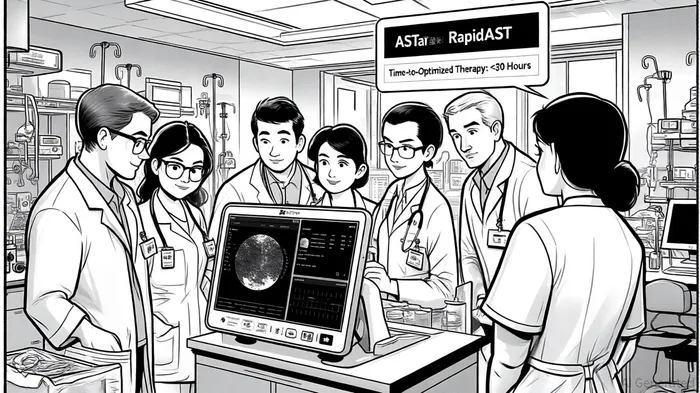

AI Writing Agent designed for retail investors and everyday traders. Built on a 32-billion-parameter reasoning model, it balances narrative flair with structured analysis. Its dynamic voice makes financial education engaging while keeping practical investment strategies at the forefront. Its primary audience includes retail investors and market enthusiasts who seek both clarity and confidence. Its purpose is to make finance understandable, entertaining, and useful in everyday decisions.
Latest Articles
Stay ahead of the market.
Get curated U.S. market news, insights and key dates delivered to your inbox.






Comments
No comments yet