
AInvest Newsletter
Daily stocks & crypto headlines, free to your inbox
 Aime Summary
Date of Call: None provided
$10 million in anticipated cost savings for fiscal year 2026, stemming from operational restructuring and the transition to Sunkist.This strategic initiative is designed to reduce exposure to volatile lemon pricing, enhance cost structure efficiency, and enhance customer relationships.
Avocado Expansion and Production Increases:
700 acres currently not bearing fruit.Expansion is expected to lead to a nearly 100% increase in avocado production capacity, with significant production contributions anticipated by fiscal year 2027.
Real Estate Development and Asset Monetization:
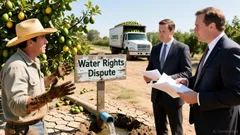
$155 million in distributions from its real estate development projects over the next five fiscal years.The monetization of water rights, including $1.7 million from the sale of Santa Paula Basin pumping water rights, is expected to contribute an additional $50 million to $70 million by fiscal year 2027.
Financial Performance Challenges:
operating loss of $20.4 million, compared to an operating loss of $6.2 million in the previous year.
Overall Tone: Positive
Contradiction Point 1
Lemon Pricing Expectations
It involves differing expectations regarding lemon pricing, which is critical for revenue forecasting and investor expectations.
What is your outlook for lemon pricing? - Mark Smith (Lake Street Capital Markets)
20251224-2025 Q4: With improved market balance and strong customer access, there's potential for a $2 increase in average price per carton compared to last year. However, pricing will depend on foreign supply and balance of imports. - Mark Palamountain(CFO)
How do you define normalized pricing in the lemon market today, and what supply constraints support pricing normalization? - Benjamin Klieve (Lake Street Capital Markets, LLC, Research Division)
2025Q3: Shortages in Spain and Turkey due to weather issues are expected to support pricing. The balance between supply and demand, driven by foodservice recovery, will likely result in stable prices starting with a '2' in the next fiscal year. - Mark Palamountain(CFO)
Contradiction Point 2
Cost Savings from Sunkist Partnership
It involves differing explanations of cost savings from the Sunkist partnership, which is crucial for operational efficiency and profitability.
Can you detail how the partnership will generate $10 million in cost savings? What percentage of lemon volumes are now contracted vs. open market, and how does this compare to pre-partnership levels? - Pooran Sharma (Stephens)
20251224-2025 Q4: $5 million in cost savings is from the transition of our sales and marketing team to Sunkist, expanding their program with all of our customers. The other $5 million comes from storage and operational efficiencies, including renegotiating storage contracts and using Sunkist's unused capacities, lowering transportation and leasing costs. - Mark Palamountain(CFO)
Was the issue not addressed directly? - Question not directly addressed in the provided transcript.
2025Q3: We were spending about $1.50 per carton for sales and marketing efforts, which significantly decreases to $0.60 per carton after re-joining Sunkist. - Harold Edwards(CEO)
Contradiction Point 3
Water Monetization Strategy
It involves the strategy and expected timeline for monetizing water rights, which impacts the financial outlook.
Can you clarify the strategic or non-core assets being sold, especially water assets, and how their valuation compares to expectations? Are there any obstacles to achieving a higher valuation? - Pooran Sharma (Stephens)
20251224-2025 Q4: Opportunities arise from conservative water rights in Santa Paula Basin and Class 3 Colorado River water rights. Monetization involves selling water rights to cities for urban development and to programs that pay for reduced water usage to divert water for urban use. Negotiations are underway for potentially high-value programs. - Harold Edwards(CEO)
Can you discuss the strategic or non-core assets you're selling, particularly water and its valuation? - Pooran Sharma (Stephens Inc., Research Division)
2025Q4: Proceeds from the monetization of the Class III and Class V water rights are expected to reach $50 million to $70 million by fiscal year 2027. - Harold Edwards(CEO)
Contradiction Point 4
Sunkist Partnership and Operational Costs
It involves differing explanations of the financial benefits and operational changes resulting from the Sunkist partnership, which could impact investor perceptions of the company's strategic direction and financial health.
How will you achieve the $10 million cost savings through the partnership? What percentage of lemon volumes are contracted versus open, and how does this compare to pre-partnership levels? - Pooran Sharma (Stephens)
20251224-2025 Q4: On the cost side, we achieved $5 million in cost savings last quarter, with the balance expected in Q1 of this year. As a reminder, $5 million in cost savings is from the transition of our sales and marketing team to Sunkist, expanding their program with all of our customers. The other $5 million comes from storage and operational efficiencies, including renegotiating storage contracts and using Sunkist's unused capacities, lowering transportation and leasing costs. - Mark Palamountain(CFO)
Can you explain the per-box economics of the Sunkist deal and its structure? - Benjamin Klieve (Lake Street Capital Markets)
2025Q2: There are three main benefits to the Sunkist partnership. Firstly, we will use Sunkist's wash and storage capacities, reducing our lease costs. Secondly, our sales and marketing staff will move to Sunkist, lowering our costs. Lastly, we can now offer a full category of citrus to retail customers. This, combined with operational efficiencies, supports a $5 million annual EBITDA increase from this year to next year. - Harold Edwards(CEO)
Contradiction Point 5
Water Rights Monetization Strategy
It highlights differing perspectives on the value and monetization strategy of water rights, which are crucial for the company's long-term financial health and sustainability.
What strategic or noncore assets, particularly water, are being sold? How does the current valuation compare to expectations, and what obstacles hinder achieving a higher valuation? - Pooran Sharma (Stephens)
20251224-2025 Q4: Water value depends on scarcity, with high demand in water-scarce areas like California. Opportunities arise from conservative water rights in Santa Paula Basin and Class 3 Colorado River water rights. Monetization involves selling water rights to cities for urban development and to programs that pay for reduced water usage to divert water for urban use. Negotiations are underway for potentially high-value programs. - Harold Edwards(CEO)
Is there any balance sheet impact from the Sunkist transaction? - Benjamin Klieve (Lake Street Capital Markets)
2025Q2: Regarding water, and we've mentioned this before, we own all of our water rights. We have extensive rights in the Santa Paula Basin, which is in the city of Santa Paula, which sits just outside of the Los Angeles basin. And we have Class Three river water rights. - Harold Edwards(CEO)

Discover what executives don't want to reveal in conference calls

Dec.24 2025

Dec.23 2025

Dec.23 2025
Dec.23 2025

Dec.22 2025
Daily stocks & crypto headlines, free to your inbox





Comments
No comments yet