Limoneira's Q4 2025: Contradictions Emerge on Lemon Pricing, Avocado Production, and Water Rights Valuation

Tuesday, Dec 23, 2025 7:53 pm ET3min read
Aime RobotAime Summary

-

implemented strategic cost-cutting measures, projecting $10M savings in FY2026 via Sunkist partnership and operational efficiency.

- Q4 FY2025 revenue fell to $42.8M (-2.5% YoY), with FY2025 total revenue dropping 16.6% to $159.7M amid lemon market oversupply.

- Avocado expansion (700 non-bearing acres) and Agromin JV expected to drive $4-5M EBITDA starting FY2027 as trees mature.

-

distributions ($155M over 5 years) and water rights monetization ($50-70M potential) highlighted as key value-creation initiatives.

Date of Call: None provided

Financials Results

  • Revenue: $42.8M in Q4 FY2025, down from $43.9M in Q4 FY2024; FY2025 total net revenue $159.7M vs $191.5M in FY2024
  • EPS: Net loss per diluted share of $0.49 in Q4 FY2025 vs $0.11 in Q4 FY2024; FY2025 net loss per diluted share $0.93 vs net income per diluted share $0.40 in FY2024
  • Operating Margin: Operating loss of $11.1M in Q4 FY2025 vs operating loss of $2.8M in Q4 FY2024; FY2025 operating loss $20.4M vs $6.2M in FY2024

Guidance:

  • FY2026 fresh lemon volumes of 4.0–4.5 million cartons and avocado volumes of 5–6 million pounds.
  • Anticipate ~$10 million in cost savings in FY2026 (≈50% reduction in SG&A from restructuring/Sunkist transition).
  • Expect $155 million in real estate distributions over the next five fiscal years.
  • Agromin organic recycling JV expected to process ~300,000 tons/year and contribute $4–5 million EBITDA beginning FY2027.
  • Avocado expansion (700 non‑bearing acres) to contribute meaningfully in FY2027 as trees mature.

Business Commentary:

* Strategic Transformation and Cost Reduction: - Limoneira implemented extensive strategic initiatives to address oversupply in the global lemon market, resulting in a projected $10 million in cost savings for fiscal year 2026 compared to fiscal year 2025. - The transformation involved repositioning the company around multiple profit centers, improving cost structure, and enhancing customer access through partnerships like Sunkist.

  • Agribusiness Revenue and Product Mix:
  • Fresh packed lemon sales contributed $19.2 million in the fourth quarter of fiscal year 2025, compared to $8.4 million in the same period of fiscal year 2024, marking a significant increase.
  • The company is expanding its avocado offering, with 1,500 acres planted, aiming to increase production capacity by nearly 100% over the next three to four years.

  • Financial Performance and Guidance:

  • For the fiscal year 2025, Limoneira reported total net revenue of $159.7 million, compared to $191.5 million in the previous fiscal year, driven by increased agribusiness revenues from oranges and reduced exposure to volatile lemon pricing.
  • The company guided for fresh lemon volumes of 4-4.5 million cartons and avocado volumes of 5-6 million pounds for fiscal year 2026.

  • Real Estate and Asset Strategy:

  • Limoneira's real estate pipeline is expected to distribute $155 million over the next five fiscal years, with key projects like Harvest at Limoneira and Limco Del Mar being developed.
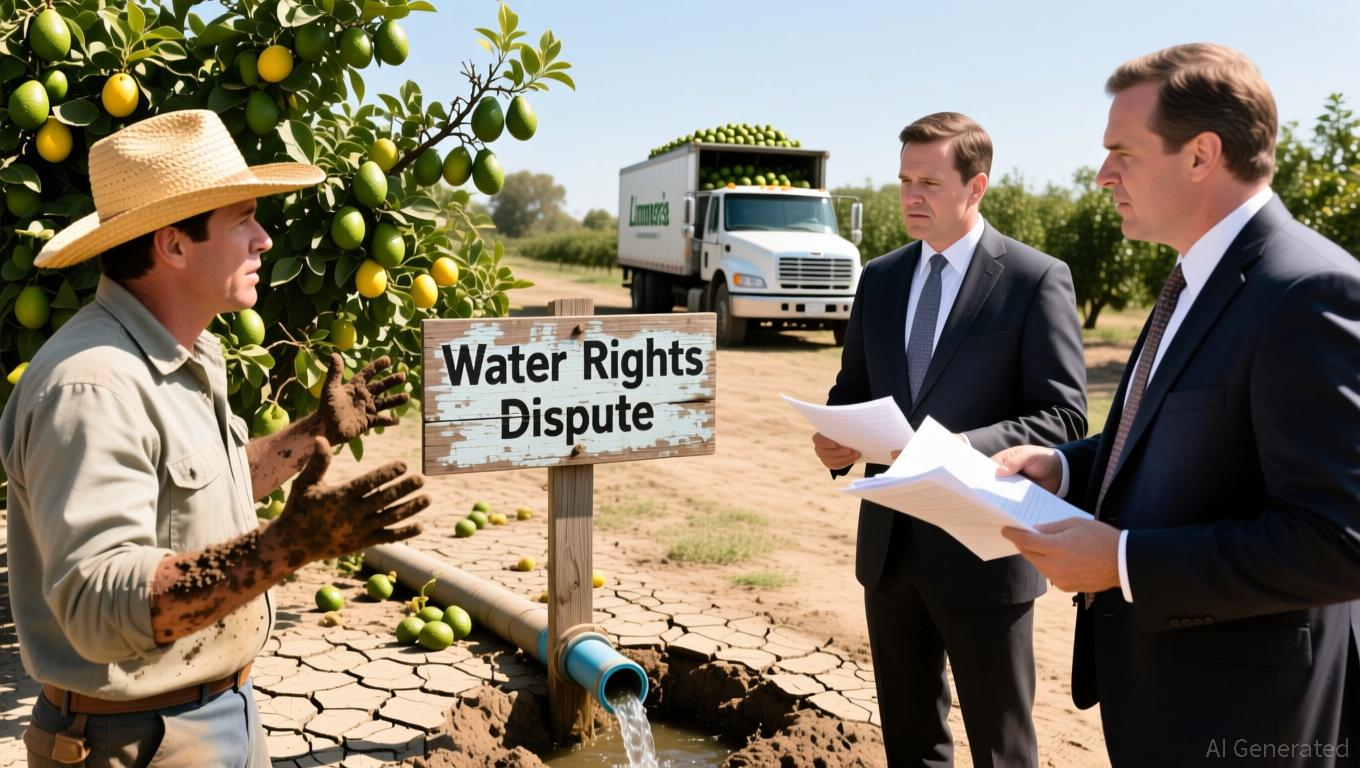
  • The company is also monetizing water rights, with plans to realize $1.7 million from Santa Paula Basin water rights and a potential $50-$70 million from Colorado River water rights through fiscal year 2027.
Sentiment Analysis:

Overall Tone: Positive

  • Management repeatedly framed the business as transformed and positioned for improvement: "we expect to generate $10 million in cost savings compared to fiscal year 2025"; "Fiscal year 2026 will mark the beginning of this transformation’s financial impact"; return to Sunkist provides improved customer access and pricing stability; multiple value-creation initiatives (avocados, JV, real estate, water monetization) highlighted.

Q&A:

  • Question from Puran Sharma (Stephens): Could you give granularity on the $10 million in cost savings from the Sunkist partnership and detail how customer relationships/contracting will change?
    Response: The $10M is roughly split: ~$5M from transitioning sales/marketing to Sunkist and ~$5M from storage and operational efficiencies; Sunkist reduces sales cost per carton (from ~$1.50 to $0.60) and provides better retail and foodservice access, improving pricing stability.

  • Question from Puran Sharma (Stephens): Can you discuss water asset valuation, monetization strategy, and any government pushback?
    Response: Water rights (Santa Paula conserved pumping and Class 3 Colorado River rights) are high-value assets being monetized via conserved-rights sales and participation in fallowing programs; company expects to capture material value through end of FY2027 and is negotiating with stakeholders while mindful of community impacts.

  • Question from Jerry Sweeney (Roth Capital Partners): Will renegotiation of the Colorado River Compact and cuts along the river be positive for your water-rights strategy?
    Response: Yes — negotiations and mandated reductions increase demand/value for senior Class 3 water rights; anticipated cuts appear targeted at lower-priority classes, positioning Limoneira favorably for fallowing/conveyance programs.

  • Question from Puran Sharma (Stephens): How will Limco Del Mar be developed — sell, self-develop, or partner — and what's the timing/value uplift?
    Response: Primary focus is securing entitlements (community charrettes, CEQA, public vote) through 2026; value uplift is substantial if entitled, but development approach/partnering remains undecided until entitlement progress is achieved.

  • Question from Puran Sharma (Stephens): What's the cadence for the 700 non-bearing avocado acres coming into production and expected operating income per acre?
    Response: 700 non-bearing acres will mature over the next 3–4 years with ongoing plantings (~250–300 acres/year); long-term average yield ~17,000 lbs/acre and expected operating profit of roughly $12k–$14k per acre (farm cost ~ $5k/acre).

  • Question from Mark Smith (Lake Street Capital Markets): How much of the SG&A/expense savings are from the Sunkist transition versus other operational projects?
    Response: Majority from the Sunkist transition (sales force moved) plus storage/operational rightsizing; ~$10M annualized savings expected with implementation and system integrations continuing into early 2026.

  • Question from Mark Smith (Lake Street Capital Markets): Any outlook or color on near-term lemon pricing for modeling?
    Response: Management declined formal price forecasting but noted Sunkist linkage provides floor/protection; typical seasonal dip to $16–$17 in Jan–Mar may be mitigated and supply shifts (Turkey/Spain weakness) could support stronger summer pricing.

  • Question from Mark Smith (Lake Street Capital Markets): Thoughts on the balance sheet, covenant changes, and comfort with debt levels?
    Response: Renegotiated bank covenants provide runway: new capitalization-based leverage metric replaces prior backward-looking covenant and DSCR measurement suspended until end of FY2027, enabling access to credit capacity while aiming to reduce debt toward historical ~$40M target (net debt $71M as of Oct 31, 2025).

Contradiction Point 1

Lemon Pricing and Supply Constraints

It involves expectations for the lemon market pricing and supply constraints, which directly impact revenue forecasts and investor expectations.

What details can you provide about the $10 million in cost savings from the Sunkist partnership? What is the shift in lemon volumes to contracted versus open sales, and how does this compare to pre-partnership levels? - Puran Sharma (Stephens)

2025Q4: We are predicting a price with two digits next year, starting high and dipping lower in the winter. - Mark Palamountain(CFO)

How do you define normalized pricing, and what supply constraints will support pricing next year? - Benjamin Klieve (Lake Street Capital Markets)

2025Q3: Limoneira anticipates a price with two digits next year, starting high and dipping lower in the winter. - Mark Palamountain(CFO)

Contradiction Point 2

Avocado Production and Operating Income per Acre

It involves forecasts for avocado production and operating income per acre, which are crucial for strategic planning and investor expectations.

Can you explain avocado production and operating income per acre? - Puran Sharma (Stephens)

2025Q4: The avocado expansion involves planting 250-300 acres annually, with first yields expected in 2027. - Mark Palamountain(CFO)

Can you provide preliminary estimates for 2026 avocado volumes, given the biennial cycle? - Benjamin Klieve (Lake Street Capital Markets)

2025Q3: Limoneira anticipates production to be similar to or slightly lower than this year. - Harold Edwards(CEO)

Contradiction Point 3

Avocado Production Timeline and Expectations

It impacts expectations regarding the timeline and yield of the company's avocado production, which is a significant part of their expansion strategy and revenue expectations.

Can you discuss avocado production and operating income per acre? - Puran Sharma (Stephens)

2025Q4: The avocado expansion involves planting 250-300 acres annually, with first yields expected in 2027. - Mark Palamountain(CFO)

Will past plantings bear fruit by fiscal '26, leading to increased yields between fiscal '24 and '26? - Benjamin Klieve (Lake Street Capital Markets)

2025Q2: The earliest plantings are about 3 years old and have already produced over 10,000 pounds per acre, ahead of schedule. - Mark Palamountain(CFO)

Contradiction Point 5

Water Rights Transactions and Value

It involves differing perspectives on the value and potential of water rights transactions, which could impact strategic decisions and investor perceptions.

Can you provide insights on the valuation of strategic water assets relative to expectations? - Puran Sharma(Stephens)

2025Q4: Water assets are valuable due to scarcity and urban growth requirements. In Santa Paula Basin, Limoneira can monetize conserved water rights and pumping rights. In Yuma, Arizona, the Colorado River riparian water rights can be leveraged for higher value through fallowing programs, with potential payouts expected to surpass current values. - Puran Sharma(Analyst)

Can you clarify the water rights transactions, including total volume and the reason for the 55 acre-foot figure? - Benjamin Klieve(Lake Street Capital)

2025Q1: The $30,000 per acre foot rate was benchmarked against the fees developers pay to adjacent cities. - Mark Palamountain(CFO)

Comments


Add a public comment...
No comments

No comments yet