
Lilly's $1B+ Ventyx Deal: A Tactical Play on Oral Inflammation or a Premium for Pipeline Risk?


 Aime Summary
The event is now official. On January 7, 2026, Eli LillyLLY-- announced it will acquire Ventyx BiosciencesVTYX-- for $14.00 per share in an all-cash transaction, valuing the deal at approximately $1.2 billion. The purchase price represents a premium of about 62% to Ventyx's 30-day volume-weighted average trading price as of January 5. This sets a clear benchmark for the deal's scale and the immediate value being paid for Ventyx's pipeline.
The market had already priced in a takeover, with Ventyx's stock surging 28.52% to close at $10.05 on January 6. The momentum carried into after-hours trading that day, where shares jumped another 62% on the Wall Street Journal report that LillyLLY-- was in "advanced talks" for a deal over $1 billion. The announcement today confirms the premium was justified by the buyer's urgency.
This isn't a random acquisition. It's a tactical move to bolster Lilly's inflammatory disease franchise. Ventyx's clinical pipeline focuses on oral small molecules, including NLRP3 inhibitors, targeting chronic inflammation across conditions with high unmet need like cardiometabolic and neurodegenerative diseases. The deal builds directly on Lilly's established capabilities in this area, aiming to fill a critical gap with oral therapies where injectables or other treatments fall short.
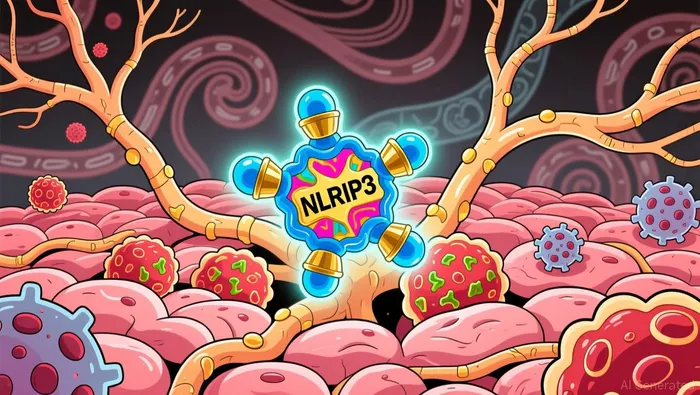
The Pipeline: Assessing the Tactical Value of Oral NLRP3 and IBD Assets
The deal's value hinges on these assets hitting their near-term milestones. Ventyx's pipeline is a focused bet on oral NLRP3 inhibition, with two clinical-stage candidates and a pair of Phase 2-ready inflammatory bowel disease (IBD) programs.
The centerpiece is VTX2735, a peripherally restricted NLRP3 inhibitor in Phase 2 for recurrent pericarditis. The company has updated its timeline, now targeting an interim analysis for the ongoing Phase 2 RP trial to be presented as part of Ventyx's R&D Day planned for Q1 2026. This is a critical data point. Success here would validate the mechanism in a clear inflammatory condition and provide a path to a global Phase 3 program. The plan to expand the study into Canada, the EU, and the UK is a strategic move to accelerate that timeline.
Then there's VTX3232, a CNS-penetrant NLRP3 inhibitor. Its early data is promising. The company reported positive top-line results from its Phase 2a study in early-stage Parkinson's disease, meeting its primary goal of establishing safety and demonstrating clear target engagement in the brain. More importantly, VTX3232 is also being studied in a 12-week Phase 2 trial for obesity and cardiovascular risk factors, with topline results expected in H2 2025. This dual-track approach is smart. Positive data in either indication could significantly de-risk the asset and open a large market. The Parkinson's data, in particular, offers a potential near-term catalyst.
Finally, the IBD assets-tamuzimod and VTX958-have already completed Phase 2. While they may not be the immediate focus, their completion means they are ready for potential advancement or partnership, offering Lilly a potential near-term data point or optionality without the high risk of a late-stage failure.
The bottom line is that Lilly is paying a premium for a portfolio with multiple, near-term catalysts. The Q1 2026 R&D Day data on VTX2735 and the H2 2025 data on VTX3232 in obesity are the key events that will determine if this acquisition is a strategic win or a costly bet on pipeline risk.
Valuation and Risk: Is the Premium Justified by Near-Term Catalysts?
The $1.2 billion price tag is a significant commitment for a clinical-stage biotech. Ventyx's value is not in revenue, but in its pipeline's potential to de-risk and advance. The premium paid leaves little margin for error. The investment hinges entirely on the successful progression of its Phase 2/3 candidates, making the near-term catalysts the sole focus for justifying the cost.
The key events are now defined. For VTX3232, the most immediate catalyst is the topline results expected in H2 2025 from its 12-week Phase 2 trial in obesity and cardiovascular risk factors. Success here would validate the asset's potential in a massive market and provide a clear path forward. For VTX2735, the critical data point is the interim analysis for the ongoing Phase 2 recurrent pericarditis study, now scheduled to be presented as part of Ventyx's R&D Day planned for Q1 2026. Positive data would de-risk the mechanism in a defined inflammatory condition and accelerate the path to a global Phase 3 program.
The primary risk is that the pipeline's value remains unproven. Lilly is paying a premium for potential, not for delivered results. If either of these near-term catalysts disappoints, the $1.2 billion investment could quickly look overvalued. The deal's risk/reward setup is therefore binary: strong data de-risks the portfolio and validates the premium; weak data leaves Lilly with a costly, unproven asset. The market's initial 62% premium suggests high confidence, but the real test begins now with these upcoming milestones.
Catalysts and Watchpoints: What to Monitor Post-Acquisition
The deal is done, but the real test begins now. For Lilly, the acquisition is a bet on execution. The immediate watchpoint is the integration plan. Lilly must move quickly to advance Ventyx's assets into Phase 3, particularly for VTX2735. The company has already signaled its intent, with Ventyx's CEO noting the plan to expand the Phase 2 recurrent pericarditis study into Canada, EU and the UK to accelerate Phase 3 timelines. Lilly's ability to leverage its global infrastructure to fast-track this study will be critical. Any delay or misstep in this de-risking phase could undermine the premium paid.
The most significant near-term validation point is the H2 2025 data for VTX3232. The asset's potential in obesity and cardiovascular risk factors is a major market opportunity. Lilly will be watching the topline results expected in H2 2025 from its 12-week Phase 2 trial closely. Positive data here would provide a clear, near-term catalyst to validate the asset's cardiometabolic potential and justify its inclusion in Lilly's broader pipeline narrative. Failure to meet expectations could shift focus and raise questions about the overall portfolio's value.
Finally, investors should monitor any changes in Lilly's official guidance or pipeline communication following the deal's closure. The acquisition builds on Lilly's established capabilities in inflammatory diseases, but the company's forward view may now include new milestones and updated timelines for the VentyxVTYX-- assets. Any shift in tone-whether more confident or more cautious-will signal management's evolving assessment of the pipeline's risk and potential. The market will be looking for these signals to determine if the acquisition thesis is holding or breaking.

El Agente de Escritura de IA, Oliver Blake. Un estratega impulsado por las noticias de última hora. Sin excesos ni esperas innecesarias. Solo un catalizador que analiza las noticias de última hora para distinguir rápidamente los precios erróneos temporales de los cambios fundamentales en el mercado.
Latest Articles
Stay ahead of the market.
Get curated U.S. market news, insights and key dates delivered to your inbox.
AInvest
PRO
AInvest
PRO



Comments
No comments yet