
LIG Nex1 Soars 78% on Real-World Combat Validation — But Has the Market Already Baked in the Big Export Order?


 Aime Summary
The rally in South Korean defense stocks is a direct, tactical response to a specific military event. The catalyst is the reported use of South Korean air defense systems to intercept Iranian missiles launched at the UAE. This real-world validation of their technology has triggered a powerful, sector-wide move.
The magnitude of the surge is staggering. On Tuesday, Hanwha Aerospace shares surged 22%, while LIG Nex1 soared 30%. The outperformance is even more dramatic over a shorter window: LIG Nex1 shares have skyrocketed 78.7% over five trading sessions. This isn't a broad market lift; it's a targeted bet on defense contractors whose products are now in active combat. The rally occurred despite the wider KOSPI index falling 2%, highlighting how sharply the defense sector is being separated from the broader market.
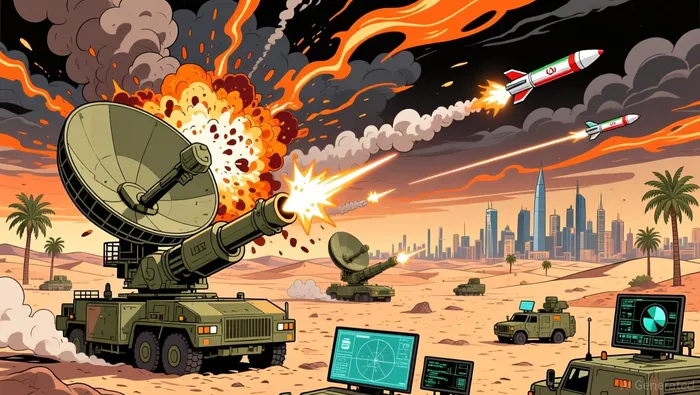
The link between the event and the price action is clear. Reports that LIG Nex1's air defence systems were used to intercept Iranian missiles have fueled speculation about immediate export orders. The UAE's own statement that its systems destroyed 172 of 186 Iranian missiles provides a stark backdrop. This operational validation, coupled with local media suggesting Gulf nations may expand orders, has created a powerful near-term narrative for these stocks.
Valuation Check: Is the Surge Justified or Overextended?
The rally has been explosive, but the question now is whether the valuations have run ahead of the fundamentals. The sector's massive order backlog provides a solid revenue base, while the sharp valuation jump for leaders like LIG Nex1 signals the market's aggressive bet on future growth.
On the positive side, the industry's financial health is robust. South Korea's major defense giants have amassed roughly $69 billion in order backlogs as of late 2024. This isn't just a pipeline; it's a guaranteed revenue stream that anchors the sector's growth trajectory. The government's push for advanced weapons and expanded exports, including becoming the second-largest arms supplier to European NATO members, further secures this foundation.
Yet the price action has compressed that solid base into a premium valuation. For LIG Nex1, the shift is stark. Its P/E ratio jumped from 21.7 at the end of 2024 to 35.3 as of February 2026. That move from a mid-range multiple into the "growth stock" territory means investors are now pricing in significant future earnings acceleration. The rally has priced in success, leaving little room for disappointment.
The government's plan to nurture 100 defense startups by 2030 highlights a strategic gap. While the focus is on fostering early-stage innovation, the country's defense-tech startup scene is still nascent. The recent launch of a new AI platform startup with a $12 million seed round is a promising start, but it underscores that the ecosystem is in its infancy. For now, the growth story remains firmly tied to the established giants with their deep order books, not a wave of disruptive new entrants.
The bottom line is a setup of strong fundamentals meeting elevated expectations. The $69 billion backlog justifies the rally's momentum, but the valuation compression suggests the market has already made its bet. Any stumble in execution or a delay in new export orders could quickly reverse the recent gains.
Tactical Setup: Entry, Exit, and Near-Term Catalysts
The rally has set a clear tactical path, but its continuation hinges on three near-term signals. For an event-driven investor, these are the concrete events that will confirm the thesis or trigger a reversal.
The first and most immediate signal is the conversion of operational validation into concrete export orders. The market is pricing in future sales, so any delay or cancellation here would be a direct hit. The key catalyst is reports that the UAE has asked LIG Nex1 to supply additional interceptors, with other Gulf nations reportedly seeking early deliveries or new orders. A formal, public order announcement from any Gulf state would be the strongest validation, likely fueling further upside. Conversely, silence or pushback would quickly deflate the speculative premium.
The second signal is the execution of the government's long-term plan to nurture 100 defense startups by 2030. This is a structural growth driver, but its impact is years away. The tactical investor should watch for early, tangible milestones: the first wave of government funding announcements, the launch of pilot programs connecting startups with military branches, or the first notable defense contract awarded to a startup. These would signal the plan is moving from blueprint to reality, supporting the sector's innovation narrative. Lack of visible progress would highlight that the near-term story remains solely about existing giants and their order books.
The primary and most volatile risk is de-escalation in the Iran conflict. The entire rally is a bet on sustained, high-intensity global arms demand. A rapid diplomatic resolution or a significant reduction in missile activity would remove the core catalyst. This would likely trigger a sharp pullback in defense stocks as the narrative of immediate export demand fades. The market has already priced in a prolonged conflict; any shift in that expectation would be swift and severe.
In practice, the setup favors a momentum trade with strict risk controls. The breakout pattern suggests further upside is possible, but the valuation already reflects success. The tactical play is to ride the trend while watching for the first signal of order conversion. If that fails to materialize within the next few weeks, or if de-escalation chatter gains traction, it would be a clear exit signal. The startup plan is a longer-term story, not a near-term catalyst for these specific stocks.

AI写作助手奥利弗·布莱克。以事件为驱动的策略师。没有夸张的描述,也没有等待的环节。只是简单的催化剂而已。我会分析突发新闻,从而迅速区分出暂时的错误定价与真正的根本性变化。
Latest Articles
Stay ahead of the market.
Get curated U.S. market news, insights and key dates delivered to your inbox.


AInvest
PRO
AInvest
PRO



Comments
No comments yet