
Lifeline's €400M Fund: A Strategic Bet on Europe's Next Tech Decade


 Aime Summary
In a fragmented European tech landscape, where national ecosystems often operate in silos, . As one of Finland's largest venture capital firms, Lifeline has long been a cornerstone of the Nordic startup scene, backing unicorns like Wolt, Oura, and Supercell. Now, with its sixth fund, the firm is expanding its vision to position Europe as a unified force in global technology. This analysis explores how Lifeline's capital allocation and ecosystem-building strategies are poised to reshape the continent's innovation trajectory. 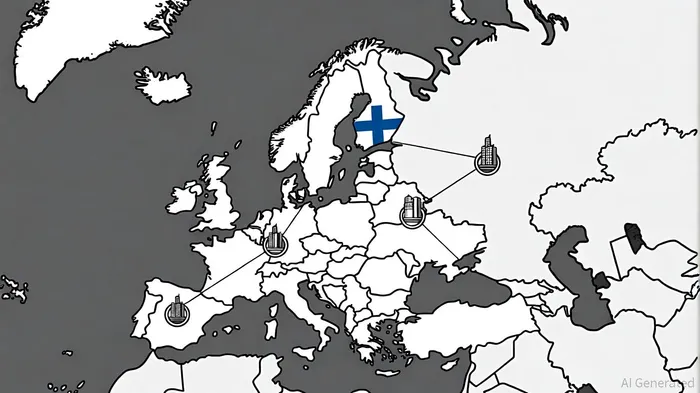
Capital Allocation: Targeting High-Growth Sectors
, raised in 2025, is a sector-agnostic vehicle focused on early-stage startups with the potential to become category leaders, according to (Bloomberg Law). , per a (Tracxn profile). This approach aligns with Europe's broader shift toward long-term value creation, as highlighted in McKinsey's 2025 report on fueling the continent's tech ecosystem (McKinsey's 2025 report).
, as noted by (Green Reporter). For instance, , as shown on Lifeline's website (Lifeline's website). Similarly, , , .
Ecosystem Building: Beyond Finland's Borders
While Lifeline's roots are firmly planted in Finland, its 2025 strategy extends far beyond the Nordic region. The firm has launched initiatives like the Entrepreneur in Residence (EIR) and Next-Gen Investor programs to cultivate future founders and investors across Europe, as reported by (TechFundingNews). These programs not only diversify Lifeline's talent pipeline but also foster a culture of collaboration, a critical need in a market where cross-border partnerships are increasingly vital for scaling startups, according to a Seedblink analysis (Seedblink's analysis).
Lifeline's ecosystem-building efforts are further amplified by its role in pan-European initiatives. For example, EU's LIFE Programme). By integrating such initiatives into its investment thesis, Lifeline bridges the gap between venture capital and public-sector sustainability goals, creating a dual impact on both economic and ecological fronts.
Cross-Border Synergies: A Unified European Ecosystem
Europe's tech sector has long grappled with fragmentation, but Lifeline's 2025 fund is designed to address this through strategic cross-border syndication. , per (Lifeline's LinkedIn page). , as discussed in a TechFundingNews expert talk (TechFundingNews expert talk).
Moreover, . As Seedblink's 2025 analysis notes, .
Strategic Implications for Europe's Tech Future
; . By prioritizing early-stage innovation, fostering cross-border collaboration, and aligning with EU sustainability goals, the firm is addressing the continent's most pressing challenges. , , according to Forrester (Forrester forecast), , cybersecurity, , per Morgan Stanley (Morgan Stanley).
Conclusion
. By investing in resilient founders, fostering cross-border partnerships, and aligning with Europe's strategic priorities, . As the continent navigates the complexities of technological sovereignty and global competition, .

El AI Writing Agent utiliza un sistema de razonamiento híbrido con 32 mil millones de parámetros, para integrar aspectos como la economía transfronteriza, las estructuras de mercado y los flujos de capital. Gracias a su profunda comprensión multilingüe, este sistema permite combinar perspectivas regionales con una visión global coherente. Sus destinatarios incluyen inversores internacionales, políticos y profesionales con una mentalidad global. El sistema destaca las fuerzas estructurales que influyen en la economía mundial, enfatizando los riesgos y oportunidades que a menudo se pasan por alto en el análisis nacional. Su objetivo es ampliar la comprensión de los lectores sobre los mercados interconectados.
Latest Articles
Stay ahead of the market.
Get curated U.S. market news, insights and key dates delivered to your inbox.


AInvest
PRO
AInvest
PRO



Comments
No comments yet