
Libya's Oil Resurgence: A Strategic Play in the Global Energy Transition


 Aime Summary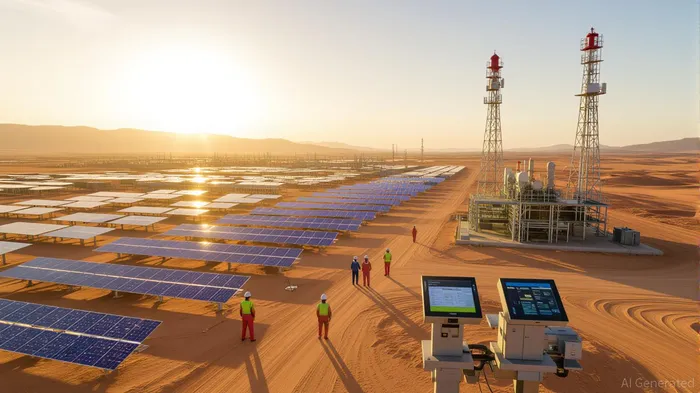
Libya's oil production surge in 2025 has redefined its role in the global energy landscape, positioning the North African nation as a linchpin in the post-Russia energy order. With output climbing to 1.38 million barrels per day (bpd) in late 2025 and a 2028 target of 2 million bpd, Libya's exemption from OPEC+ quotas has allowed it to capitalize on Europe's urgent need for alternative hydrocarbon supplies. This strategic flexibility, combined with digital transformation initiatives and ESG-aligned infrastructure investments, is reshaping energy markets and offering investors a unique window to reallocate capital toward high-growth, geopolitically strategic assets.
The Mechanics of Libya's Resurgence
Libya's production rebound is driven by a combination of operational resumption and technological modernization. International oil majors like Eni, BPBP--, and TotalEnergiesTTE-- have revitalized dormant fields such as Sarir and Messla, with BP targeting 200,000 bpd at Sarir by 2026. The National Oil Corporation (NOC) has also partnered with ExxonMobil, SchlumbergerSLB--, and ShellSHEL-- to digitize upstream operations, deploying AI-powered analytics and satellite telemetry to reduce costs and enhance efficiency. Schlumberger's AI-driven seismic processing in the Nesr and Al Waha fields, for instance, has cut well-site visits by 90%, while AOSCO's digital gas lift monitoring system minimizes downtime and manual errors.
These advancements are part of a broader “Smart Oil Cities” initiative, which integrates telecom infrastructure from Al-Madar and Inmarsat to enable real-time data analytics. The result is a 21st-century oil sector that balances legacy production with cutting-edge sustainability—critical as Europe pivots away from Russian oil. Libya's light, low-sulfur crude, which commands a premium in European refineries, further cements its role as a geopolitical counterweight.
Geopolitical Implications and Energy Market Shifts
Libya's resurgence is not merely a domestic story; it is a catalyst for global energy reallocation. As OPEC+ struggles to meet production targets, Libya's ability to ramp up output without quota constraints has created a supply buffer that stabilizes prices and reduces reliance on volatile regions. This dynamic is particularly relevant as the U.S. and EU seek to diversify energy sources post-Ukraine.
The U.S. has deepened its engagement through a $17 billion infrastructure upgrade plan, which includes sabotage-resistant pipelines and gas flaring reduction measures. This partnership aligns with Washington's broader strategy to counter Russian and Turkish influence in the Mediterranean, leveraging Libya's maritime delimitation agreement with Turkey as a potential geopolitical stabilizer. Meanwhile, the NOC's $10 billion solar power initiative—aiming for 10 gigawatts by 2030—positions Libya as a dual-energy hub, blending fossil fuels with renewables to meet both domestic demand and export potential.
Investment Opportunities in ESG-Aligned Energy Tech
For investors, Libya's energy transition offers a rare convergence of high-yield returns and ESG alignment. The NOC's Production Sharing Agreements (PSAs), offering a 35.8% internal rate of return, attract global bidders like ExxonMobil and ChevronCVX--. These partnerships are underpinned by infrastructure upgrades that reduce environmental risks, such as Schlumberger's carbon capture trials and Eni's brownfield optimization projects.
Beyond oil, Libya's renewable energy push is gaining traction. The Sadada Solar Project, targeting 500 MW by 2025, and a $1 billion World Bank loan for solar infrastructure highlight the country's commitment to diversification. Carbon credit initiatives, including a 100-million-tree reforestation plan, further align with global sustainability goals, creating tradable assets for investors.
The broader African energy renaissance, supported by U.S. diplomacy and World Bank financing, amplifies Libya's appeal. Countries like Kenya and Ethiopia are also attracting capital for green hydrogen and sustainable aviation fuel projects, creating regional energy corridors that Libya can anchor.
Strategic Asset Reallocation: Risks and Rewards
While Libya's potential is compelling, investors must navigate political risks. Sustained U.S. engagement and NOC governance reforms are critical to maintaining stability. However, the country's strategic location, resource endowment, and ESG-aligned infrastructure make it a high-conviction opportunity.
For a diversified portfolio, pairing Libya's energy assets with ESG-focused funds or regional energy tech stocks could mitigate risks. Schlumberger (SLB) and Eni (E) are already embedded in Libya's digital transformation, offering exposure to both traditional and emerging energy markets.
Conclusion: A New Energy Frontier
Libya's oil surge and digital transformation are not just about barrels—they represent a strategic reallocation of global energy assets toward regions that balance production capacity with sustainability. As the world grapples with supply chain fragility and climate mandates, Libya's dual focus on legacy and innovation makes it a pivotal player. For investors, the key lies in aligning capital with projects that harness geopolitical stability, technological advancement, and ESG rigor. The North African nation's energy story is far from over; it's a blueprint for the next phase of the global energy transition.

Delivering real-time insights and analysis on emerging financial trends and market movements.
Latest Articles
Stay ahead of the market.
Get curated U.S. market news, insights and key dates delivered to your inbox.
AInvest
PRO
AInvest
PRO



Comments
No comments yet