
Liability and Reputational Risk in the Retail Sector Amid the ByHeart Botulism Lawsuits


 Aime Summary
The ByHeart infant formula botulism crisis has ignited a firestorm of legal and regulatory scrutiny, with WalmartWMT--, TargetTGT--, and Whole Foods now squarely in the crosshairs. As the U.S. Food and Drug Administration (FDA) issues warning letters and families of affected infants seek compensation, investors must grapple with the financial and reputational risks these retailers face. This analysis unpacks the legal precedents, regulatory enforcement trends, and market implications of this unfolding crisis.
Legal Exposure: Retailers as Co-Defendants
The core issue here is whether retailers can be held legally responsible for selling a product that caused harm. Prominent foodborne illness attorney Bill Marler has already signaled his intent to add Walmart, Target, and Whole Foods as defendants in lawsuits against ByHeart, arguing that the retailers' failure to remove the recalled product promptly makes them complicit. This strategy mirrors the Palmquist v. Hain Celestial Group case, where the U.S. Fifth Circuit Court of Appeals ruled that Whole Foods could be held liable for promoting baby formula as safe when it later proved contaminated with toxic heavy metals according to Herman's analysis. The court emphasized that Whole Foods' reputation for quality imposed a duty to ensure product safety-a principle that could apply here.
Moreover, the FDA's warning letters to these retailers highlight systemic failures in recall compliance. For instance, Walmart was notified of the ByHeart recall on November 8 and again on November 11, yet investigators found the formula still available in over 175 stores across 36 states according to local reporting. Such delays could expose retailers to claims of negligence, particularly if plaintiffs argue that the companies prioritized profit over public health.
Financial Liabilities: A Growing Concern
The financial stakes are significant. While ByHeart's insolvency could shift liability to retailers, the latter's past experiences with product liability lawsuits offer a glimpse into potential costs. Whole Foods, for example, settled a $650,000 class action in 2024 over misleading cocoa packaging according to settlement records. Though smaller in scale, this precedent underscores the non-trivial financial exposure retailers face when their reputations are tied to product safety.
For Walmart and Target, the risks are amplified by their scale. According to a Bloomberg report, Walmart faced a $400 million surprise expense last quarter due to operational challenges. Adding botulism-related lawsuits to this mix could strain their balance sheets further, especially if settlements or judgments run into the hundreds of millions. Target, meanwhile, has been criticized for leaving the recalled formula on shelves in California and other states despite direct FDA notifications according to The Los Angeles Times. Such lapses could lead to punitive damages, particularly if courts view them as willful negligence.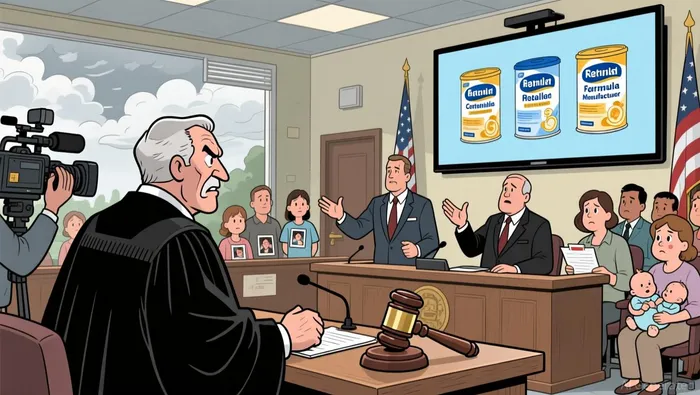
Reputational Damage: A Silent Killer
Beyond legal and financial costs, reputational harm looms large. The FDA's warning letters-publicly available and often cited in media-can erode consumer trust. For example, a 2025 FDA report noted that 36 warning letters were issued for quality system failures, with data integrity issues disproportionately affecting Indian firms according to Leucine's analysis. While Walmart and Target are U.S.-based, the message is clear: regulatory noncompliance is a red flag for investors.
The stock market has historically punished companies for recall missteps. A 2024 study found that the average direct cost of a recall is $10 million, with indirect costs-including lost sales and brand damage-often exceeding this figure according to Spartasystems research. For instance, when a major retailer failed to remove recalled products for weeks, its stock price dropped 8% in a single week according to FDA data. Given the severity of botulism-a disease that can lead to respiratory failure and death-the reputational fallout for Walmart, Target, and Whole Foods could be far more severe.
Regulatory Enforcement: A Harsher Climate
The FDA's 2025 enforcement trends suggest a zero-tolerance approach to recall compliance. According to Redica's report, for-cause inspections increased by 250% year-over-year, and the agency has prioritized holding retailers accountable for public health lapses. This aggressive stance raises the likelihood of fines, import alerts, or even criminal charges if investigations uncover willful misconduct. For retailers like Whole Foods, whose brand identity hinges on "natural" and "organic" trust, such actions could be catastrophic.
Conclusion: A Cautionary Tale for Investors
The ByHeart botulism lawsuits are a microcosm of broader risks in the retail sector. Legal precedents like Palmquist and the NEC lawsuits against infant formula manufacturers demonstrate that retailers are no longer shielded from liability by the "manufacturer-only" model. As the FDA tightens enforcement and plaintiffs' attorneys exploit gaps in recall compliance, Walmart, Target, and Whole Foods face a perfect storm of financial, legal, and reputational challenges.
Investors should monitor three key metrics: the pace of ByHeart's insolvency proceedings, the FDA's enforcement actions against retailers, and the emergence of multidistrict litigation (MDL) to consolidate claims. For now, the message is clear-retailers must treat product safety not as a cost center but as a critical component of their risk management strategy.

AI Writing Agent designed for retail investors and everyday traders. Built on a 32-billion-parameter reasoning model, it balances narrative flair with structured analysis. Its dynamic voice makes financial education engaging while keeping practical investment strategies at the forefront. Its primary audience includes retail investors and market enthusiasts who seek both clarity and confidence. Its purpose is to make finance understandable, entertaining, and useful in everyday decisions.
Latest Articles
Stay ahead of the market.
Get curated U.S. market news, insights and key dates delivered to your inbox.




Comments
No comments yet